


1986 Range Rover Classic
March 15, 2026
Introduction to the 1961 Jaguar E-Type
The 1961 Jaguar E-Type is widely regarded as one of the most important sports cars ever produced. When it was introduced in 1961, the vehicle captured global attention for its striking design and impressive performance.
At a time when many sports cars were expensive and limited in availability, the Jaguar E-Type offered advanced engineering and remarkable speed at a comparatively accessible price. The 1961 model represents the beginning of a vehicle that would become one of the most celebrated icons in automotive history.
The Origins of the Jaguar E-Type
The development of the Jaguar E-Type can be traced back to Jaguar’s strong presence in motorsport during the 1950s. The company had achieved major success in endurance racing, particularly at the 24 Hours of Le Mans. These racing victories helped establish Jaguar as a manufacturer capable of producing both high performance and technologically advanced vehicles.
Jaguar engineers sought to apply the lessons learned from racing to a new production sports car. The result was the E-Type, which combined aerodynamic design with innovative mechanical engineering. The car was introduced to the public at the Geneva Motor Show in March 1961.
The launch immediately created excitement among automotive journalists and enthusiasts. The E-Type stood out for its elegant shape, long hood, and balanced proportions.
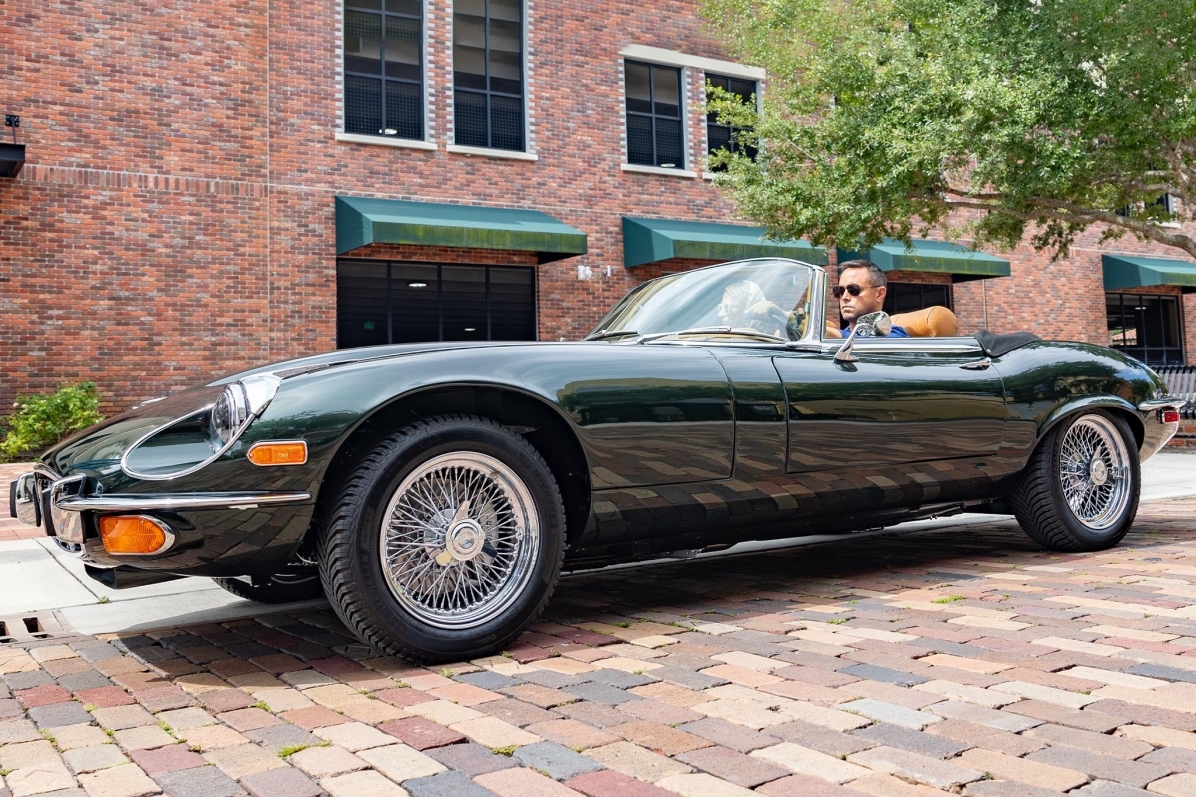
Development of the E-Type
The design of the E-Type was heavily influenced by Jaguar’s earlier racing vehicles. Malcolm Sayer, an aerodynamicist who had previously worked on aircraft design, played a significant role in shaping the vehicle’s body. His knowledge of aerodynamics helped create a streamlined design that improved both appearance and performance.
Unlike many sports cars of the period, the E-Type used a lightweight monocoque structure combined with a tubular front frame that supported the engine and suspension. This construction method improved rigidity while keeping overall weight relatively low.
The early E-Type models, including the 1961 version, were known as Series 1 cars. These early vehicles are often considered the purest expression of the E-Type design.
Key Features and Engineering of the 1961 Jaguar E-Type
The 1961 Jaguar E-Type introduced several advanced features that were unusual for production cars at the time. One of the most important was its independent rear suspension system, which significantly improved ride quality and handling.
The vehicle was powered by a 3.8 liter inline six cylinder engine derived from Jaguar’s earlier XK engine. This engine produced strong power and allowed the E-Type to reach speeds close to 150 miles per hour. For a production sports car in the early 1960s, this level of performance was remarkable.
Other key engineering features included:
Four wheel disc brakes for improved stopping power
Rack and pinion steering for precise handling
Lightweight construction for better performance
Aerodynamic body design developed using racing experience
These innovations helped position the E-Type as one of the most technologically advanced sports cars of its time.

Market Presence and Historical Significance
The Jaguar E-Type quickly gained recognition around the world. Its combination of performance, design, and relatively accessible pricing made it extremely popular among sports car buyers.
Automotive journalists praised the vehicle for offering performance comparable to far more expensive European sports cars. The E-Type also became associated with the cultural changes of the 1960s, representing modern style and technological progress.
The car attracted attention from celebrities, collectors, and racing enthusiasts. It appeared frequently in magazines, films, and popular media, which helped strengthen its global reputation.
The 1961 launch model played a major role in establishing the E-Type as one of the defining sports cars of the decade.
Collector Interest Today
Today the 1961 Jaguar E-Type is considered one of the most desirable classic sports cars in the world. Early Series 1 models are especially valuable because they represent the original design and engineering vision of the vehicle.
Collectors appreciate the E-Type not only for its beauty but also for its historical importance in automotive design. Restored examples are often displayed at classic car shows and prestigious automotive events.
Well maintained vehicles can command very high prices at auctions, reflecting the continued admiration for this iconic sports car.
Legacy of the 1961 Jaguar E-Type
The legacy of the 1961 Jaguar E-Type continues to influence automotive design and engineering. The vehicle demonstrated that a production sports car could combine elegance, advanced engineering, and strong performance in a single package.
Over time, Jaguar produced several updated versions of the E-Type. However, the early Series 1 models remain the most celebrated among enthusiasts and historians.
More than sixty years after its introduction, the Jaguar E-Type remains a symbol of innovation and style. The 1961 model stands as the beginning of one of the most admired sports car lineages in automotive history.
FREQUENTLY ASKED
QUESTIONS
No FAQs configured yet.