

ECD Employee Spotlight: Charlie | Lead Drive Train Technician
September 5, 2018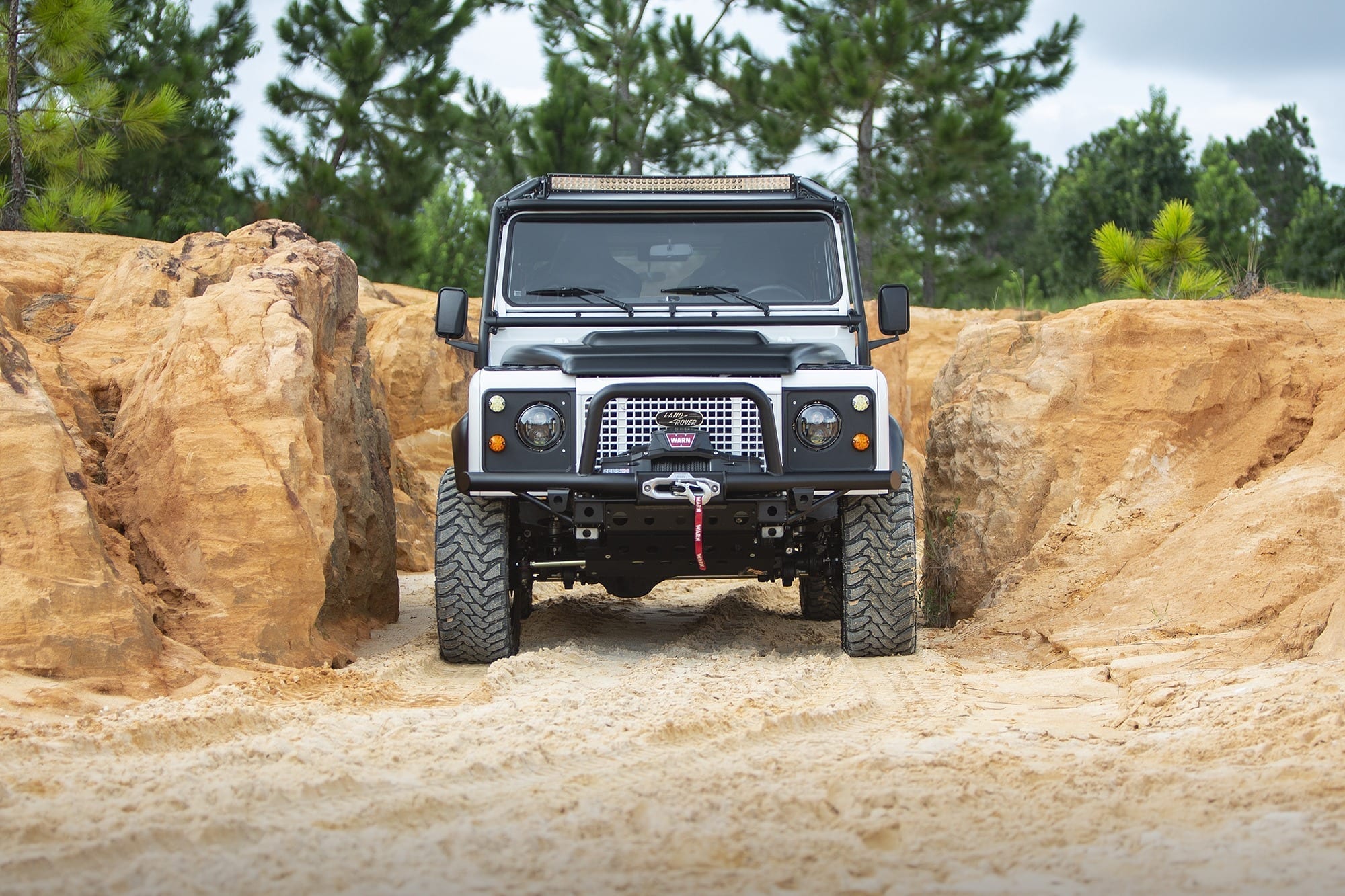
Project Savage | The 150th Build by E.C.D. Automotive Design
September 18, 2018
The Land Rover Defender has always been and always will be the ultimate off-road, go anywhere, do anything vehicle. Originally produced with a steel chassis, which is a metal galvanized frame for the Land Rover Defender, the model was built to withstand any hard beatings the frame might take, whether it be bodies of water, tough terrain, or rust.
For owners investing in a high-end Defender restoration, the decision surrounding the chassis is critical. Many consider staying with the original steel frame to preserve historical character, while others choose a galvanized chassis to create a stronger foundation for decades of use. For most Defender builds today, a galvanized chassis provides a level of durability and reliability that aligns with modern expectations of performance and long-term ownership.
This guide explores how galvanizing works, why Defenders benefit from it so dramatically, and what to consider when choosing this upgrade for your restoration.
Key Takeaways
-
A galvanized chassis is a frame coated in zinc to protect against corrosion.
-
Choosing a galvanized chassis helps extend the structural life of your Land Rover Defender and lowers long-term maintenance costs.
-
A chassis built for longevity supports both lifestyle use and collector value, which is important in the premium restoration market.
What is a Galvanized Chassis?
Think of a galvanized chassis like the sturdy metal skeleton of a defender vehicle, providing a rigid base to mount major vehicle parts, such as the engine and transmission. A galvanized chassis is an original Land Rover Defender chassis that has been dipped in a molten protective zinc coating that holds off corrosion.
Why the Chassis Matters So Much in a Defender
The chassis is the backbone of every Defender. It supports the body, suspension, drivetrain, and every load the vehicle encounters. Unlike monocoque designs, the Defender relies on a separate ladder frame that absorbs a significant amount of stress when used on trails, uneven surfaces, or during towing.
We asked our 25-year Land Rover Defender veteran and Warranty manager, Glenn, what the benefits of building a custom Defender with a galvanized chassis were:
"The chassis won't rot since it's protected. It's not going to rust through and break off. Because they don't deteriorate as quickly, it gives the life of the vehicle longevity, giving it a longer run. When you build with a galvanized chassis, you get the peace of mind knowing that it's brand new." - Glenn
Why Aging Original Frames Becomes a Problem
Classic Defenders were engineered for utility, not long-term corrosion resistance. Early models lacked the protective coatings that modern vehicles rely on. Moisture, road salt, mud and trapped debris eventually break down the steel, especially in areas like:
-
Outriggers
-
Rear crossmembers
-
Spring mounts
-
Fuel tank supports
-
Inside boxed sections, where moisture becomes trapped
Once rust takes hold inside the chassis, it can quietly weaken structural areas that are nearly impossible to inspect without fully stripping the vehicle. For restorers who want lasting reliability, this is where a galvanized chassis becomes transformative.
How Galvanizing Works
Galvanizing is a metallurgical process in which the steel chassis is fully submerged in molten zinc. This forms a bonded protective coating that shields the metal from corrosion. Unlike paint or undercoating, zinc becomes part of the steel surface, creating a durable barrier both inside and out.
Key Benefits of Zinc Coating
-
Complete coverage
Even internal cavities receive protection, which is crucial for the Defender’s boxed ladder frame. -
Sacrificial protection
If the coating is scratched, zinc corrodes first, protecting the steel beneath. -
Longevity
Galvanized steel resists corrosion for decades, offering exceptional durability for vehicles that will see varied climates. -
Consistency
Every surface receives uniform protection during the immersion process.
Because the Defender chassis is subject to twisting forces, impacts, and temperature changes, having a resilient coating that will not peel or chip easily is a major advantage over traditional paint-based protection.
Defender Weak Points and How a Galvanized Chassis Addresses Them
1. Moisture Retention in Boxed Sections
Defender chassis rails often trap moisture from water crossings, rain, washing, or coastal humidity. Once inside, water sits against bare steel surfaces without ventilation. Galvanizing protects these internal cavities, preventing the corrosion that otherwise occurs out of sight.
2. Rear Crossmember Deterioration
The rear crossmember is highly exposed to spray from the wheels. Many original frames show extensive rust in this area, even when the rest of the chassis looks acceptable. A galvanized crossmember remains resilient in environments where salt spray or mud buildup is common.
3. Outrigger and Body Mount Corrosion
The body mounts experience continuous stress and exposure. Rust in these areas affects how the body aligns with the frame. With a galvanized chassis, these points remain stronger for longer, preserving proper fitment.
4. Off-Road Scrapes and Impacts
Off-roading exposes the underside to rocks, branches, and uneven terrain. Since zinc offers sacrificial protection, even if the coating wears in a localized spot, the frame continues to resist deep rust formation.
5. Coastal and High-Humidity Exposure
Defenders used in coastal regions face continuous salt exposure that can rapidly deteriorate untreated steel. Zinc performs extremely well in salty environments, providing a significant advantage for owners living near oceans or lakes.
Why a Galvanized Chassis Matters for Luxury Restorations
Drivers investing in a high-level restoration expect a vehicle that feels refined, reliable, and capable of lasting for the long haul. A galvanized chassis aligns with that expectation because it elevates the structural quality of the entire platform.
1. Enhances Ride Comfort and Handling
A solid chassis improves ride consistency, alignment, and suspension geometry. When a frame has weakened areas, the vehicle may feel loose or unsettled over uneven road surfaces. With a galvanized frame, the Defender maintains a steady, confident feel on both pavement and trails.
2. Elevates Ownership Confidence
Owners want to know that the most important part of their restored Defender is built to last. A chassis that resists rust provides reassurance, whether the vehicle is used daily, shipped to a vacation home, or driven across varying climates.
3. Increases Collector Appeal
Collectors value structural integrity. A Defender built on a galvanized frame stands out in the premium restoration market because the chassis will remain strong long after lesser restorations begin to show wear.
4. Protects Long-Term Value
High-end Defenders command premium pricing. A galvanized chassis helps preserve that value by extending the usable lifetime of the vehicle, reducing long-term repair costs, and making it more desirable to future buyers.
Build Quality Considerations When Choosing a Galvanized Chassis
Selecting a galvanized chassis is only part of the equation. To achieve the highest quality build, several key factors must be addressed.
1. Quality of the Zinc Coating
Not all galvanizing processes produce the same results. Uniform thickness, consistent application, and smooth finish all influence performance. A high-quality supplier ensures the chassis is well-prepared before immersion, which increases coating adhesion.
2. Proper Drainage and Ventilation Holes
Before galvanizing, the chassis must have drainage holes to allow molten zinc to flow through the frame. Once galvanized, these holes also help moisture escape during ownership, preventing buildup inside the rails.
3. Correct Alignment and Fitment During Assembly
After galvanizing, the chassis must remain true and square. During restoration, body panels, mounts, driveshafts, and suspension geometry all depend on precise alignment. Experienced technicians ensure everything fits perfectly, maintaining structural harmony.
4. Post-Build Protection and Care
While galvanized steel resists corrosion extremely well, additional protection, such as wax injection or rubberized undercoating, can further extend its life. Periodic cleaning, especially after off-road use, also helps maintain the chassis.
Real-World Scenarios Where a Galvanized Chassis Makes a Difference
Coastal Driving
Saltwater spray and humid air accelerate corrosion dramatically. Coastal owners often see rust forming on untreated steel within just a few years. A galvanized chassis performs exceptionally well in these environments.
Off-Road Adventures
Trails, water crossings, and rocky terrain put constant stress on the Defender. Impact protection and internal corrosion resistance help the vehicle withstand use that would rapidly age an original bare-steel frame.
Seasonal Climates with Winter Road Salt
Salt used on winter roads can rot a Defender chassis faster than any other environment. Zinc protection significantly reduces the impact of salt exposure.
Long-Distance Overlanding
Overlanding requires dependability. A galvanized frame offers peace of mind for long trips, remote locations, and varied conditions.
Collector Storage and Second Homes
For owners who store their Defender or keep it at a vacation property, a galvanized chassis minimizes the risk that moisture or intermittent use will degrade the structural frame.
Defender Galvanized Chassis FAQs
Review the following frequently asked questions about the Defender galvanized chassis.
How long does a galvanized chassis last?
With proper care, a galvanized Defender frame can last several decades. Zinc coatings hold up exceptionally well even in harsh climates.
Does galvanizing change the look of the chassis?
Galvanized frames have a silver finish that can be left as is or coated with paint or underseal. Many restorers choose a finish that matches the aesthetic of the underbody.
Is a galvanized chassis heavier?
The zinc coating adds a small amount of weight, but the difference is minimal and does not affect performance.
Can a galvanized chassis still rust?
While rare, localized corrosion is possible if the zinc coating is penetrated deeply. Routine cleaning and maintenance help preserve the coating.
Is galvanizing worth the investment?
For most restoration builds, yes. The upgrade significantly reduces long-term maintenance costs and improves structural reliability.
Conclusion
A galvanized chassis is one of the most impactful upgrades you can select when restoring a Land Rover Defender. It strengthens the foundation of the vehicle, protects against corrosion for decades, and supports the level of refinement expected in a modern luxury restoration. From improved structural integrity to long-term value and peace of mind, a galvanized chassis ensures the Defender feels ready for anything.
For drivers who want a restoration that honors heritage while delivering contemporary durability, this upgrade offers a balance of engineering strength and ownership confidence that elevates the Defender platform for years to come.
Ready to start your iconic build? Call us at (407) 483-4825 or email [email protected]
FREQUENTLY ASKED
QUESTIONS
No FAQs configured yet.