


How Thoughtful Customization Shapes the Way a Restored Vehicle Is Actually Used
February 12, 2026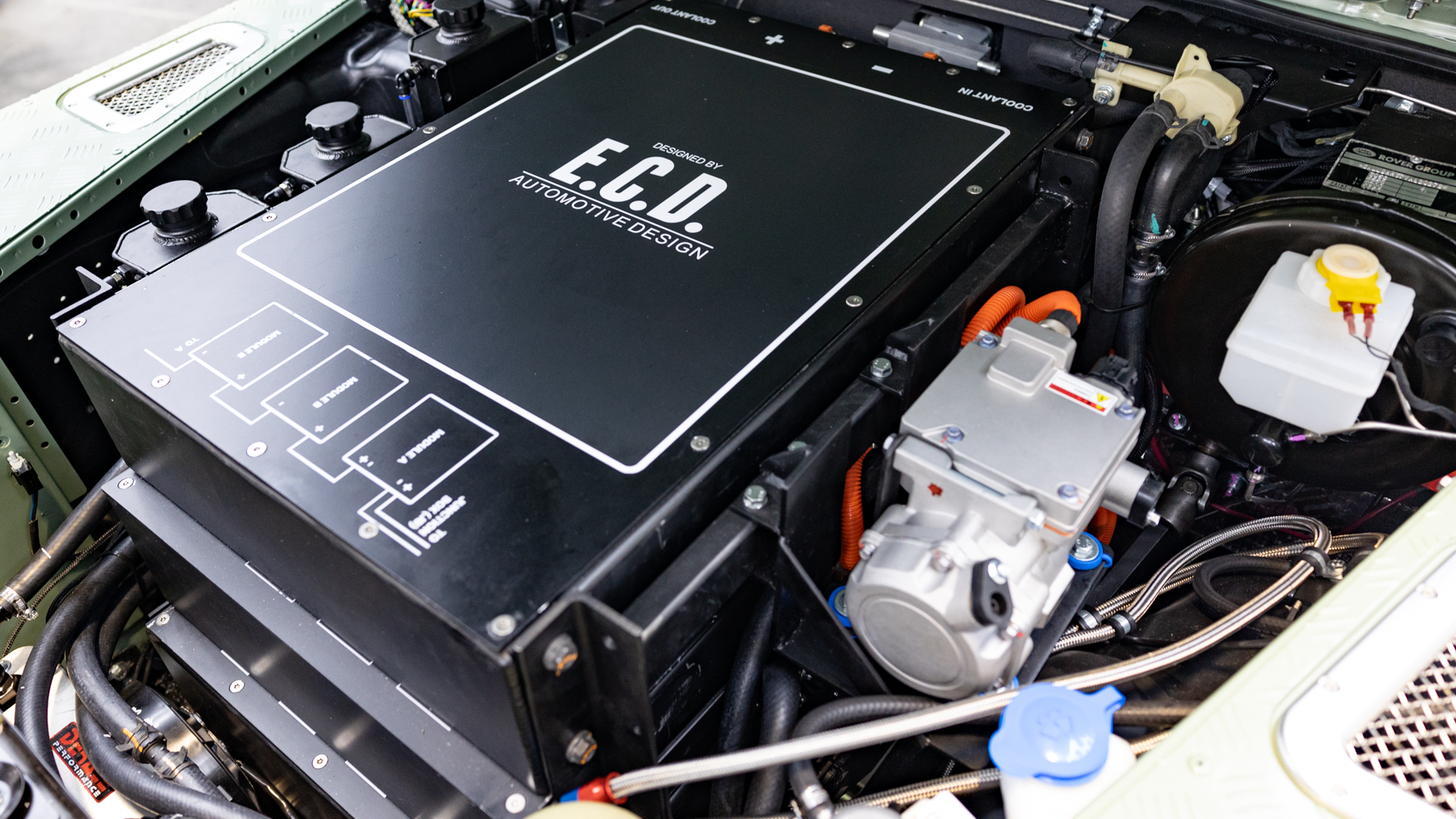
Electric Restomods Explained: What Changes, What Improves, and What Stays the Same
February 18, 2026
This timeless recipe turns a classic into a purpose-built driver's machine.
Few cars arrive at the intersection of beauty, balance, and an unfiltered connection between human and machine as cleanly as the Jaguar E-Type. Enzo Ferrari called it "the most beautiful car ever made" when it debuted on March 15, 1961.
More than half a century later, the E-Type remains the benchmark for restorers who prioritize the tactile, analogue joys of driving while bringing classic cars into the 21st Century.
Keep reading to learn seven reasons why the E-Type still sets the standard for driver-focused restorations. We'll also discuss how a hand-built, bespoke program turns that standard into a one-off masterpiece.
1. Chassis Geometry That Rewards Careful Hands
The E-Type's long wheelbase gives it the distinctive shape, but it also has near-perfect weight distribution and rigid backbone chassis that make it inherently responsive. Restorers who respect that geometry, rather than masking it, preserve the car's innate feedback.
When fiddly suspension bushes are replaced with precision-engineered polyurethane or period-correct but uprated components, the results are unmistakable. You get a sharper turn-in and a directness that modern sports cars often filter away.
Driver-centric restorations treat the chassis as sacred, as well they should. Bridge the gap between originality and performance with subtle reinforcements, period-correct geometry, and modern dampers tuned specifically for the car's mass and spring rates. You'll build a restored E-Type that feels honest at 60 MPH and alive on a backroad.
2. Small-Block Power Options That Respect Character
Power upgrades that ignore the E-Type's soul ruin the experience.
The best driver-focused builds use compact, high-revving powerplants. We recommend modern V8s or even carefully integrated EV conversions. These engines or motors match the car's character rather than overpower it. A lightweight, torque-rich V8 that retains a lively top end preserves the E-Type's throttle-to-turn synergy. Choosing an electric conversion can sharpen throttle response and lower the center of gravity (because battery packs weigh more than internal combustion engines) without killing engagement.
It's not about maximum horsepower with either of these powertrains. It's about usable, predictable delivery that invites the driver to explore the limits without surprises.
3. Braking and Steering That Inspire Confidence
Original braking systems and steering racks were designed for the era's performance envelope. Today's drivers expect more braking bite and a more communicative steering touch.
Driver-first restorations upgrade calipers, pads, and master cylinders while keeping pedal feel progressive and intuitive. Re-ratioed steering racks or refreshed worm-and-roller systems with modern seals can eliminate vagueness while preserving the mechanical link the E-Type is famed for. You'll still enjoy the feel of driving a legend while keeping in tune with modern traffic and roadways.
The goal is a car that stops and points as decisively as it looks. The driver's intentions are never second-guessed by the machine.
4. Lightweight, Purposeful Materials That Honor Originality
Maintaining the E-Type's visual purity is central to any high-caliber restoration. That means using aluminum and hand-formed panels where period aesthetics matter. This design philosophy combines original aesthetics with discreet use of modern composites for crash-critical or weight-sensitive areas.
The most tasteful restorations replace rust and compromise with materials matched for weight and finish. The result? A car that looks original but possesses the structural and corrosion resistance expected by today's owners.
Every metal repair is a chance to improve longevity without rewriting the visual language of the car. You get a vintage showpiece that's just as capable as today's modern vehicles.
5. Interior Craftsmanship Tuned to the Driver
An E-Type's driver-centric interior balances ergonomics with authenticity.
Modern seats with classic lines and adjustable supports enhance comfort on long drives while preserving the cabin silhouette. Controls are kept tactile and direct thanks to a leather-wrapped rim with period-correct diameter, a clear cluster with modern internals for reliability, and purposeful placement of switches so the driver's attention stays on the road.
Hand-stitched leathers, bespoke trim, and personalized switchgear create an intimate cockpit, custom-built for one owner's tastes. It's like getting into the cockpit of a World War II-era plane but you're about to take off in a supersonic jet.
High-end restorers treat the cockpit as a bespoke suit. It's functional, beautiful, and made to fit the person who will live with it.
6. Precision Build Processes and The 2,200-Hour Difference
Driver-focused restorations are a time investment. There's no way around it. Meticulous programs like ECD Auto Design measure success in hours and detail, not speed.
Our specialist shop commits to a 2,200-hour build cycle executed in a climate-controlled facility with experienced craftsmen. We deliver cars that drive like a purpose-built tool rather than a piecemeal reassembly.
Each subsystem receives calibrated attention. No detail is left unchecked. Everything is tests for fit and engineering. Bearings, tolerances, electrical systems, and final road tuning are iterated until the driving behavior is predictable, durable, and thrilling.
Our kind of build philosophy yields a car that behaves like it was designed yesterday. But it contains the soul of a classic.
7. Customization That Enhances, Not Erases, the Driving Experience
Personalization is not about decoration. It's about tailoring the car to your driving life.
A driver-forward E-Type restoration might include modern climate controls discreetly installed for longer drives (no 4x60 air conditioning here). Look for re-geared transmission choices for today's highway speeds to help you pass traffic or manage hilly terrain. Consider a sympathetic EV conversion for quiet canyon runs.
The best custom elements are reversible or integrated in a way that preserves the car's long-term value and usability. The restoration pays homage to the E-Type's heritage without eschewing modern drivability.
Collectors and enthusiasts commission one-off features so the car performs exactly how they intend to use it, such as weekend blasts, concours shows, or cross-country tours. Our team can create a vehicle that meets your precise standards down to the last radio nob.
Why the Jaguar E-Type Works Better Than Most for Modern Restorations
The E-Type's fundamental brilliance balances lightness, aerodynamics, and driver-centric ergonomics. Its design makes the car uniquely malleable. When we dedicate the necessary craft, time, and engineering intent, the result is an automobile that feels alive rather than museum-quiet. Hand-built construction, targeted modern mechanicals, and bespoke interiors transform the E-Type from an icon of style into an icon of experience.
Your custom E-Type build checks two boxes. First, it can be a showpiece investment-grade restoration. Any gearhead will recognize its silhouette instantly before slowly approaching your pièce de résistance with the awe and reverence it deserves. Simultaneously, it's an honest, accessible sporting car that rewards regular driving, from casual scenic drives on the weekend to commutes to the office.
That duality is rare, which is why so many restoration houses point to the E-Type as the yardstick for driver-focused work.
What Prospective Owners Should Expect
High-fidelity, driver-centric restorations are not inexpensive or instantaneous. Nor should they be. They are functional pieces of automotive art that deserve perfection.
Any restoration, but especially an E-Type, demands premium materials, expert labor, and a patient timeline. The original E-Type went from its initial design to production in four years. This same kind of care goes into your restoration.
Leading bespoke programs operate from purpose-built facilities with experienced technicians and measured build pipelines. Our 100,000 square-foot Rover Dome, with more than 70 of the world's best restoration experts on hand, lets you know just how serious we are about restoring your dream car.
We assure a world-class restoration. But it also requires realistic lead times and budget alignment. If you prioritize a living, driving car over quick turnover, the investment pays dividends in usability, durability, and long-term value. Take a look at our project known as The Bridgewater Commission to see what's possible.
Choose the Right Restoration Partner
When selecting a shop, you should ask for evidence of handcrafted processes, documented build hours, and examples of how powertrain and chassis upgrades were integrated without compromising the driving feel. You'll want a facility that combines high-volume capability with dedicated artisans working under one roof in climate-controlled bays. These tend to produce the most consistent, driver-focused results.
Look for a philosophy that emphasizes personalization, modern performance options (including V8 and EV pathways), and transparent timelines. This team is not just your partner. We love classic cars just as much as you do.
Why The E-Type?
Why not? The Jaguar E-Type remains the gold standard because its original design rewarded fidelity. A careful, hand-built restoration that respects geometry, enhances control, and modernizes discreetly yields a driving experience that simply cannot be replicated by mass modification.
An E-Type restoration is for collectors and drivers who want more than an ornament. They want a living car that invites them every time they turn the key. The E-Type is, and will remain, the measuring stick. It has been for more than 65 years.
Interested in a purpose-built, driver-focused E-Type? What about a bespoke Defender, Range Rover Classic, or Toyota FJ40 restoration? Discuss your vision with us. Our restoration experts lovingly build by hand and measure quality in hours and detail. Contact us, and let's talk about your perfect dream build. We'd love to help you uncover your show-quality, driver-centric legend.
CREATE IT. BUILD IT. LIVE IT.
FREQUENTLY ASKED
QUESTIONS
No FAQs configured yet.