


1965 Mustang
March 19, 2026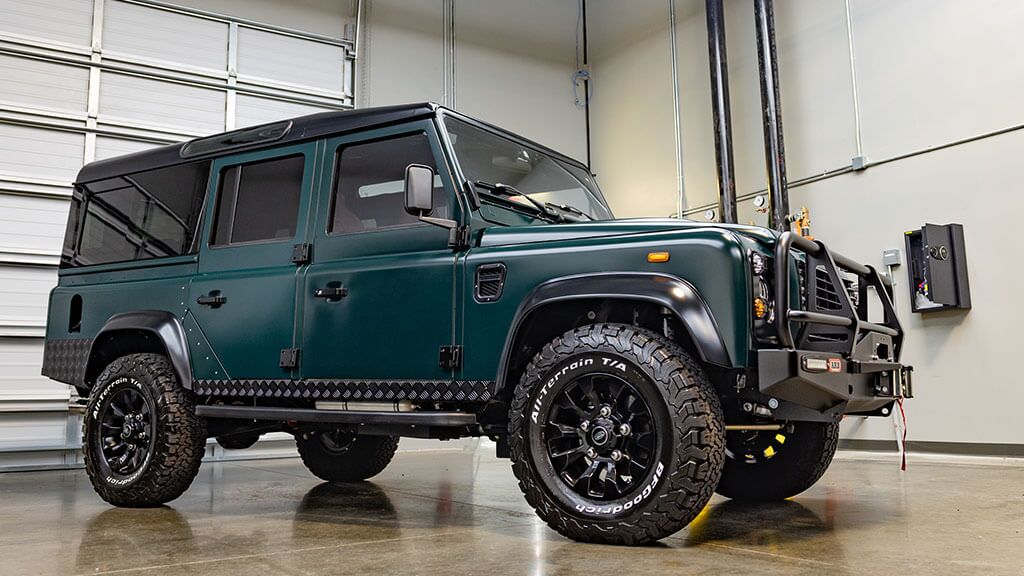
Introduction to the 1989 Defender
The 1989 Defender represents an important moment in the history of Land Rover’s most recognizable off road vehicle. Although the official name “Defender” was not introduced until 1990, the vehicles produced during the late 1980s were the direct predecessors of the Defender line. These models carried forward the design philosophy that began with the original Land Rover Series vehicles in 1948 and continued through the Land Rover Ninety and One Ten models introduced in the 1980s.
By 1989, Land Rover had refined the design of its utility vehicles to balance durability, comfort, and improved performance. The vehicles built during this period retained the rugged characteristics that made Land Rover famous while gradually incorporating modern engineering improvements. As a result, the 1989 model is often regarded as one of the last examples of the transitional era before the Defender name became official.
Historical Development
The story of the 1989 Defender begins with the introduction of the Land Rover Ninety and One Ten in the early 1980s. These models replaced the long running Series III vehicles and brought several significant improvements. The Ninety had a shorter wheelbase of approximately 93 inches, while the One Ten featured a longer 110 inch wheelbase designed for greater load capacity and passenger space.
The updated models used a new coil spring suspension system instead of the traditional leaf springs used in earlier Series vehicles. This suspension design had already proven successful on the Range Rover and dramatically improved ride comfort and off road articulation. By the late 1980s, the Ninety and One Ten had become widely respected for their ability to perform in extreme conditions while offering better road manners than earlier Land Rovers.
In 1989, these vehicles continued to evolve with improvements to engines, transmissions, and interior comfort. The growing competition in the global four wheel drive market encouraged Land Rover to modernize its utility lineup while maintaining the traditional body on frame construction and aluminum body panels that had defined the brand for decades.
Design and Construction
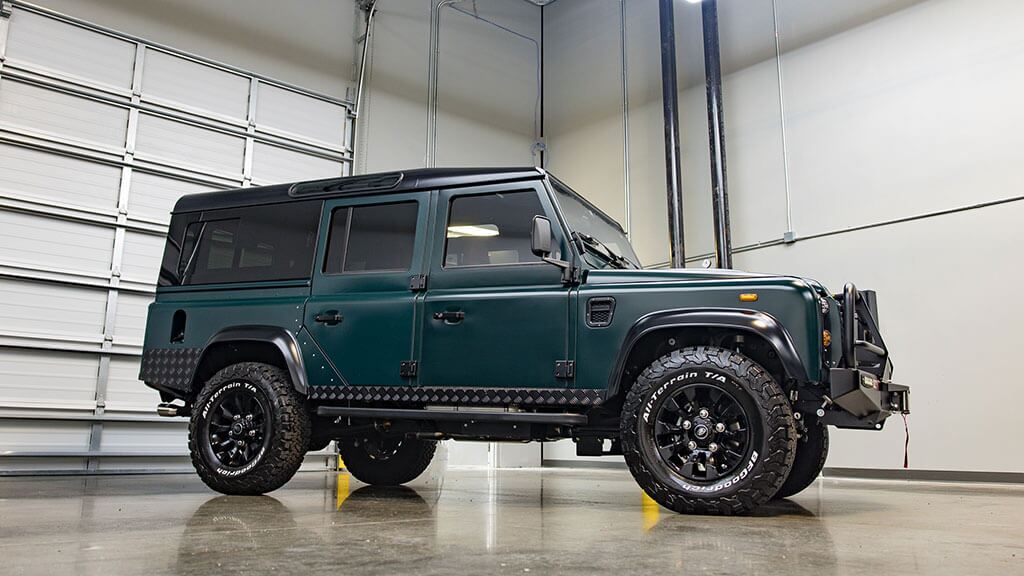
The design of the 1989 Defender remained closely tied to the classic Land Rover identity. The body was constructed primarily from aluminum alloy panels mounted on a strong steel ladder frame chassis. This design provided excellent durability while also resisting corrosion, which was important for vehicles used in harsh climates and remote environments.
The shape of the vehicle was deliberately simple and functional. Flat body panels, exposed door hinges, and a nearly vertical windshield reflected the vehicle’s focus on practicality rather than styling. These features also made repairs easier in remote areas where advanced equipment might not be available.
The interior of the 1989 model was basic but practical. Durable materials were used throughout the cabin, and the dashboard layout was designed with utility in mind. While comfort was not the primary priority, the coil spring suspension and improved seating provided a noticeable improvement compared to earlier Series models.
Engine and Performance
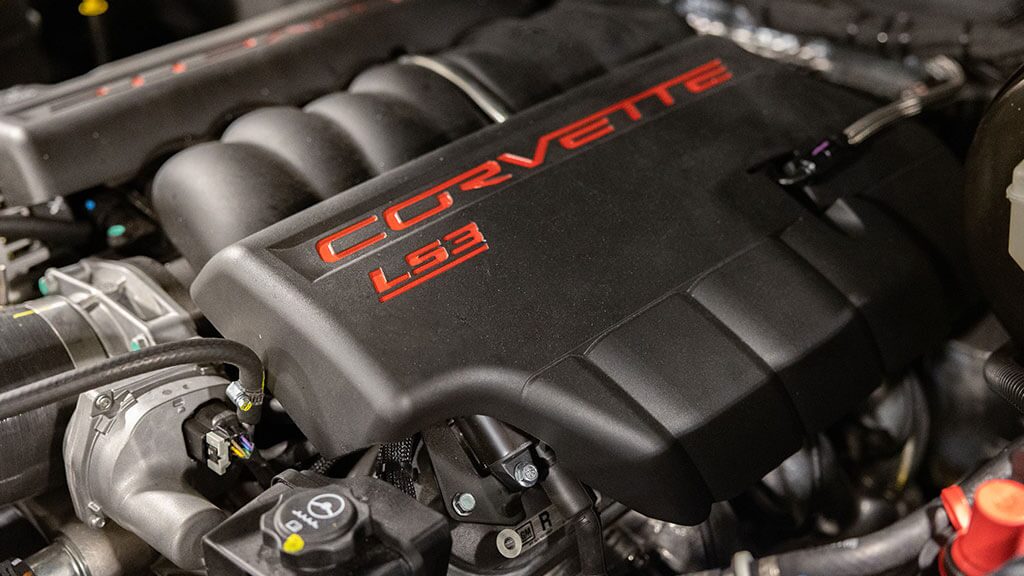
Several engine options were available for the 1989 Land Rover utility models that would soon become known as the Defender. Diesel engines were particularly popular due to their reliability and fuel efficiency. One of the most common options during this period was the 2.5 liter naturally aspirated diesel engine. This engine was known for its durability and ability to operate in demanding conditions.
Another available engine was the 2.5 liter turbo diesel, which provided improved power and better highway performance. Petrol engines were also offered in some markets, including a 3.5 liter V8 that delivered stronger acceleration and higher top speeds.
The vehicles were equipped with a permanent four wheel drive system and a two speed transfer case. This allowed drivers to switch between high and low range depending on terrain. Combined with excellent ground clearance and strong axle articulation, the 1989 model was capable of navigating difficult landscapes such as mud, sand, and rocky trails.
Off Road Capability
Off road performance remained the defining characteristic of the Land Rover utility vehicles in 1989. The coil spring suspension system improved wheel travel and traction on uneven surfaces. The permanent four wheel drive system ensured that power was always distributed to both axles, providing better stability and grip.
The vehicle’s short overhangs and high approach and departure angles allowed it to climb steep obstacles without damaging the bodywork. In addition, the strong ladder frame chassis allowed the vehicle to carry heavy loads and withstand the stresses of rough terrain.
Because of these capabilities, vehicles from this era were widely used by farmers, explorers, humanitarian organizations, and military forces around the world. Their reliability and adaptability made them valuable tools in regions where road infrastructure was limited.
Transition Toward the Defender Name
The year 1989 is significant because it came just before Land Rover officially introduced the Defender name in 1990. The introduction of the Land Rover Discovery created a need to clearly distinguish the company’s traditional utility vehicles from its newer models.
To avoid confusion, Land Rover renamed the Ninety and One Ten models as the Defender 90 and Defender 110. While the name changed, the fundamental design remained largely the same. This continuity means that the 1989 vehicles are often viewed as the final stage of development before the Defender identity became established.
Legacy and Historical Importance
The vehicles produced in 1989 hold an important place in Land Rover history. They represent the culmination of decades of engineering development that began with the original Series models. At the same time, they mark the transition into the modern Defender era that would continue for more than twenty five years.
Collectors and enthusiasts appreciate these late 1980s models because they combine traditional mechanical simplicity with improved comfort and capability. Many examples remain in service today, which reflects the durability and practical design that defined Land Rover vehicles of this period.
The legacy of the 1989 Defender era is still visible in modern off road vehicles. Its combination of rugged construction, versatile design, and exceptional off road performance established a reputation that continues to influence the Land Rover brand today.
FREQUENTLY ASKED
QUESTIONS
No FAQs configured yet.