


1986 Range Rover Classic
March 15, 2026
1965 Mustang
March 19, 2026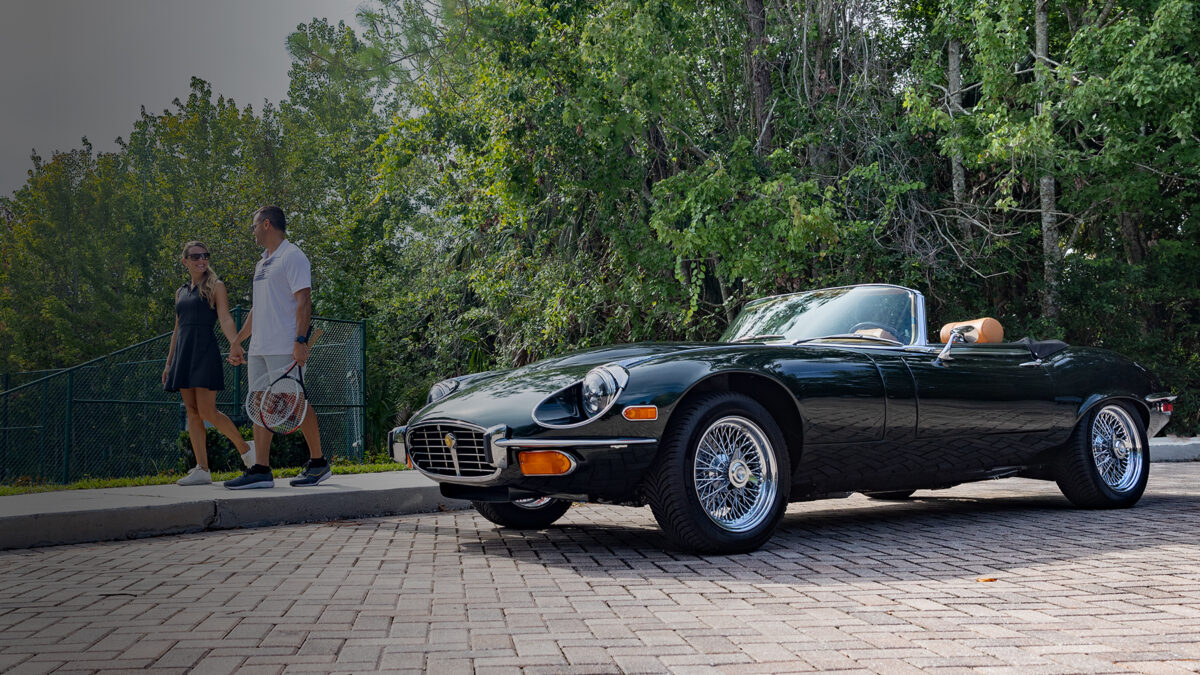
The Car That Started Everything
March 15, 1961 was not a typical day at the Geneva Motor Show. Jaguar had arranged for two E-Types to make the drive from Coventry overnight — one for static display, one for journalists to drive. The press car arrived so late that test drives had to be scheduled into the evening. Nobody left. That alone tells you something about the car that showed up.
The 1961 Jaguar E-Type was the first production example of what would become one of the most celebrated sports cars ever built. But within the E-Type lineage, the 1961 model holds a specific and irreplaceable position. It is the original Series 1 in its purest, least-compromised form — and for collectors and restorers who understand the difference, that matters enormously.
What Made the 1961 Model Distinct
The E-Type ran in production from 1961 to 1974, but not all E-Types are equal. The earliest cars, and particularly the 1961 examples, carry a set of features that were quietly removed or revised in subsequent years, making them immediately identifiable to anyone who knows what to look for.
The 1961 E-Type came fitted with the 3.8-liter XK inline-six engine. This was the same basic engine architecture Jaguar had been developing since the late 1940s, refined through years of racing development and capable of pushing the car to a genuine 150 mph at a time when most production sports cars could not approach that figure. The 3.8-liter unit was eventually replaced by a 4.2-liter version in late 1964, which brought improvements in torque and drivability. The earlier 3.8 is considered by many purists to be the more characterful engine of the two.
Visually, the earliest Series 1 cars have details that set them apart at a glance. The headlights sit behind glass covers — a feature later removed to satisfy U.S. regulations. The interior uses a flat floor rather than the transmission tunnel that appeared in later cars. The bonnet is held by external latches. The dashboard is simple, aluminum-finished, and deeply functional. None of these are compromises. They are the original design intent, unmodified.
The bodywork itself was shaped by Malcolm Sayer, an aerodynamicist who came to Jaguar from the British aircraft industry. Sayer did not sketch the E-Type the way a traditional car designer might. He calculated it mathematically, using the same principles he had applied to aircraft fuselages and to the D-Type racing car that won Le Mans three consecutive times between 1955 and 1957. The result was a body that is aerodynamically coherent rather than merely beautiful. The beauty is a byproduct of the math.
Why the 1961 Commands a Premium
Among collectors, early 3.8-liter Series 1 cars — particularly roadsters with matching numbers — consistently achieve the highest prices in the E-Type market. The reasons are straightforward: low production numbers in the first model year, unmodified original specification, and the historical weight of being among the first examples of a car that changed what people believed a production sports car could be.
Barn-find examples in rough condition regularly sell for significant sums. Concours-correct examples with documented history are in a different category entirely. The 1961 model year specifically benefits from collector interest that has only intensified as original examples become harder to find in unrestored or correctly restored condition.
What the 1961 also represents for the restomod market is a foundation. The monocoque structure, when properly restored and reinforced, is an excellent platform for modern mechanical upgrades precisely because the original engineering was so well considered. The front subframe that carries the engine, suspension, and front bodywork as a single integrated unit was a radical concept in 1961. It remains a sensible one for builders working with the car today.
Building a 1961-Inspired E-Type with ECD
Every E-Type built at ECD Auto Design begins with a genuine period shell — sourced, inspected, and fully stripped before a single build decision is made. For clients drawn to the early Series 1 specification, the build process respects what made those original cars special while addressing everything that made them difficult to live with daily.
The 3.8-liter XK engine is a remarkable piece of engineering history. It is not, however, a practical choice for a car that will be driven regularly in modern conditions. ECD clients can opt for a 450hp LS3 V8 or a fully electric drivetrain — both fitted without compromising the external appearance of the car. The long nose bonnet, the covered headlight aesthetic, the aluminum-finished cabin — all of it remains. What changes is what happens when you press the throttle.
Suspension, brakes, cooling, and electrical systems are all rebuilt to modern standards. The result is a car that looks exactly as a 1961 E-Type should look and drives the way no 1961 E-Type ever could.
If you have been drawn to the early Series 1 as a starting point for a commission, the custom Jaguar E-Type build page outlines the full build process, drivetrain options, and what to expect from start to delivery.
Interested in a slightly later expression of the same bloodline? The 1965 Jaguar E-Type introduced the 4.2-liter engine and a fully synchronized gearbox — a meaningful shift that made the car more liveable without sacrificing what made it iconic.
FAQs: 1961 Jaguar E-Type
What engine did the 1961 Jaguar E-Type come with?
The 1961 model used the 3.8-liter XK inline-six engine, producing around 265 horsepower in standard trim. This engine powered the E-Type until late 1964 when Jaguar transitioned to a larger 4.2-liter version.
What is a Series 1 Jaguar E-Type?
Series 1 refers to the first generation of E-Type production, running from 1961 to 1968. The earliest cars, particularly pre-1965 examples, are sometimes called “pure” Series 1 due to features like the glass-covered headlights, flat floor, and external bonnet latches that were later changed.
Why are 1961 E-Types more valuable than later models?
The 1961 model year represents the original, least-modified version of the E-Type design. Low production numbers, matching-numbers documentation, and the historical significance of being among the first examples produced all contribute to collector premiums on early cars.
What is the difference between the 3.8 and 4.2 liter E-Type engines?
The 3.8-liter engine was used from 1961 to 1964. The 4.2-liter that replaced it offered more torque and a fully synchronized gearbox, making it more practical for road use. Purists often prefer the character of the 3.8, while many drivers find the 4.2 more liveable.
Can a 1961 Jaguar E-Type be built as a restomod?
Yes. The Series 1 shell is an excellent platform for a restomod build. Builders like ECD Auto Design use period-correct shells as the foundation, updating the drivetrain, suspension, brakes, and electrical systems while preserving the original exterior design. To explore commissions, visit the ECD custom Jaguar E-Type page.
FREQUENTLY ASKED
QUESTIONS
No FAQs configured yet.