

Buying a vintage Defender today is very different than it was even a few years ago. Demand has surged, availability has tightened, and buyers are far more educated about what separates a true, well-built Defender from one that simply looks the part. Originality still matters, but drivability, reliability, and build quality now play an equally important role in long-term ownership.
Not all vintage Defenders are restored the same way. Differences in chassis condition, powertrain selection, suspension setup, and interior execution can dramatically affect how a vehicle drives, how it ages, and how well it holds value over time. This guide walks through what actually matters — model by model, system by system — whether you're comparing builders, evaluating a specific truck, or starting your own.
Choosing Between the D90, D110, and D130
Wheelbase length, seating configuration, drivetrain options, and suspension setup all play a role in the overall ownership experience — and each model offers a distinctly different feel behind the wheel.
Defender 90: Compact and Capable
The most agile model in the vintage lineup. Its shorter wheelbase suits tight trails and city driving while still seating up to five passengers with practical cargo space — the choice for owners who want a more responsive, playful feel behind the wheel.
Defender 110: Balanced and Versatile
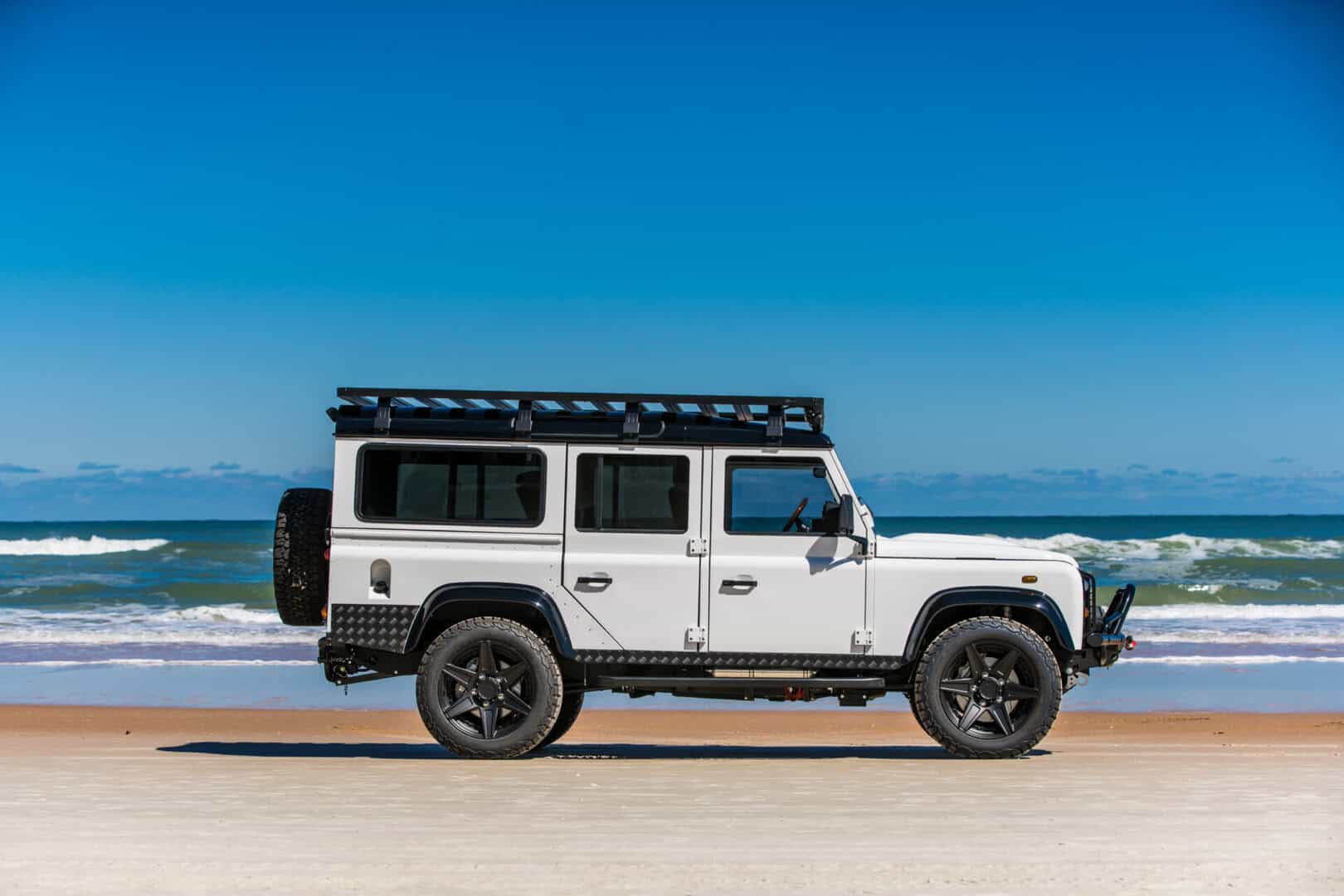
Often considered the most versatile vintage Defender. With seating for up to seven passengers and flexible cargo configurations, it works equally well as a family vehicle, adventure platform, or long-distance tourer — and it's the model we build most often.
Defender 130: Space Without Compromise
The longest wheelbase and greatest interior capacity in the vintage lineup. Originally developed for utility and expedition use, the 130 has evolved into a platform that supports luxury finishes without losing its rugged foundation. Every D130 we build is bespoke to order — start a D130 build here.
Engine & Drivetrain Options
Original Defender powerplants were never built for daily American highway use — most factory diesel and four-cylinder engines max out around 110–130 horsepower. A proper modern build replaces the drivetrain entirely, and the engine you choose changes the character of the vehicle as much as the body style does.
Transmission pairing matters just as much as the engine itself — automatic builds are far more common for daily use, while manual builds appeal to purists who want the original driving feel paired with modern reliability.
- 6.2L GM LS3 V8 The most common swap in our builds, balancing reliable daily power with manageable cost.
- 6.2L LT1 V8 More refined power delivery, popular for owners prioritizing on-road comfort.
- 6.2L Supercharged LT4 V8 For buyers who want serious performance from a vehicle that still looks period-correct.
- Cummins Turbo-Diesel For owners who want torque-heavy towing capability and diesel longevity.
- ECD EV System A full electric drivetrain option for buyers who want zero-emission daily driving without changing the exterior.
Suspension, Brakes & Ride Quality
A vintage Defender's original leaf-spring or early coil suspension was designed for utility, not comfort. Most serious builds today replace it with an air ride system, which lets the vehicle ride comfortably on pavement while retaining real off-road travel.
Braking is the other system that gets overlooked. A 6.2L V8 swap adds real weight and real power — upgrading to performance calipers and larger rotors isn't optional at that point, it's a safety requirement. Anti-sway bars and upgraded axles round out a suspension package built for how these trucks are actually driven today: daily roads, occasional trails, not full-time expedition use.
Interior Build & Craftsmanship
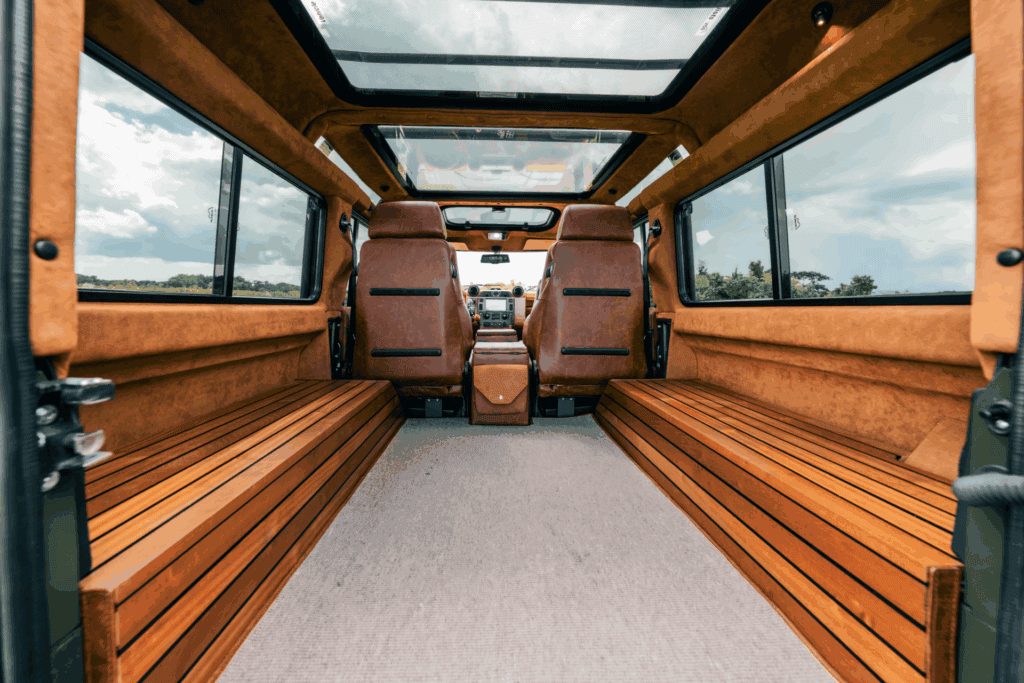
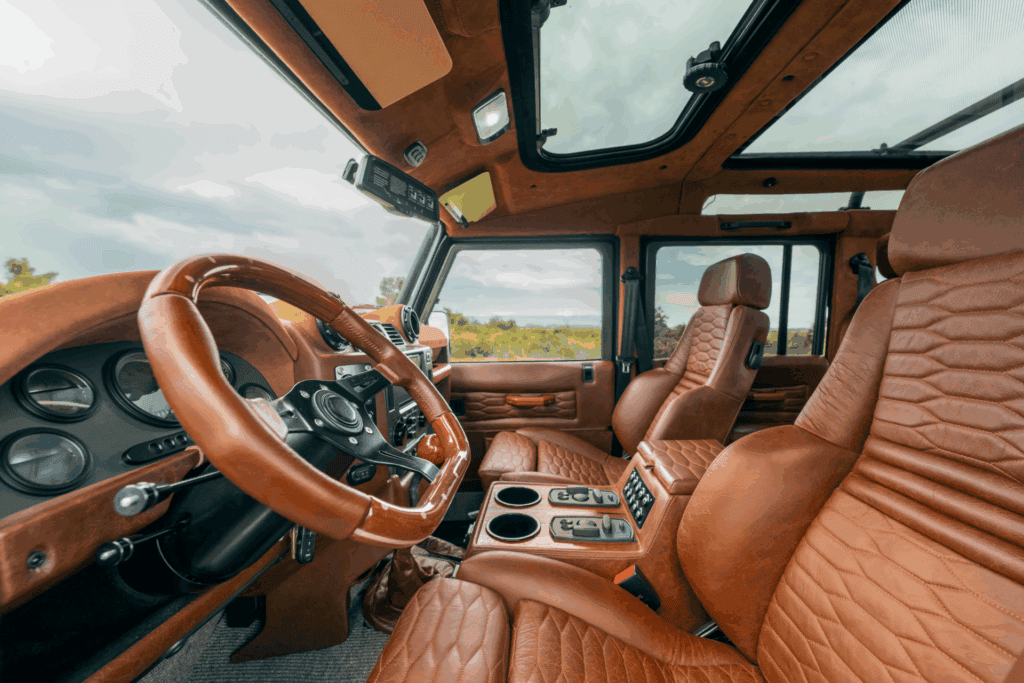
The interior is where a true restoration is easiest to evaluate in person and hardest to fake in photos. Look for a properly trimmed dash — the Puma Classic dash is a common reference point in the Defender world — wrapped in genuine leather rather than vinyl, heated front and middle-row seating, and a wiring harness built for modern electronics rather than retrofitted around the original loom.
Smaller details separate good builds from great ones: powder-coated steering wheels, custom gauge faces, factory-integrated infotainment with Bluetooth and backup cameras, and sound insulation in the bulkhead that meaningfully cuts road and engine noise on the highway.
Factory Restoration vs. Bespoke Build
Factory Restoration
Factory-style heritage restorations focus on preserving originality within tightly controlled specifications — correct period colors, original-spec components, minimal deviation from how the truck left the factory. There's real value in that approach for collectors prioritizing originality above all else.
Bespoke Build — ECD's Approach
A bespoke build takes a different approach entirely: tailoring performance, comfort, and aesthetics to how the vehicle will actually be used. Customization opens the door to modern engines, improved suspension geometry, upgraded braking systems, contemporary interiors, and technology that enhances safety and usability. For most owners — daily drivers, weekend adventurers, collectors who actually want to drive what they own — this balance of heritage and modernization creates a vehicle that feels timeless rather than dated.
What a Real Restoration Process Looks Like
A properly rebuilt Defender starts with a structurally sound frame — chassis corrosion is the single biggest red flag in any vintage Defender, original or restored, and replacement is non-negotiable for a serious build. From there, every system is addressed as part of one complete vehicle rather than as isolated upgrades: frame, drivetrain, suspension tuning, interior craftsmanship, and exterior finish.
At ECD, that process runs roughly 2,200 person-hours per vehicle, with every build undergoing a multi-point pre-delivery inspection and test miles before it ships. The result should be a vehicle that's ready to be driven, enjoyed, and relied upon — without the uncertainty that often comes with unfinished projects or lightly refreshed imports.
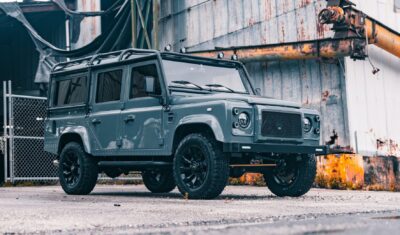
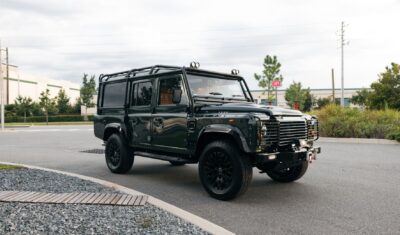
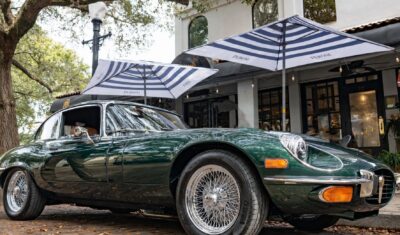
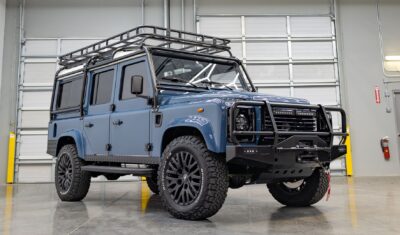
Available Now. Ready to Deliver.
Every Build Begins With a Conversation.
Tell us the model, the use, the vision — and we'll take it from there.