


Modern Tech Upgrades for Classic Vehicles: 2026 Guide
June 30, 2026
Engine upgrades are defined as mechanical modifications that replace or enhance a vehicle’s original powerplant to improve power output, fuel efficiency, and long-term durability. Understanding how engine upgrades affect classic trucks means grasping a fundamental trade-off: you gain modern performance and reliability, but you must manage the impact on originality and resale value. The most common upgrade path in the classic truck world is the LS engine swap, a term referring to General Motors’ Gen III and Gen IV V8 family. Electronic fuel injection (EFI), overdrive transmissions, and driveline geometry management are the core technical disciplines that determine whether a swap succeeds or fails. Done right, a restomod build transforms a truck that struggles to keep highway pace into a vehicle that outperforms most modern pickups.
How engine upgrades affect classic trucks: the main options
The 5.3L LS engine is the most recommended starting point for classic truck owners because it balances affordability, parts availability, and installation ease. Junkyard 5.3L units are plentiful, and the swap ecosystem around them is mature. For owners who want more, a built 6.0L LS can push well past 400 horsepower with forged internals and a performance camshaft.

Crate engines offer a third path. A factory-sealed crate unit arrives with a warranty and known specifications, removing the guesswork of a used donor engine. The trade-off is cost: crate engines carry a significant price premium over junkyard pulls, though they save labor hours on inspection and cleaning.
EFI versus carburetor is one of the most consequential choices in upgrading classic truck engines. A carbureted setup preserves period-correct aesthetics and costs less upfront. EFI, however, delivers precise fuel metering, cold-start reliability, and the fuel economy gains that make a modernized truck genuinely practical. Modern LS swaps combined with EFI and overdrive transmissions can double fuel economy compared to the original carbureted factory engine. That is not a marginal improvement. It changes the character of the truck entirely.
Transmission pairing is equally critical. The 4L60E handles moderate power levels well and fits most light-duty classic truck applications. Step up to a 6.0L build or a supercharged setup, and the 4L80E becomes the correct choice. It is heavier and requires a wider tunnel, but it handles torque that would destroy a 4L60E within a season.
| Engine Option | Approx. Parts Cost | Power Range | Best Use Case |
|---|---|---|---|
| 5.3L LS (junkyard) | $800–$1,500 | 290–320 hp stock | Budget daily driver swap |
| 6.0L LS (built) | $3,000–$5,000 | 400–500+ hp | Performance restomod |
| Crate engine (LS3/LT1) | $5,000–$9,000+ | 430–650 hp | High-end bespoke builds |
| Rebuilt original engine | $1,500–$3,500 | Stock or mild gains | Originality-focused restoration |
Pro Tip: Match your transmission to your power goal before you buy the engine. Retrofitting a 4L80E after the fact costs more in labor than choosing it correctly from the start.
Does upgrading the engine improve reliability and longevity?
Modern LS engines carry a design life exceeding 200,000 miles when properly maintained. That figure dwarfs the realistic expectation of a worn original engine in a truck built in the 1960s or 1970s. The reliability gain is real, but it only materializes when the supporting systems receive equal attention.
Cooling is the first system that demands an upgrade. The LS family runs a steam port on the front of the block that must connect to the radiator. Ignoring the steam port connection creates hot spots in the cooling system and leads to premature engine failure. A high-flow aluminum radiator with a proper coolant recovery tank is the correct solution.
Fuel system upgrades are non-negotiable for EFI conversions. The original mechanical fuel pump and low-pressure lines cannot supply the 58 psi that most LS fuel rails require. An in-tank or inline high-pressure pump, a return-style fuel system, and braided stainless lines are the standard specification for a professional build.
Wiring is where many classic truck engine modifications fail. The LS ECM must communicate with sensors, the transmission controller, and the vehicle’s existing electrical system. A standalone wiring harness designed specifically for the donor ECM eliminates the most common failure points. Attempting to splice factory truck wiring into a modern engine harness without expertise produces gremlins that take months to diagnose.
Key maintenance considerations after an engine upgrade:
- Cooling system: Flush and inspect annually; verify steam port line integrity at every service.
- Fuel system: Replace fuel filter per the EFI manufacturer’s schedule, typically every 30,000 miles.
- Tune: Recheck ECM calibration after any supporting modification, including exhaust or intake changes.
- Motor mounts: Inspect custom fabricated mounts for cracking at 12-month intervals.
- Driveline angles: Measure U-joint operating angles after any suspension change to prevent vibration and premature wear.
Pro Tip: Professional dyno tuning after installation is not optional. An improperly calibrated ECM runs the engine lean, which destroys pistons and shortens the life of a build that cost thousands of dollars.
Original drivetrain vs. engine swap: how upgrades affect value and usability
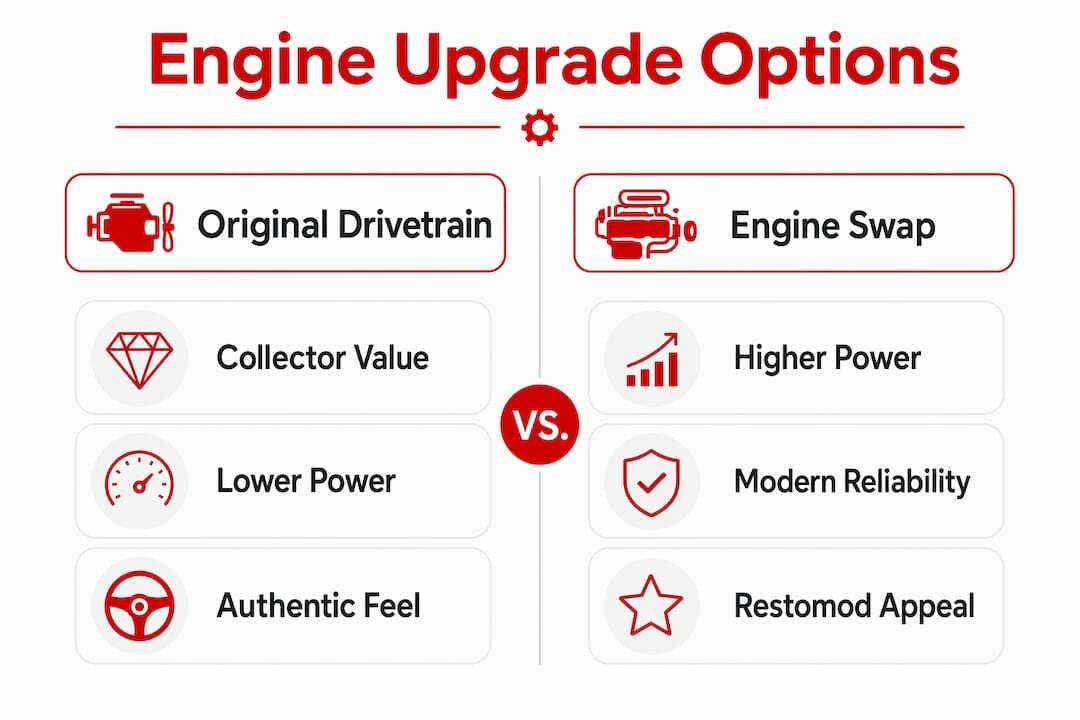
The decision between preserving the original drivetrain and pursuing a restomod swap is the central tension in classic truck ownership. Preserving originality increases collector appeal and commands a premium in the purist market. A numbers-matching truck with its factory engine intact occupies a different category entirely from a modified example, and serious collectors pay accordingly.
Restomod builds, however, serve a different owner with different priorities. A truck fitted with a modern LS, power steering, and four-wheel disc brakes is a vehicle you can drive confidently in traffic, on a road trip, or to a job site. The marriage of authenticity and capability is the defining promise of the restomod philosophy.
Resale value in the restomod segment depends heavily on build quality. A professionally executed swap with clean wiring, proper fabrication, and documented tuning commands strong prices. A cobbled-together swap with visible shortcuts depresses value below what a stock truck would bring.
Emissions regulations must be verified before any engine swap proceeds. Many states require that the replacement engine be the same year or newer than the vehicle, and California’s CARB regulations impose additional certification requirements. Non-compliance risks registration denial and fines that can exceed the cost of a compliant solution.
| Factor | Original Drivetrain | Engine Swap (Restomod) |
|---|---|---|
| Collector value | High among purists | Lower for purists, higher for restomod buyers |
| Daily usability | Limited by age and wear | Comparable to a modern truck |
| Fuel economy | Poor (carbureted, no overdrive) | Significantly improved with EFI and overdrive |
| Maintenance cost | High (obsolete parts) | Lower with modern engine availability |
| Emissions compliance | Generally exempt (pre-1976) | Must verify by state and engine year |
What does an engine upgrade actually cost?
A budget LS swap into an OBS Chevy truck starts at approximately $2,350 in parts. A high-performance 6.0L build can exceed $7,250 in parts alone before a single hour of labor is counted. Those figures represent the floor and a common ceiling for enthusiast builds, not the absolute maximum for bespoke, high-specification projects.
Hidden expenses routinely double the parts budget on classic truck engine modifications. Custom motor mount fabrication, crossmember modifications, fuel system components, a standalone wiring harness, and professional dyno tuning each carry their own line-item cost. Driveline geometry management, which means measuring and correcting U-joint operating angles after the engine and transmission are positioned, requires precision and often custom driveshaft work.
Labor cost varies dramatically between DIY and professional installation. A skilled home builder with a lift, welder, and prior swap experience can complete a 5.3L swap in 80–120 hours. A professional shop charges $75–$150 per hour depending on market and specialization. Budget at least 25% above your total parts estimate for unexpected expenses. That buffer covers the custom bracket you did not anticipate, the fuel line fitting that does not clear the frame, and the second tuning session after you change the exhaust.
Planning steps to avoid financial pitfalls:
- Define your use goal first. Daily driver, weekend show truck, and track-day restomod each require different specifications and budgets.
- Source the engine and transmission together from the same donor vehicle when possible to ensure compatibility.
- Price the complete supporting system before committing: cooling, fuel, wiring, exhaust, and mounts.
- Get a professional quote for fabrication before assuming DIY is feasible.
- Verify emissions compliance in your state before purchasing any engine.
Pro Tip: Engine upgrade projects succeed when driven by a clear use goal rather than chasing the biggest power number. Define what you want the truck to do, then select the engine and transmission combination that serves that purpose.
Key Takeaways
Engine upgrades transform classic trucks most effectively when the entire vehicle system, not just the engine, receives coordinated attention.
| Point | Details |
|---|---|
| LS swaps dominate the market | The 5.3L LS is the most recommended starting point for cost, availability, and ease of installation. |
| Reliability requires system upgrades | Cooling, fuel, and wiring must match the new engine or longevity gains disappear quickly. |
| Cost ranges are wide | Budget swaps start near $2,350 in parts; performance builds exceed $7,250 before labor. |
| Originality vs. usability is a real trade-off | Preserved drivetrains command collector premiums; restomods deliver modern daily-driver capability. |
| Emissions compliance is non-negotiable | Verify local regulations before purchasing an engine to avoid registration denial or fines. |
The full-system mindset separates great builds from expensive mistakes
The trucks I respect most are not the ones with the biggest engine. They are the ones where every system was upgraded with the same intention as the powerplant. I have seen builds with 500-horsepower LS engines sitting on original drum brakes and factory leaf springs. That is not a restomod. That is a liability.
Expert builders consistently emphasize that brakes, suspension, and wiring must match the engine upgrade for the vehicle to be safe and genuinely drivable. Power without control is not performance. It is provenance squandered.
The restomod culture is maturing. Owners are moving past the era of “drop in an LS and call it done.” The builds that command attention and strong resale prices today are the ones with clean engine bays, properly routed harnesses, and suspension geometry that was engineered rather than improvised. That shift reflects a deeper understanding of what classic truck performance enhancements actually require.
Legal compliance deserves the same seriousness as mechanical execution. An engine swap that fails emissions inspection is not a finished build. It is an unregistered project sitting in a garage. Verify your state’s requirements before you buy the engine, not after the swap is complete.
The most honest advice I can offer: treat your classic truck upgrade as a vehicle improvement program, not a parts installation. Every system is connected. The engine choice sets the ceiling, but the supporting work determines whether you ever reach it.
— Evolve
Ecdautodesign and the art of the purposeful classic build
Ecdautodesign has spent years perfecting the discipline of transforming classic vehicles into bespoke, ground-up builds that honor heritage while delivering genuine modern capability. Every build begins with a clear brief: what does this vehicle need to do, and what level of craftsmanship does the owner expect?
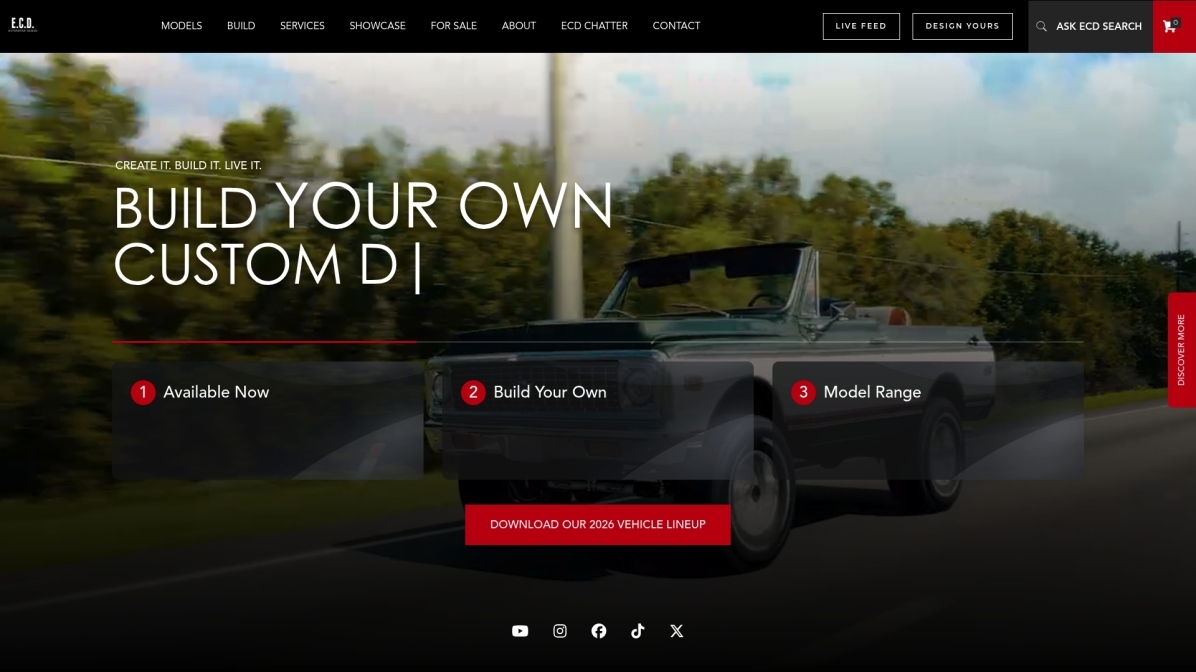
For classic truck enthusiasts who want that same level of intentional engineering applied to their project, Ecdautodesign’s approach to custom restoration builds offers a compelling reference point. The process covers every system, from drivetrain selection to suspension calibration, with the same meticulous attention that separates a finished vehicle from a perpetual project. If you are planning a serious classic truck upgrade and want to understand what a fully engineered build looks like, Ecdautodesign’s portfolio is worth your time.
FAQ
What is the best engine swap for a classic truck?
The 5.3L LS engine is the most recommended starting point for classic truck swaps due to its affordability, wide parts availability, and straightforward installation. Owners seeking higher performance can step up to a built 6.0L LS or a crate engine like the LS3.
How much does a classic truck engine swap cost?
A budget LS swap starts at approximately $2,350 in parts, while a high-performance 6.0L build can exceed $7,250 in parts before labor. Hidden costs including custom fabrication, fuel system components, and professional tuning routinely double the initial parts estimate.
Does an engine swap hurt a classic truck’s resale value?
A professionally executed swap can increase resale value in the restomod market, but it reduces collector appeal for purists who prize numbers-matching originality. Build quality and documentation are the primary factors that determine whether a swapped truck commands a premium or a discount.
Do I need to check emissions laws before swapping a classic truck engine?
Emissions regulations must be verified before any engine swap, as non-compliance can result in registration denial and fines. Many states require the replacement engine to be the same year or newer than the vehicle, and California imposes additional CARB certification requirements.
What supporting systems need upgrading alongside a new engine?
Cooling, fuel delivery, and wiring are the three systems that most commonly cause failures in classic truck engine upgrades when left unaddressed. Brakes and suspension should also be upgraded to match the increased power output for safe, balanced performance.
Recommended
- Custom Engine Options for the Range Rover Classic – Custom Defender | Restored Defender Specialists | ECD Auto Design
- Auto Evolution: Range Rover Classic Hides LT4 Surprise With More Power Than Supercharged 2021 – Custom Defender | Restored Defender Specialists | ECD Auto Design
- Blog – Custom Defender | Restored Defender Specialists | ECD Auto Design
- Blog – Custom Defender | Restored Defender Specialists | ECD Auto Design
FREQUENTLY ASKED
QUESTIONS
No FAQs configured yet.