

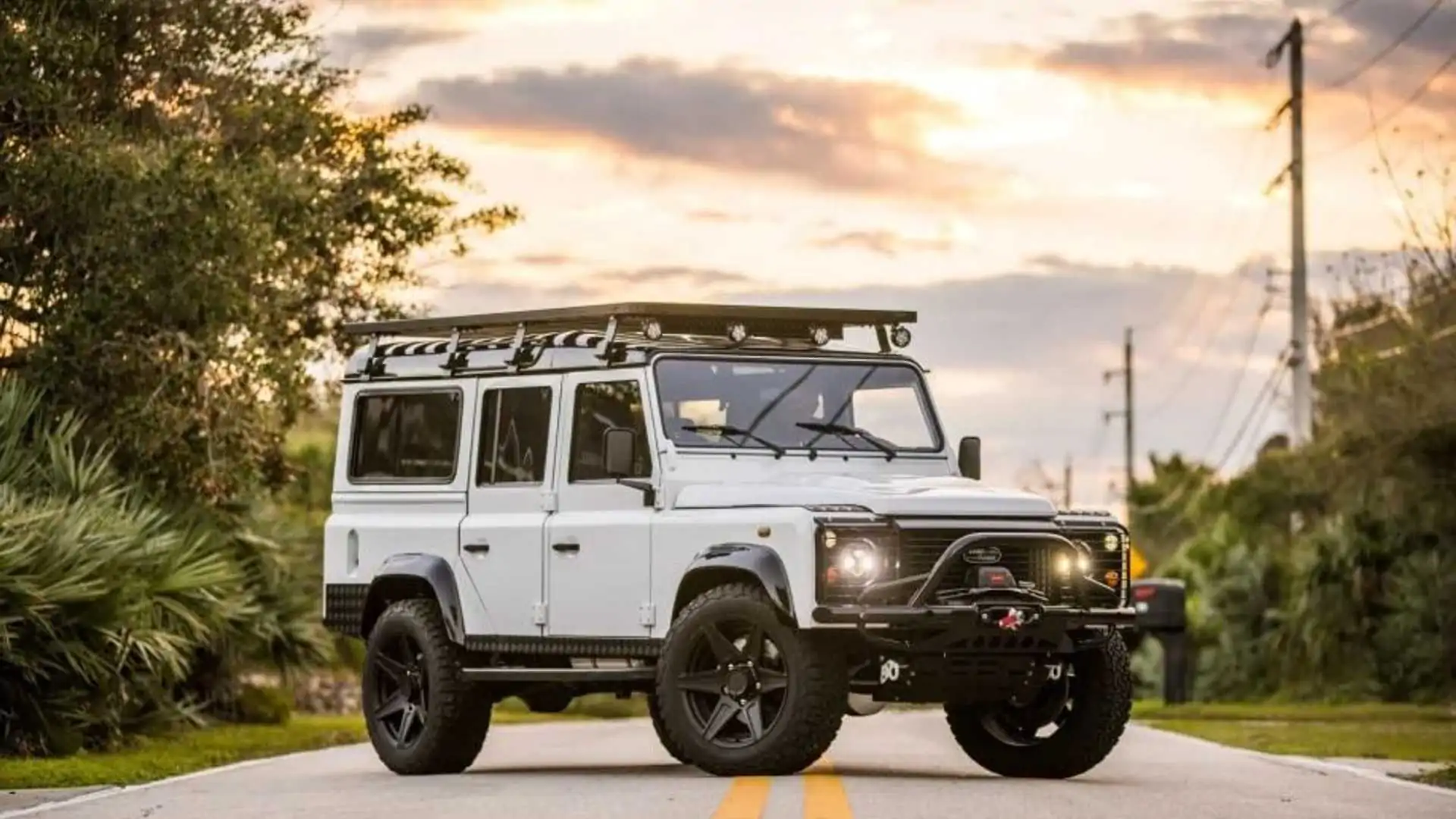
Why Restored Defenders Suit Daily Driving in 2026
July 13, 2026
Why Bespoke Vehicles Reflect Personal Brand Identity
July 14, 2026
The Defender left the factory as a working vehicle. Farm gates, gravel tracks, and river crossings shaped its design long before anyone considered it a lifestyle machine, and that origin still defines what it feels like to drive one in stock form. Heavy steering, a rough idle, drum brakes on early trucks, and a cabin that treats sound insulation as an afterthought. That honesty is part of the appeal, but it also explains why almost every owner starts a list of upgrades within the first few months of ownership. The best Defender upgrades tend to follow a predictable order, because the same handful of changes transform the truck the most.
The Engine Swap Comes First for a Reason
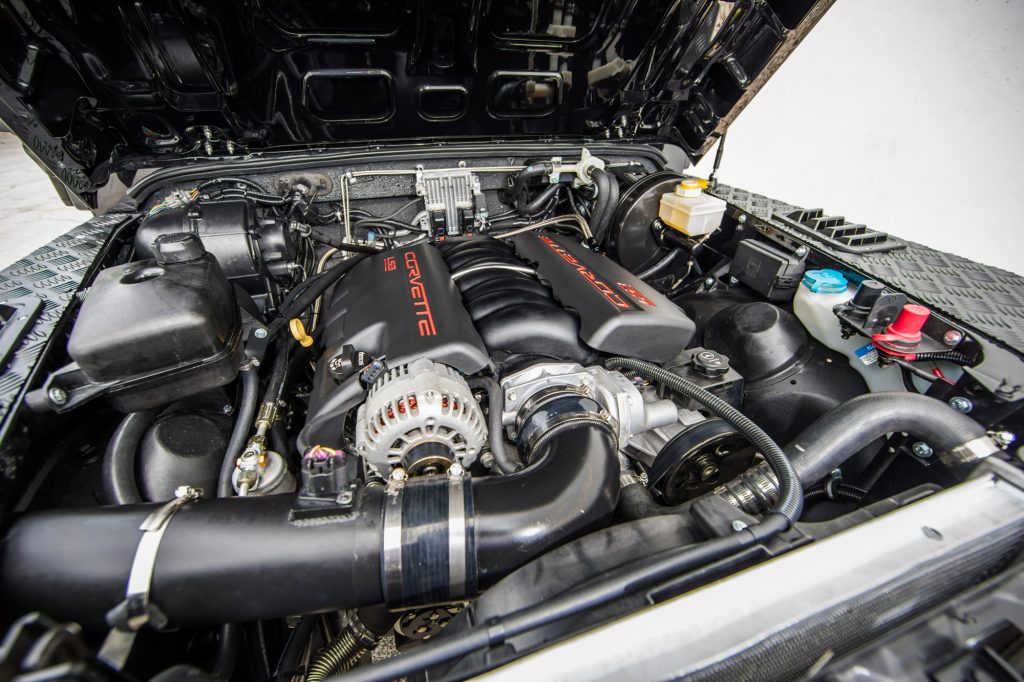
Ask a room full of Defender owners which single change mattered most and the answer is nearly unanimous: the drivetrain. The original 200Tdi and 300Tdi diesels are durable, but they were built for torque at walking pace, not for merging onto an American interstate. A modern V8 swap solves that in one move. The GM LS3 crate engine has become the default choice in the Defender community because it delivers around 430 horsepower, starts on the first turn of the key in any weather, and has parts support at any auto shop in the country. Owners who want more choose the LT1 at 450 horsepower, and diesel loyalists gravitate to the Cummins 2.8L turbodiesel, which produces roughly four times the torque of the original engine while keeping the character of an oil burner.
The swap matters because it changes how often the truck gets driven. A stock diesel Defender becomes a weekend novelty. A V8 Defender becomes the vehicle you take to dinner, on road trips, and to school pickup, which is the difference most owners are actually paying for.
A Modern Transmission Changes the Truck More Than the Engine Does
This one surprises people. The factory manual gearbox is long of throw, vague between gates, and paired with clutch effort that turns city traffic into a leg workout. Pairing a modern engine with a 6, 8, or 10 speed automatic is what makes a Defender feel usable rather than merely fast. Highway cruising drops the revs, the truck stops lurching in stop and go traffic, and passengers stop bracing against the dash. Owners who have driven both configurations rarely go back to three pedals unless the truck is a dedicated trail rig.
Suspension: Where Comfort Actually Comes From
Leaf and coil setups from the original truck transmit every expansion joint straight into the seat. Upgraded coil springs with modern dampers are the entry point, and a full air ride system is the destination. Air suspension lets the truck kneel for passengers, level itself under load, and soak up broken pavement in a way no period correct setup can. For owners who use their Defender as a daily driver, suspension is the upgrade they notice every single day, which is why it rarely gets regretted.
Brakes and Steering Catch the Truck Up to Its New Power
Adding 400 plus horsepower to a vehicle designed around 110 makes braking a safety upgrade, not a comfort one. Four wheel disc conversions with performance pads and rotors, such as EBC kits, bring stopping distances into modern territory. Power steering conversions do the same for low speed maneuvering. A stock Defender at a parking lot crawl demands real shoulder effort; a converted truck can be steered with two fingers. Both upgrades disappear into the background, which is exactly what good engineering should do.
Seats, Sound, and Climate: The Cabin Upgrades Owners Never Undo
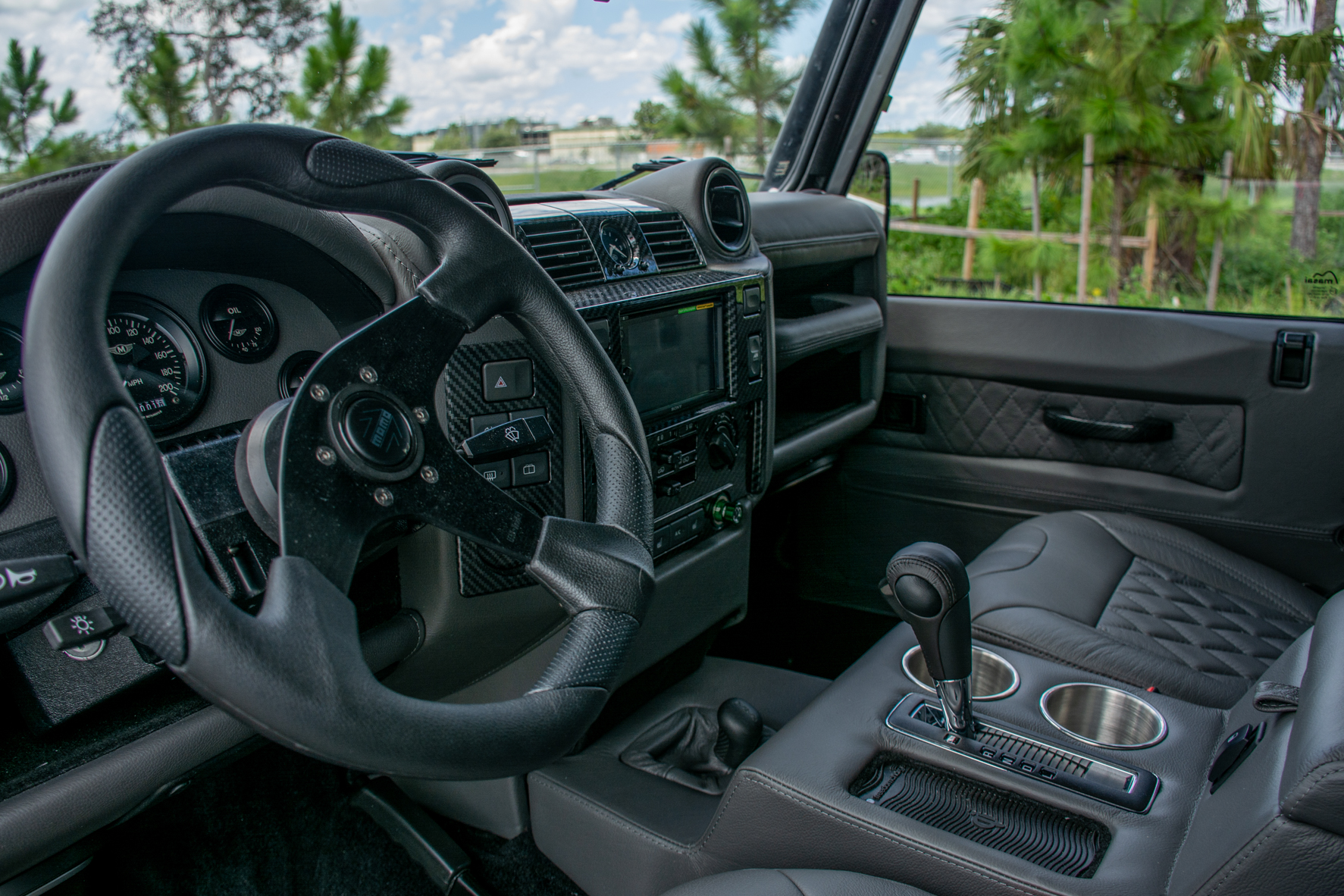
Factory Defender seats are flat, thin, and mounted at an angle that seems designed by someone who never sat in them. Heated and ventilated seats in the Puma or Corbeau style are the most common interior request, followed closely by proper sound deadening throughout the tub and bulkhead. Thick insulation and wool carpet turn the interior from an echo chamber into a place where conversation happens at normal volume. Dual zone climate control finishes the job. Florida summers and Colorado winters both stop being an argument against taking the Defender.
Wheels, Tires, and the Details That Finish the Build
Sawtooth style 18 inch wheels wrapped in BFGoodrich all terrains have become the modern Defender signature, sharpening on road manners without surrendering the off road stance. LED headlight and lighting conversions correct one of the truck’s genuine weaknesses at night. Discreet modern infotainment with wireless CarPlay, hidden behind a period appropriate fascia, rounds out the list. None of these are dramatic on their own. Together they close the gap between a truck designed in the 1980s and the way people actually live now.
The Upgrade Path Most Owners Wish They Had Taken From the Start
There is a pattern in how these projects unfold. Owners upgrade piecemeal over several years, spend more than they planned, and end up with a truck that was off the road for long stretches. The alternative is choosing a classic that arrives with all of it already engineered as a system: drivetrain, suspension, brakes, interior, and electrics designed to work together from a bare galvanized chassis up. That is the approach behind a Custom Defender from ECD Auto Design, where the buyer specifies every element in a single design process instead of chasing upgrades one at a time. The same philosophy applies whether the platform is a two door D90, a four door D110, or the long wheelbase D130.
Whichever route an owner takes, the list above holds. Power, gearbox, suspension, brakes, seats, and sound. Get those six right and the Defender stops being a compromise and starts being the vehicle that gets chosen over everything else in the driveway.
FREQUENTLY ASKED
QUESTIONS
No FAQs configured yet.