


How Custom Paint Processes Work: A Car Enthusiast’s Guide
July 16, 2026
Vehicle Build Sheet Explained: What Buyers Must Know
July 20, 2026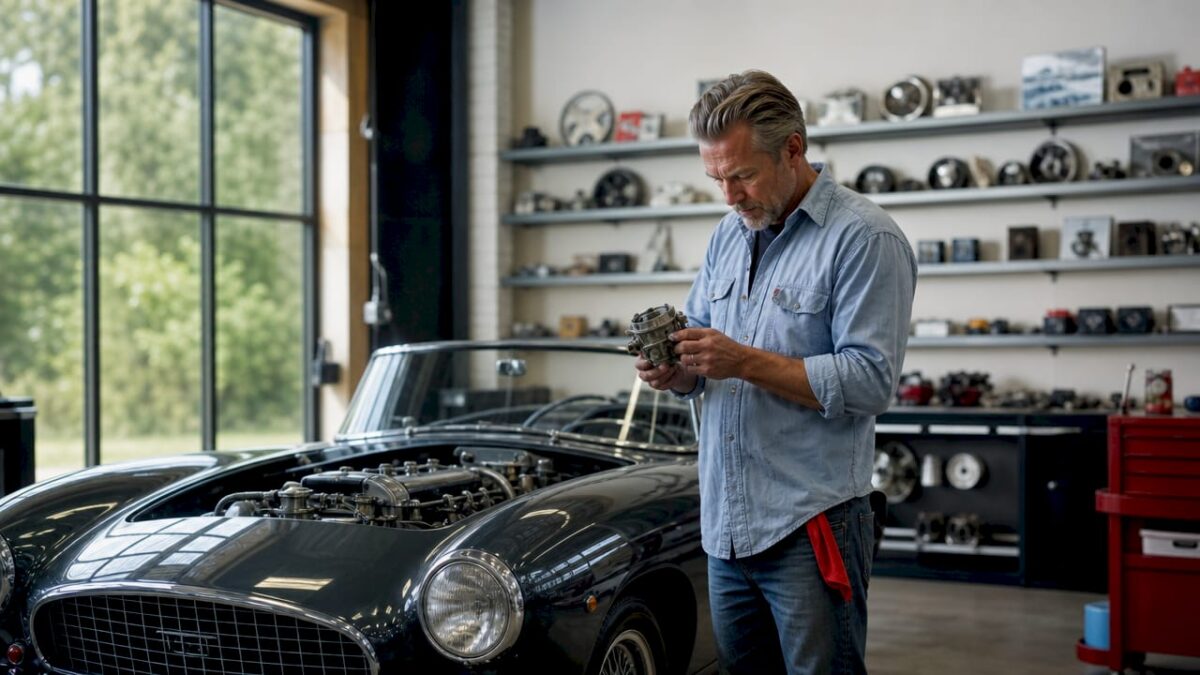
A concours-ready restoration is defined as the Grade 1 standard of classic car restoration, returning a vehicle to exact factory condition with period-correct authenticity in every component, from fasteners to finishes. The industry term is “concours condition,” and it represents the pinnacle of what the collector car world recognizes as complete, uncompromising restoration. This standard demands that every hose clip, paint code, interior stitch, and engine bay marking match the original factory build record. Concours condition is not about making a car look its best. It is about making it correct. The investment reflects that: a full concours restoration typically requires 4,000 to 5,000 hours of labor and can cost at least $500,000.
What makes a restoration concours-ready?
A concours-ready restoration meets one non-negotiable standard: historical accuracy in every detail. Judges at elite events like Pebble Beach Concours d’Elegance are marque experts. They do not admire gloss. They verify correctness. A car that looks stunning but carries the wrong grade of paint sheen or a modern rubber seal will lose points immediately.
The criteria that define concours quality standards include:
- Period-correct materials throughout. Every rubber, fabric, metal, and adhesive must match what the factory used in the original production year. Substituting a modern equivalent, even a superior one, is a deduction.
- Factory-original specifications. Color, trim level, and configuration must match the original build record. Deviating from factory specs often disqualifies a car from competitive concours shows entirely.
- Correct hardware and fasteners. Hose clips, bolt finishes, and wiring looms are scrutinized. A stainless steel bolt on a car that left the factory with a zinc-plated one is a visible error to a trained judge.
- Provenance documentation. Build records, factory photographs, and ownership history support every claim of authenticity. Without documentation, a restorer is guessing, and judges know the difference.
- Credible wear, not perfection. A car restored to concours standard should show the kind of aging consistent with careful use, not the sterile perfection of a showroom prop.
One of the most misunderstood aspects of concours preparation is the danger of over-restoration. Modern paint and chrome finishes that exceed period specifications cause point deductions. Judges reward period-correct rightness over maximal sheen. A car that looks “too good” for its era is, paradoxically, wrong.
Pro Tip: Before sourcing a single part, build a complete reference archive. Gather factory build sheets, period press photographs, and marque club technical bulletins. This archive becomes your restoration bible and your defense against every judge’s question.
What does the concours restoration process involve?
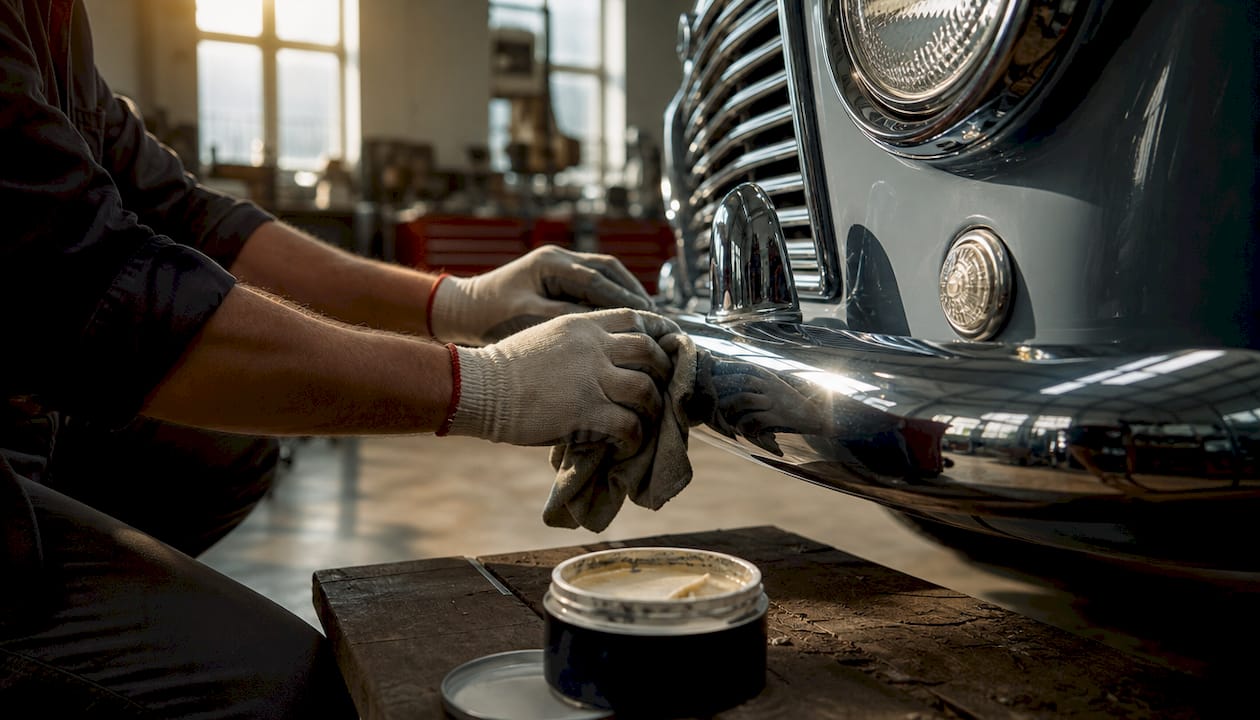
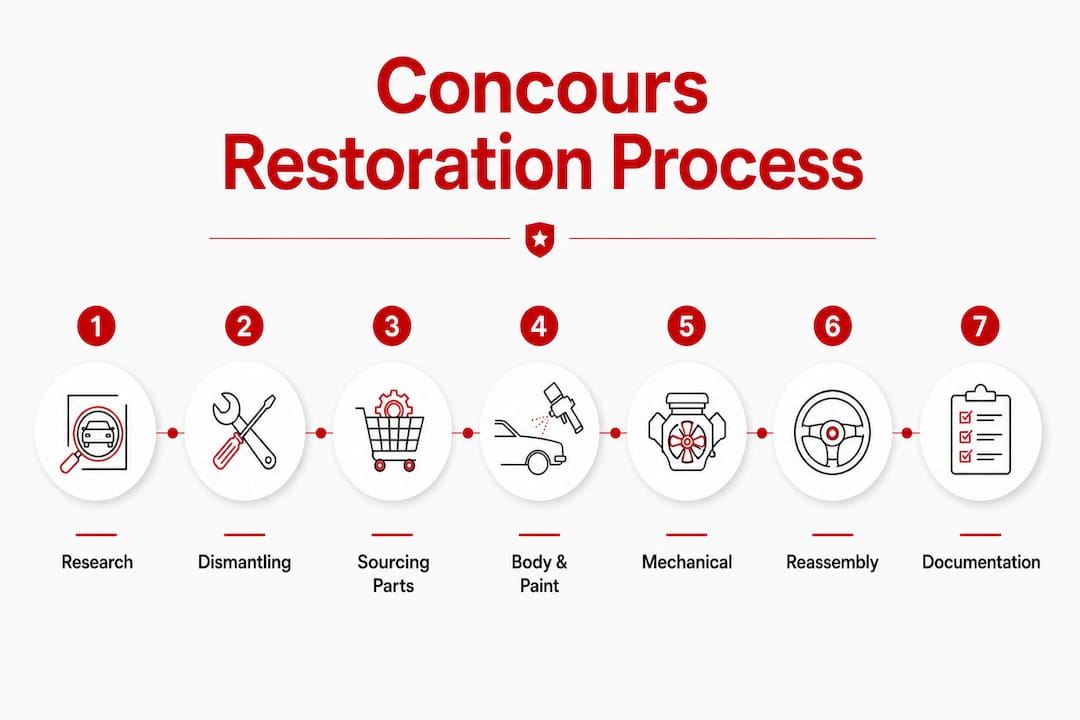
The concours restoration process is a structured, multi-phase undertaking that demands as much discipline as craftsmanship. Understanding the full scope prevents costly mistakes and timeline surprises.
-
Complete disassembly with photographic documentation. Every panel, bracket, wire, and clip is removed and cataloged. Thousands of pre-disassembly photographs are standard practice. These images become the reference for every reassembly decision.
-
Structural assessment and body-off restoration. With the body removed from the chassis, restorers address hidden rust, stress cracks, and metal fatigue. This phase frequently reveals damage that extends the timeline by months.
-
Parts sourcing and verification. Period-correct parts must be located, authenticated, and sometimes fabricated to original specifications. This is where timelines stretch. Rare components for low-volume classic cars can take a year or more to source.
-
Bodywork, paint, and finish. Paint must match the original factory color code and finish level. The preparation work beneath the paint, including metal finishing and primer selection, is as important as the topcoat.
-
Mechanical rebuild. Engine, transmission, suspension, and brakes are rebuilt to factory specifications. Mechanical assembly cannot begin until bodywork and painting are complete, making interdepartmental timing critical.
-
Interior and trim restoration. Upholstery, carpets, headliners, and trim pieces are restored or replicated using period-correct materials and stitching patterns.
-
Final assembly and detailing. Every component is reinstalled in the correct sequence, torqued to factory specifications, and verified against the reference archive.
A full concours restoration takes 11 months to over 3 years, with timelines of 3 to 5 years common when parts sourcing delays and hidden structural damage compound. That scale of commitment is not a warning. It is the price of doing this correctly.
How does concours judging work?
Concours judging is a forensic exercise, not an aesthetic one. Judges are typically marque specialists with decades of ownership and research experience. They bring reference materials to the field and verify details that most restorers never consider.
What judges actually evaluate
Paint quality, panel fit, engine bay presentation, and mechanical readiness all influence scores heavily. Signs of leaks, corrosion, or incorrect parts cause point losses regardless of how the exterior looks. A car with a flawless body but an engine bay fitted with the wrong dipstick handle will score below a car with minor cosmetic imperfections but total mechanical correctness.
Restored vs. preservation classes
Most major concours events offer two primary competition classes. The table below shows how they differ:
| Category | Restored class | Preservation class |
|---|---|---|
| Condition standard | Returned to factory-new specification | Original, unrestored, with authentic patina |
| Judging focus | Accuracy of restoration work | Originality and survival of factory materials |
| Scoring advantage | Rewards research and execution | Often scores higher if authenticity is intact |
| Typical entrant | Professionally restored classics | Low-mileage, single-owner survivors |
Preservation classes allow original unrestored cars to compete and frequently outscore restorations when factory materials survive intact. This reflects the market’s growing respect for documented originality over cosmetic intervention.
Pro Tip: Enter your car in a regional show one season before targeting a major event like Pebble Beach. Regional judges provide written score sheets. Those sheets are a free education in exactly what your car needs before the national stage.
What are the benefits of a concours restoration?
The benefits of concours restoration extend well beyond a trophy. They are financial, historical, and mechanical.
- Investment-grade value. The classic car market increasingly values historical accuracy and documented originality over flashy finishes. A fully documented concours restoration commands a significant premium at auction over an undocumented or cosmetically restored example.
- Mechanical reliability. A concours-grade rebuild addresses every system to factory specification. The result is a car that performs as its engineers intended, not as decades of deferred maintenance left it.
- Historical preservation. Each concours restoration preserves a piece of automotive history in its most accurate form. The car becomes a primary source, not a replica.
- Elite show eligibility. Only cars meeting concours quality standards qualify for invitation-only events. Pebble Beach, Villa d’Este, and Amelia Island represent the pinnacle of collector recognition, and entry requires documented, period-correct work.
- Graceful aging. Period-correct finishes and materials age in ways consistent with the car’s era. Modern substitutes often age poorly by comparison, creating visual anachronisms that reduce long-term value.
Successful concours entrants spend months researching archival build records and provenance before a single bolt is removed. That research investment is what separates a car that wins from one that merely competes.
Key Takeaways
A concours restoration succeeds only when period-correct authenticity, rigorous documentation, and precise interdepartmental coordination are treated as equal priorities from day one.
| Point | Details |
|---|---|
| Grade 1 standard | Concours condition requires exact factory replication, not cosmetic improvement. |
| Documentation is foundational | Archival research and pre-disassembly photographs are as critical as the mechanical work. |
| Over-restoration causes deductions | Modern finishes exceeding period specs cost points; judges reward correctness over gloss. |
| Timeline and cost are substantial | Expect 4,000–5,000 labor hours, 11 months to 3+ years, and costs starting at $500,000. |
| Preservation classes often outscore restorations | Unrestored survivors with intact factory materials frequently beat restored cars in judging. |
What I’ve learned from watching concours restorations up close
The restorers who win at the highest level share one habit that separates them from everyone else: they treat the research phase as the most important phase. Not the paint. Not the engine rebuild. The research. They spend weeks in marque club archives before they touch the car, and they build a reference library that would satisfy a museum curator.
The temptation to over-restore is real and understandable. When you have a car stripped to bare metal, the instinct is to make everything perfect. That instinct is the enemy of a concours score. Period-correct rightness and visual perfection are not the same thing, and confusing them is the most common mistake I see in otherwise excellent restorations.
What I find genuinely compelling about the concours discipline is that it treats craftsmanship as a form of scholarship. The best restorers are also historians. They understand that their job is not to improve the car. Their job is to tell the car’s story with complete fidelity. That distinction changes every decision they make, from which fastener finish to specify to which shade of black to use on the engine block.
Concours work also rewards patience in a way that few disciplines do. Refinement across multiple show seasons, incorporating judge feedback and deeper archival research, produces cars that improve year over year. The discipline is both art and scholarship. That combination is rare, and it is why the results command the respect they do.
— Evolve
Ecdautodesign’s approach to concours-grade classic builds
Ecdautodesign has built its reputation on ground-up restorations that treat authenticity and performance as inseparable. Every build begins with the same discipline that defines concours preparation: complete disassembly, structural verification, and period-correct sourcing before a single finish decision is made.

For collectors who want a classic Land Rover Defender restored to the highest standard, Ecdautodesign’s bespoke Defender builds demonstrate what concours-grade attention to detail looks like in a vehicle built for both show and genuine use. The atelier approach means every configuration detail, from drivetrain to interior finish, is documented and deliberate. If you are ready to commission a build that reflects this standard, explore the full restoration portfolio and start the conversation.
FAQ
What is a concours restoration in simple terms?
A concours restoration returns a classic car to its exact original factory condition using period-correct materials, finishes, and specifications throughout. It is the highest recognized standard in classic car restoration.
How long does a concours restoration take?
A concours restoration typically takes 11 months to over 3 years, with timelines of 3 to 5 years common when parts sourcing delays and hidden structural damage are factored in.
Why do judges penalize over-restoration?
Judges penalize over-restoration because using modern materials or finishes that exceed period specifications breaks historical accuracy. Concours judging rewards period-correct rightness, not maximum gloss or shine.
What documentation do I need for a concours entry?
Restorers need factory build records, archival photographs, provenance history, and thousands of pre-disassembly images to support every authenticity claim during judging.
Can an unrestored car beat a fully restored one at a concours event?
Yes. Preservation class entries with intact factory materials and documented originality frequently outscore restored cars, because judges prioritize surviving authenticity over restoration quality.
Recommended
- Car & Driver | How to Give Your Ride a Showroom Shine, from a Car Restoration Expert – ECD Auto Design
- Ground-Up Defender Restoration: A Complete Process Guide
- Everything You Need to Know About Maintaining Your Vintage Restoration – Custom Defender | Restored Defender Specialists | ECD Auto Design
- DuPont Registry | 7 Modernized Defender Restorations For Sale At E.C.D. Automotive – Custom Defender | Restored Defender Specialists | ECD Auto Design
FREQUENTLY ASKED
QUESTIONS
No FAQs configured yet.