


Grace, Pace, and Modern Space: Upgrades to Elevate a Vintage Modified Jaguar
September 24, 2025
Why Restored Vehicles Suit Executive Lifestyles
July 15, 2026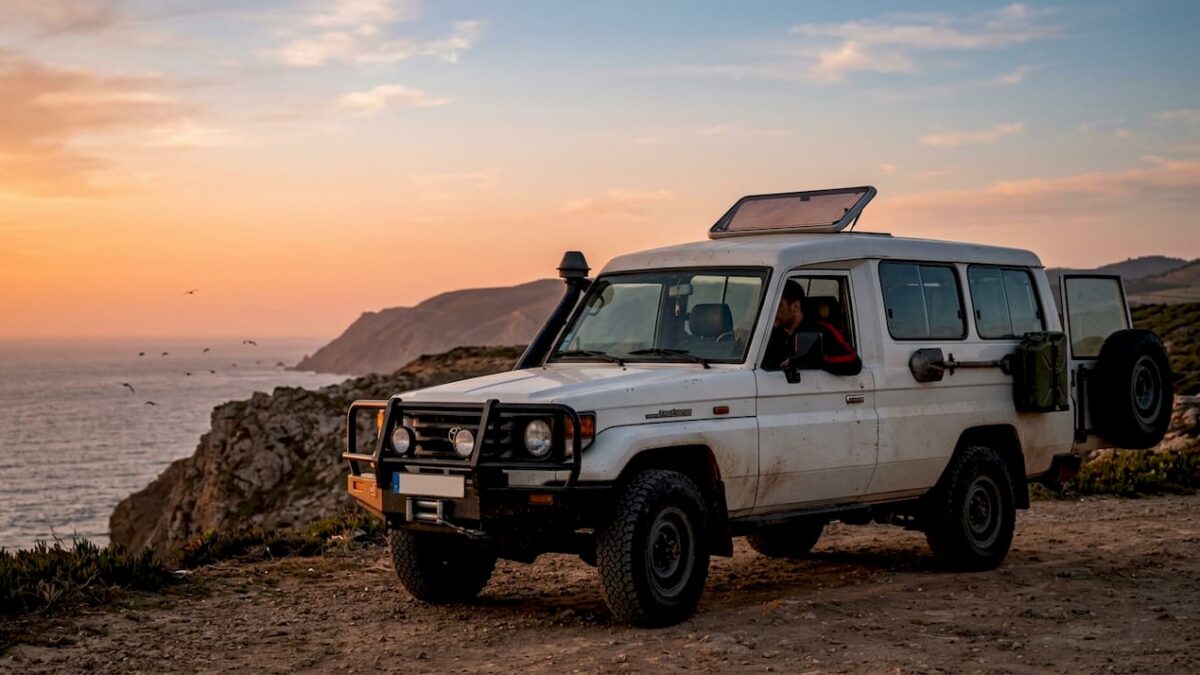
A safari-ready vehicle is defined as a purpose-built or specially modified off-road vehicle designed to handle rugged safari terrain while maximizing passenger comfort and wildlife viewing. The industry benchmark in 2026 is the custom-modified Toyota Land Cruiser, configured for 5–7 passengers with a pop-up roof and heavy-duty suspension. These vehicles go far beyond standard 4×4 trucks. They combine high ground clearance, diesel-powered torque, reinforced tires, and purpose-designed interiors to create a marriage of authenticity and capability. Understanding what makes a vehicle safari-ready helps you choose the right rig before you ever set wheel on African soil.
What is a safari-ready vehicle, and what defines one?
A safari-ready vehicle is any truck, van, or purpose-built 4×4 modified to meet the specific demands of wildlife safari routes. The industry uses the term “safari vehicle” to describe this category, though “safari-ready” captures the modification-first mindset that separates a capable rig from a standard SUV. Three core requirements define the category: sufficient ground clearance to clear rocky tracks, a viewing platform (pop-up roof or open sides) for unobstructed wildlife sightings, and a drivetrain built for low-speed traction over long distances.
Passenger safety and equal viewing access are equally central to the design philosophy. Every passenger gets a window seat in a properly configured safari vehicle, so no one waits for a wildlife sighting while another guest blocks the view. That design principle shapes everything from seating width to roof hatch placement.
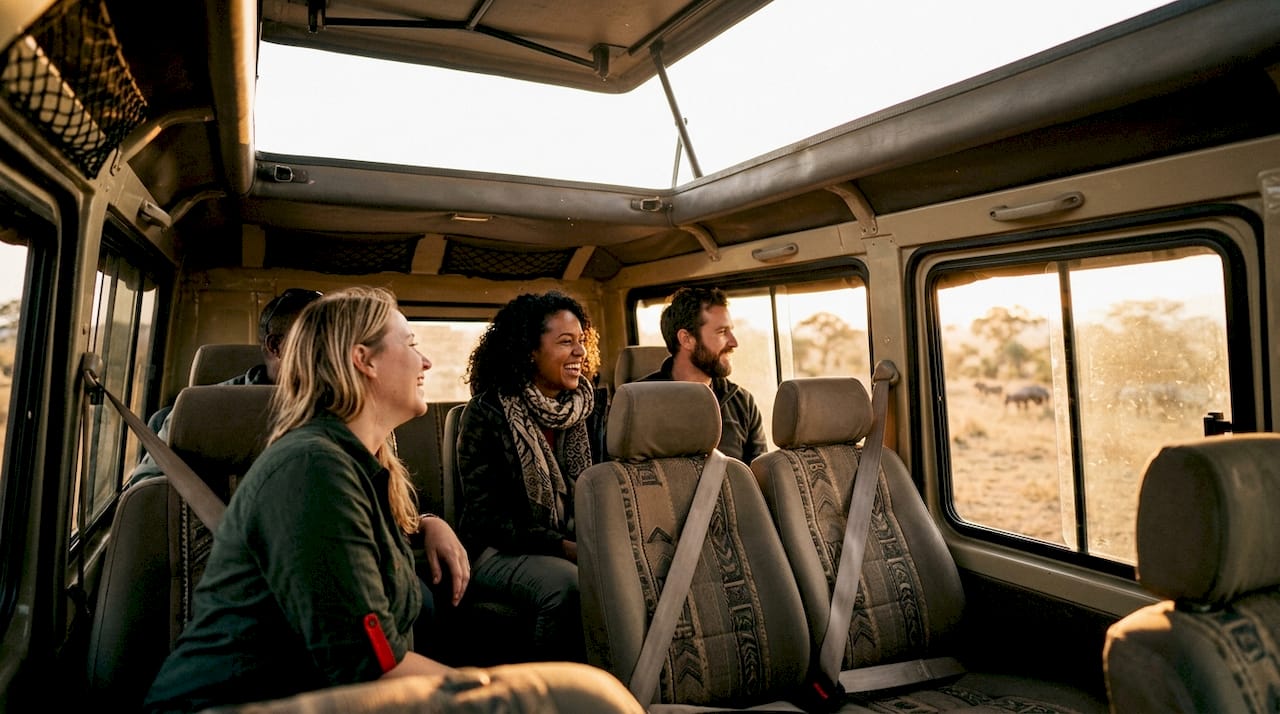
The Toyota Land Cruiser has held the benchmark position for decades because it balances all three requirements at scale. Its platform accepts heavy-duty suspension lifts, roof conversions, and extended wheelbases without sacrificing the reliability that remote routes demand. That said, the Land Cruiser is a starting point, not the only answer.
What are the primary features that make a vehicle safari-ready?
Safari vehicle features fall into three categories: terrain capability, viewing design, and passenger comfort. Each category contains non-negotiable elements that separate a safari-ready build from a capable but unmodified truck.
Terrain capability
- Ground clearance: A minimum of 8–9 inches of clearance keeps the chassis above rocks, ruts, and eroded track edges.
- Heavy-duty suspension: Long-travel coil or leaf springs absorb the constant vibration of corrugated dirt roads without fatiguing passengers.
- Reinforced all-terrain tires: Standard sidewalls crack on Namibia’s volcanic gravel. Reinforced sidewalls resist punctures and cuts across sharp terrain.
- 4WD system: A proper four-wheel drive system with low-range gearing provides the traction needed on sandy, muddy, or steep tracks.
Viewing and access design
- Pop-up roof hatches: These allow passengers to stand and scan 360 degrees without leaving the vehicle, which is the standard for most East African parks.
- Open sides: Open-sided vehicles offer unmatched visibility and immersion but provide less protection from dust and weather than pop-up roof vehicles. Photographers and wildlife enthusiasts favor this format for its unobstructed sightlines.
- Elevated seating rows: Tiered bench seating lifts rear passengers above the roofline of the vehicle ahead, preserving sightlines even in convoy.
Passenger comfort and practical fittings
Comfort on safari depends on functional design rather than luxury appointments. Leather upholstery is impractical in dusty environments. What matters is fatigue-preventing seat padding, airflow from roof hatches and side windows, charging ports for cameras and phones, and a cooler box for water and snacks on long drives.
Pro Tip: Ask your outfitter whether the vehicle has individual seat belts for every position. Many older safari conversions omit belts on rear bench seats, which creates a safety gap on rough tracks.
Diesel engines dominate safari vehicles because of their superior low-end torque and fuel efficiency over long distances. Petrol engines demand more frequent refueling and deliver less traction in deep sand or mud, where torque at low RPM is the deciding factor.
What types of safari vehicles exist, and how do they differ?
Safari vehicles fall into three main categories: open-sided 4x4s, pop-up roof 4×4 Land Cruisers, and safari vans used on well-maintained roads. Each type suits a different combination of terrain, budget, and passenger count.
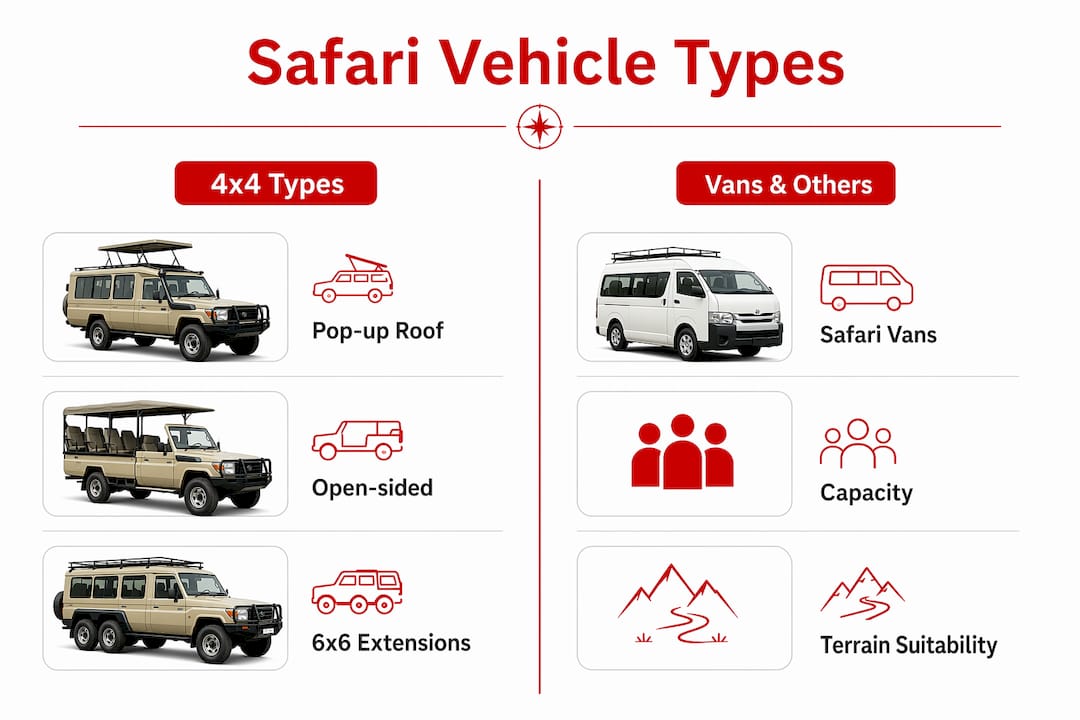
| Vehicle type | Passenger capacity | Best terrain | Key trade-off |
|---|---|---|---|
| Pop-up roof 4×4 (standard) | 5–7 | Rocky, sandy, mixed | Enclosed but versatile |
| 6×6 extended 4×4 | Up to 9 | Muddy, heavy-load routes | Wide turning circle |
| Open-sided 4×4 | 4–6 | Dry season, flat terrain | Exposed to dust and rain |
| Safari van | 6–9 | Paved or graded roads | Limited off-road ability |
The standard pop-up roof 4×4 is the workhorse of East African safari circuits. It handles the widest range of terrain and keeps passengers protected from afternoon rain showers while still offering full standing views.
6×6 safari vehicles add traction and load capacity for heavy cargo and muddy tracks, but they carry a wider turning circle and compact soft ground more than a standard 4×4. Operators in the wet-season Serengeti favor them, but they are not the default choice for most itineraries.
Safari vans are the most affordable option and work well on Kenya’s well-graded Masai Mara circuits. Their pop-up roofs provide adequate viewing, but their 2WD drivetrains make them unsuitable for remote or seasonal routes. Open-sided vehicles deliver the most immersive experience and are the format of choice for photography-focused safaris in dry conditions.
How does terrain affect which safari vehicle you need?
Terrain is the single most decisive factor in safari vehicle selection. Not every route demands a full 4×4 build, but the consequences of choosing wrong are severe enough to ruin an itinerary.
High-clearance 2WD vehicles handle most tourist routes, but 4×4 capability is non-negotiable for remote, sandy, or volcanic gravel terrain like Namibia and Botswana. Namibia’s volcanic gravel is particularly destructive to standard tires. The sharp, angular stones cut sidewalls that would survive asphalt or compacted dirt without issue.
Key terrain considerations by environment:
- Sandy tracks (Botswana, Kalahari): Require 4WD low-range and reduced tire pressure to float over loose sand rather than dig in.
- Volcanic gravel (Namibia): Demand reinforced all-terrain sidewalls and slower speeds to prevent blowouts.
- Muddy seasonal routes (Serengeti wet season): Favor 6×6 configurations or aggressive mud-terrain tires with self-recovery gear.
- Rocky highland tracks (Ethiopia, Rwanda): Require high ground clearance and long-travel suspension to protect the undercarriage.
- Well-graded park roads (Masai Mara, Kruger): Permit high-clearance 2WD or standard safari vans without modification.
Weight distribution matters as much as drivetrain choice. A heavily loaded vehicle with poor weight balance loses traction and handling on loose surfaces, even with 4WD engaged. Roof-mounted gear raises the center of gravity and increases rollover risk on side-sloped terrain.
Pro Tip: If your safari crosses multiple countries or terrain types, prioritize a 4×4 with a full-size spare and a basic recovery kit. A single flat tire on a remote Botswana track without a spare ends the drive.
The role of 4×4 vehicles in demanding environments extends well beyond Africa. The same principles of traction, clearance, and low-range gearing apply wherever roads disappear and terrain takes over.
What practical design choices improve the safari experience?
The best safari vehicles are engineered around the passenger experience, not just the terrain. A vehicle that handles mud flawlessly but leaves guests exhausted after three hours on corrugated tracks has failed its primary purpose.
Seating design is the most underrated element. Padded, contoured seats with lumbar support prevent the deep fatigue that sets in after four hours of vibration on dirt roads. Bench seats without contouring transfer every bump directly to the spine. The difference between a good seat and a poor one becomes obvious by midday on a long game drive.
Airflow is equally critical in hot, dusty climates. Pop-up roof hatches create a chimney effect that pulls hot air out of the cabin when the vehicle moves. Side windows with mesh screens allow cross-ventilation without admitting dust. Vehicles without adequate airflow become oppressively hot by 10:00 AM in the Serengeti or Okavango.
Safety during wildlife encounters requires a specific balance. Vehicles need to be open enough for clear sightlines but structured enough to prevent passengers from leaning dangerously close to animals. Side rails, grab handles, and defined standing positions inside roof hatches all contribute to safe game viewing at close range.
The community experience of equal wildlife viewing is the primary objective of safari vehicle design. A vehicle that gives one passenger a perfect view while another stares at a headrest has failed its design brief, regardless of its mechanical capability.
Key Takeaways
A safari-ready vehicle combines terrain capability, purpose-built viewing design, and functional passenger comfort. No single feature defines the category; all three must work together.
| Point | Details |
|---|---|
| Terrain drives vehicle choice | Match your drivetrain and tire spec to the specific terrain on your route, not a generic standard. |
| Diesel engines are the standard | Low-end torque and fuel range make diesel the correct choice for long-distance safari drives. |
| Equal viewing access is non-negotiable | Every passenger needs a window seat; seating design directly shapes the quality of wildlife encounters. |
| 6×6 is not always better | Six-wheel configurations add capacity and mud traction but introduce turning and ground-compaction trade-offs. |
| Comfort is functional, not luxurious | Fatigue-preventing seats and airflow matter more than premium materials in a dusty safari environment. |
The feature most buyers overlook
Most people researching safari vehicles fixate on drivetrain specs and roof configurations. Those matter. But the feature that separates a genuinely great safari vehicle from a merely capable one is seating geometry, and almost no one talks about it.
I’ve seen beautifully modified 4x4s with pop-up roofs and diesel engines that left passengers craning their necks for three hours because the seat heights were wrong. The rear bench sat too low, the roof hatch was too far forward, and the person in the middle seat had no clear sightline to either side. The vehicle could handle any terrain you threw at it. The passengers were miserable by noon.
The practical lesson: when evaluating a safari vehicle, sit in every seat position before you commit. Stand up through the roof hatch from the rear bench. Check whether the person in the center seat can see past the B-pillar. These are the details that determine whether a vehicle is truly safari-ready or just safari-capable.
My other strong opinion concerns diesel versus petrol. The fuel efficiency argument is real but secondary. The decisive factor is torque delivery at low RPM. When you’re crawling through deep sand at 5 mph, a diesel engine pulls cleanly without lugging. A petrol engine in the same situation demands constant throttle management and overheats faster. For any serious off-road itinerary, diesel is not a preference. It’s the correct answer.
Finally, resist the temptation to over-specify. A 6×6 configuration sounds impressive, but if your route runs through dry-season Botswana on compacted sand tracks, you’re carrying extra weight, a wider turning circle, and higher fuel consumption for no terrain benefit. Match the vehicle to the actual route, not the most extreme scenario you can imagine.
— Evolve
Ecdautodesign and the art of the purpose-built off-road vehicle
Ecdautodesign builds bespoke Land Rover Defenders from the ground up, transforming classic platforms into purpose-built machines that carry the same DNA as the world’s most capable safari vehicles. Every build starts with a meticulous restoration, then layers in the drivetrain, suspension, and interior specifications the owner actually needs. The result is a vehicle that performs on demanding terrain and reflects the owner’s exact vision, down to the last detail.
For those who want a custom Defender built for overland capability, Ecdautodesign’s configurator lets you specify every element in real time. Explore the full range of custom restoration builds and see what a ground-up bespoke build looks like when craftsmanship meets genuine off-road intent.
FAQ
What is the standard seating capacity of a safari vehicle?
The standard safari 4×4 seats 5–7 passengers, while extended 6×6 configurations carry up to 9. Capacity depends on the wheelbase and roof conversion used.
Do you need a 4×4 for every safari route?
High-clearance 2WD vehicles handle most well-maintained park roads, but 4×4 is required for remote or volcanic terrain like Namibia and Botswana. Match the drivetrain to your specific route.
Why do safari vehicles use diesel engines?
Diesel engines deliver superior low-end torque and better fuel range than petrol engines, both of which are critical for long-distance drives across sand, mud, and rough terrain.
What is the difference between a pop-up roof and an open-sided safari vehicle?
Pop-up roof vehicles offer weather protection with standing views through roof hatches. Open-sided vehicles provide unmatched visibility and are preferred by photographers, but they offer less protection from dust and rain.
Are safari vans suitable for serious off-road routes?
Safari vans work well on graded or paved park roads and are the most affordable option. Their 2WD drivetrains make them unsuitable for remote, sandy, or heavily rutted terrain.
Recommended
- Summer Ready Wheels for Defender Drivers – Custom Defender | Restored Defender Specialists | ECD Auto Design
- Instead of the new SUV, try the Classic Defender – Custom Defender | Restored Defender Specialists | ECD Auto Design
- Making Your Land Rover Defender California Compliant – Custom Defender | Restored Defender Specialists | ECD Auto Design
- Forbes: Electric Land Rover Defender Shows How To Age A Classic Car Gracefully – Custom Defender | Restored Defender Specialists | ECD Auto Design
FREQUENTLY ASKED
QUESTIONS
No FAQs configured yet.