


Classic to Modern Marvels: The ECD Defender
January 10, 2024
2024 Guide to Transforming Your Custom Defender
February 8, 2024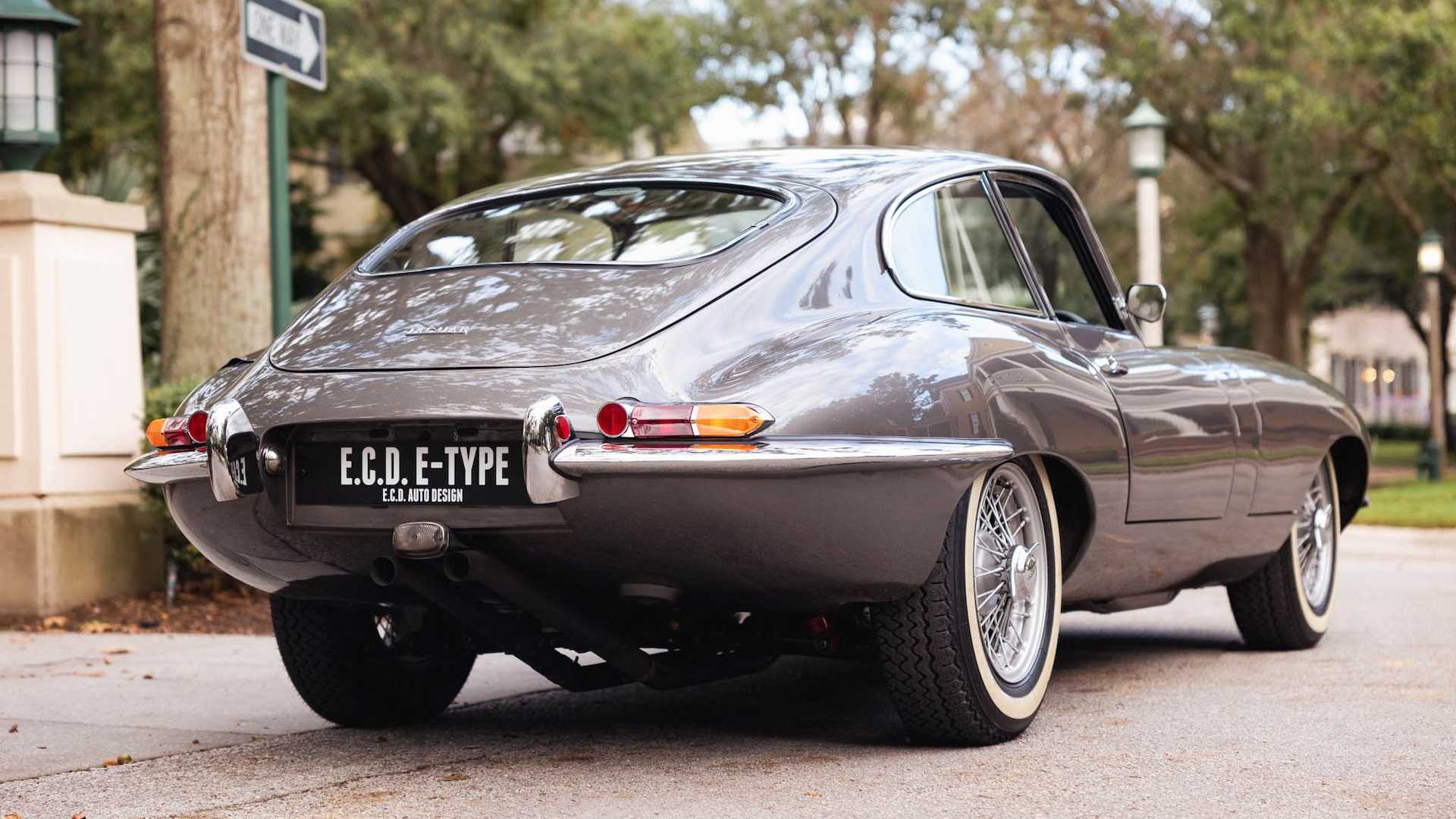
The 1970 Jaguar E-Type has always held a particular place in automotive history that enthusiasts just can’t escape. The way people feel when encountering an incredible pieceof machinery illustrates how a vehicle’s design specs can stir the soul. This was the scene at the 1961 Geneva Motor Show, when the public caught its first glimpse of the Jaguar E-Type.
The E-Type won praise for its balance between beauty and brawn. It also caught notice for offering excellent speed capabilities that were notably more affordable than competitors.
This impressive design fused artistry with functionality and embodied the sensibilities of an era while pushing the boundaries of automotive technology. The E-Type’s long, flowing lines and 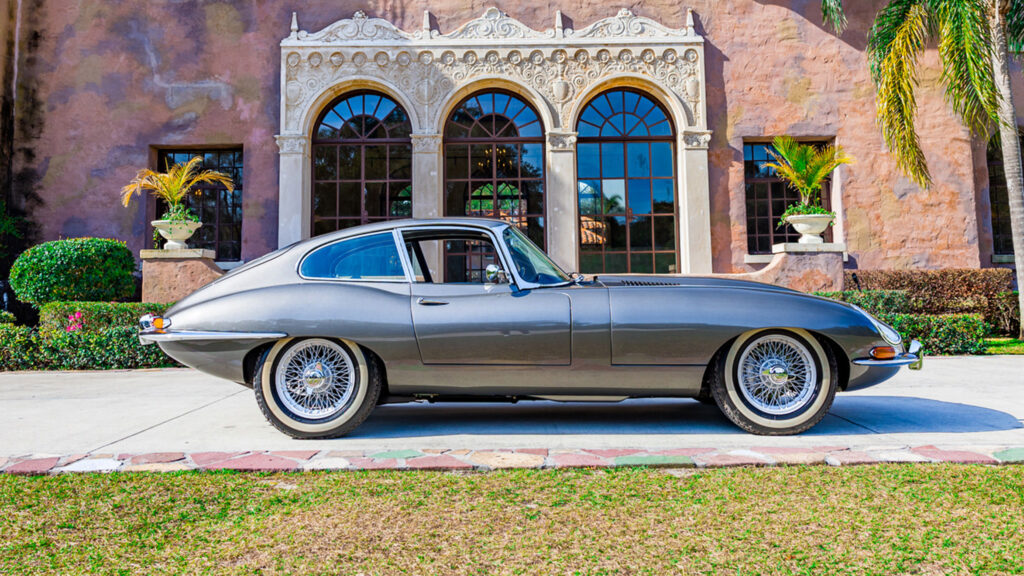 distinctive silhouette made it instantly recognizable and earned it a place among the most iconic cars of the 20th century.
Its design also influenced a generation of car designers and manufacturers, like the Ferrari 275 GTB. The E-Type’s sleek shape and high performance set a new bar for sports cars and proved that brands could make an attractive car that was also cost-effective. This success inspired other automakers to pursue a better balance of beauty and efficiency.
Exterior Appeal of 1970 E-Type
Exterior Appeal
The E-Type’s exterior design was revolutionary for its time, with a long hood, a curved roofline, and a silhouette that set it apart from anything else on the road. This graceful beauty showcased Malcolm Sayer’s expertise as he sculpted the E-Type’s body to be stunning and aerodynamically efficient. By 1970, the car wore its Series II refinements — open headlights, a larger front air intake for improved cooling, and a wraparound rear bumper with relocated tail lights — changes driven largely by U.S. safety and emissions requirements but integrated without compromising the original shape. Available as a fixed-head coupe, roadster, or 2+2, the 1970 E-Type carried the same fundamental silhouette that made the design a departure from the boxier shapes of the era.
Drivetrain
By 1970, the E-Type’s 4.2-liter inline-six had fully replaced the original 3.8-liter unit, delivering improved torque alongside a fully synchronized gearbox — a notable upgrade over the early Series I’s notchy Moss transmission. Multiple carburetors fed the dual overhead cam engine to produce strong, confident acceleration, though U.S.-spec cars from this period saw output reduced to meet tightening emissions rules.
Braking
In keeping with its sporting nature, the E-Type featured a cutting-edge four-wheel disc brake system — a rare feature among 1960s production cars — paired with an independent rear suspension. This combination enabled repeated, fade-free stops from high speeds and gave the car composed, precise handling at the limit.
1970 Jaguar E-Type Series: Detailed Overview
The Jaguar E-Type underwent notable changes between the original Series I and later Series II and III. These iterations were responses to evolving regulations and consumer expectations.
Series I (1961-1968)
The debut Series I is considered the most iconic iteration. It launched with a 3.8-liter engine, upgraded to 4.2 liters in 1964 for more torque. It had glass-covered headlights, a small grille opening, and side marker lights above the chrome bumpers. Interiors blended leather seating with an aluminum-accented dash. 1967 saw the unofficial introduction of Series 1 1/2, which removed the glass covering on the headlights. This feature was one of the changes that made it into Series II.
Series II (1968-1971)
The Series II arrived to align with safety and emissions regulations, predominantly in the key US market. Along with open, exposed headlights, the Series II had a larger front air intake that improved cooling capacity. Tail lights also migrated below the bumpers, which grew to fulfill new standards. Inside, mechanical upgrades maintained the 4.2-liter engine while incorporating emissions-focused changes.
The transition from the Jaguar E-Type Series I to the Jaguar E-Type Series II was largely defined by legislative rules, such as emissions requirements, rather than strictly design choices. Regulations shaped many of the external styling tweaks and under-the-hood alterations. They also added head restraints and influenced the ignition and steering column, introducing a steering lock and collapsible steering column.
Series III (1971-1974)
In 1971, the brand introduced the Series III. This series had a 5.3-liter V12 engine, which traded cast-iron construction for aluminum, creating more horsepower for a modest weight increase. Its longer wheelbase also led to a change in manufacturing, with Jaguar no longer producing the fixed-head coupe. Series III E-Types were only available as roadsters and 2+2 coupes. Additional updates were a cross-slat grille, wide tires, V12 badge on the rear, and flared wheel arches.
Cultural Impact and the Jaguar Legacy
The Jaguar E-Type revolutionized car design and performance and left a lasting impact on popular culture and automotive history.
The Jaguar E-Type in Film and Celebrity Culture
The E-Type’s allure rose to greater heights through its cinema presence and association with celebrities such as Frank Sinatra. It appeared in numerous films and television shows, further cementing its sophisticated status. Many high-profile figures also favored the car, adding to its glamour and desirability. This celebrity association significantly shaped the E-Type’s image as a car epitomizing luxury and success.
1970 E-Type Values: Where Series II Fits in the Market
Within the E-Type lineup, 1970 cars sit in an interesting spot. They’re Series II models — the last before the V12 Series III arrived in 1971 — built in the window when Jaguar was adapting the car to meet new U.S. safety and emissions standards while still running the 4.2-liter inline-six. That combination makes them less rare than early Series I cars (especially the sought-after “flat floor” examples from 1961), but more attainable, with project and driver-quality examples often available at a more accessible price point than a numbers-matching Series I roadster.
For restomod builds, that’s actually an advantage. A 1970 E-Type’s slightly lower acquisition cost leaves more room in the budget for the build itself — modern drivetrain, upgraded brakes, bespoke interior — without the premium (or the preservation pressure) that comes with an early Series I.
Build Your Own 1970 E-Type Legacy
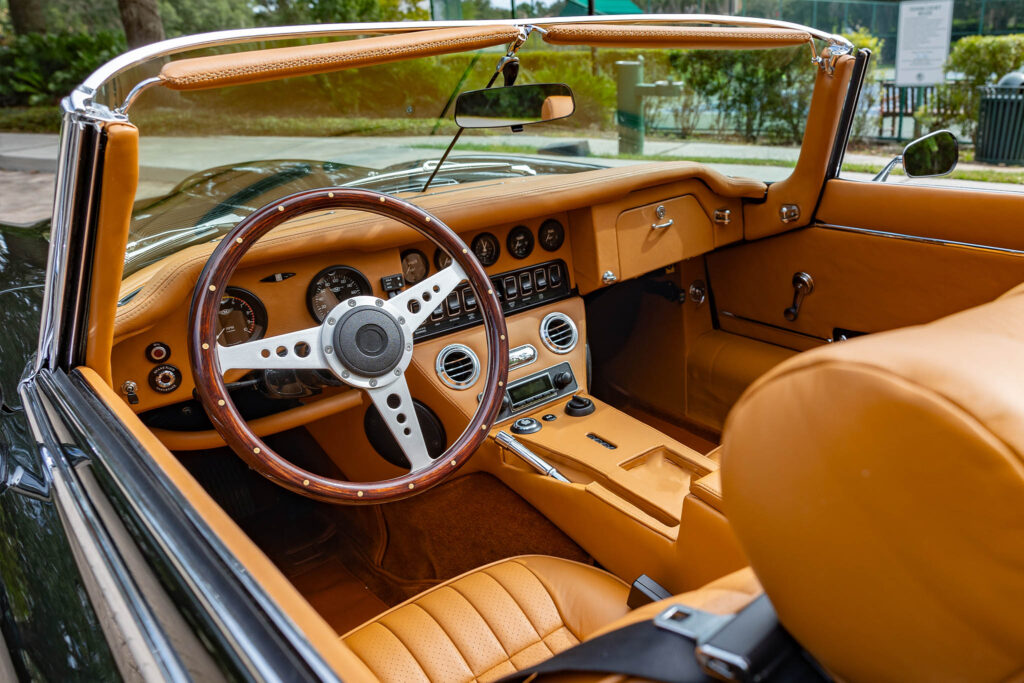
More than five decades later, the 1970 E-Type’s blend of late-Series-II character and 4.2-liter performance still makes it one of the best foundations for a custom build. ECD’s Jaguar E-Type restoration program takes that foundation and reimagines it — from drivetrain choice to every stitch of the interior — into a one-of-one built around your vision.
FREQUENTLY ASKED
QUESTIONS
No FAQs configured yet.