

Blog
What Makes a Restomod Feel “Worth It” vs Overpriced

Why Buyers Are Spending $200K+ on Custom Classics Instead of New Exotics
May 27, 2026
Range Rover Classic vs Jaguar E-Type: Which Bespoke Classic Belongs in Your Garage?
June 4, 2026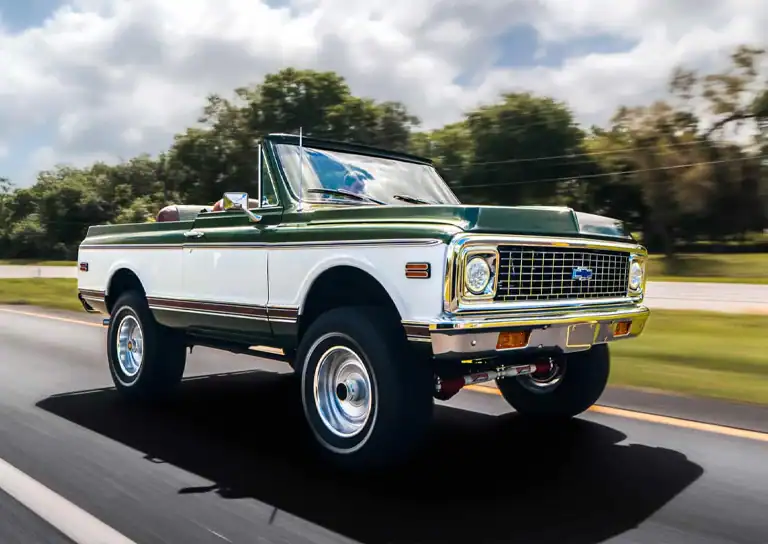
A restomod can be one of the most rewarding vehicles to own, but it can also become one of the easiest ways to overspend. The difference is not always the badge, the engine, or the paint color. It comes down to whether the build feels complete, intentional, and properly engineered.
A restomod feels “worth it” when the buyer can see where the money went.
A Worth-It Restomod Has a Clear Purpose
The best restomods are not just old vehicles with modern parts thrown at them. They have a clear identity.
A custom Defender built for luxury adventure should feel different from a Mustang built for weekend performance or a Range Rover Classic built for refined daily driving. The powertrain, suspension, interior, wheels, brakes, sound system, and technology should all support the same vision.
An overpriced restomod often feels confused. It may have expensive parts, but the build does not tell a clear story. Big wheels, loud exhaust, bright paint, and custom leather do not automatically create value if the vehicle feels like a collection of upgrades rather than a finished concept.
Build Quality Matters More Than the Spec Sheet
A long list of upgrades can look impressive online, but real value lives in the details buyers notice in person.
Panel gaps, wiring, interior fitment, paint finish, door feel, seat comfort, drivetrain smoothness, braking confidence, and road manners all determine whether the vehicle feels premium. A $200K+ restomod should not feel like a project car with nicer materials. It should feel sorted, refined, and ready to enjoy.
This is where high-end builders separate themselves. Anyone can advertise modern power, custom paint, and leather seats. Far fewer can deliver a vehicle where everything works together without rattles, shortcuts, or unfinished details.
Modern Upgrades Should Improve the Classic, Not Erase It
A restomod should make a classic more usable without destroying the reason people loved it in the first place.
That balance matters. Buyers want modern performance, air conditioning, upgraded brakes, premium audio, better drivability, and improved comfort. But they still want the vehicle to feel special. If a classic loses all its character, the buyer may wonder why they did not just buy a new SUV, sports car, or luxury vehicle instead.
The best builds keep the soul and remove the frustration.
The Price Should Match the Labor Behind It
A serious restomod is not priced only by parts. Labor is usually the hidden reason high-end builds cost so much.
Disassembly, fabrication, bodywork, wiring, paint, drivetrain fitting, interior trimming, testing, and quality control all take time. A properly built custom classic can involve hundreds or even thousands of labor hours depending on the vehicle and scope.
That is why two builds that look similar in photos can have wildly different values. One may be a cosmetic refresh with a few modern touches. Another may be a ground-up rebuild where nearly every system has been restored, upgraded, tested, and refined.
The second one may cost more, but it often feels more justified.
A Restomod Feels Overpriced When It Only Looks Expensive
Some builds are priced high because they photograph well. That does not mean they are worth the money.
Red flags include vague build descriptions, unknown builders, limited documentation, mismatched parts, poor interior fitment, low-quality wiring, cheap hardware, weak drivability, and no clear warranty or after-sale support. A shiny exterior can hide a lot of problems underneath.
A buyer should be able to ask: Who built it? What was replaced? What was upgraded? What was restored? What was tested? What documentation comes with it? What happens if something goes wrong?
If the answers are weak, the price is probably too high.
Documentation Creates Confidence
A restomod feels more valuable when the buyer can understand the process behind it. Build photos, receipts, component lists, inspection records, dyno information, paint details, and warranty information all help support the price.
Documentation proves that the vehicle is not just attractive, but accountable.
For high-end buyers, confidence matters. They are not only paying for parts and labor. They are paying to avoid uncertainty.
Brand Reputation Matters
A restomod from a respected builder usually carries more value than a one-off build from an unknown shop. That does not mean smaller builders cannot produce excellent vehicles, but reputation gives buyers peace of mind.
Established builders have processes, quality control standards, sourcing relationships, and after-sale support. They also understand how to create a consistent ownership experience, not just a dramatic reveal.
For buyers considering brands like ECD Auto Design, Singer, Icon, or other premium custom shops, part of the price reflects trust. The buyer is paying for the confidence that the vehicle was built by a team that has done it before and knows how to deliver a finished product.
The Final Test: Would You Still Want It After the Hype?
A restomod feels worth it when it remains exciting after the first impression fades.
The paint may get attention. The engine may sound incredible. The interior may look stunning. But the real value appears months later, when the vehicle still starts confidently, drives well, feels comfortable, turns heads, and makes the owner want to take the long way home.
That is the difference between expensive and overpriced.
A worth-it restomod feels complete.
An overpriced one feels decorated.
A worth-it restomod improves the classic experience.
An overpriced one simply adds cost.
A worth-it restomod makes the buyer feel like every choice had a reason.
An overpriced one leaves them wondering where the money went.
TOP RELATED STORIES
FREQUENTLY ASKED
QUESTIONS
No FAQs configured yet.