



Classic SUV Build Specification Checklist: 2026 Guide
July 7, 2026
Limited Edition Vehicle Customization Options: 2026 Guide
July 9, 2026
Child-safe vehicle customization options are specialized modifications and additions designed to maximize safety and comfort for children during family travel. The industry term for this practice is “child restraint system integration,” and it spans everything from certified anchor point retrofits to cabin comfort accessories. Standards like ADR 34 and AS/NZS 1754 define the compliance benchmarks that separate a safe installation from a dangerous one. Getting these details right is not optional. It is the foundation of every responsible family vehicle build.
1. What are child-safe vehicle customization options?
Child-safe vehicle customization options cover two distinct categories: safety-critical modifications and comfort enhancements. Safety-critical work includes certified anchor point installations, compliant child restraint hardware, and structural upgrades. Comfort enhancements include backseat organizers, vent extenders, and seat protectors. Both categories matter, but they carry very different stakes. A poorly chosen seat protector is inconvenient. A non-compliant anchor point can be fatal.
Parents researching kid-friendly car modifications should start with the safety layer before adding any comfort accessories. This sequencing protects both the child and the vehicle’s legal compliance status.
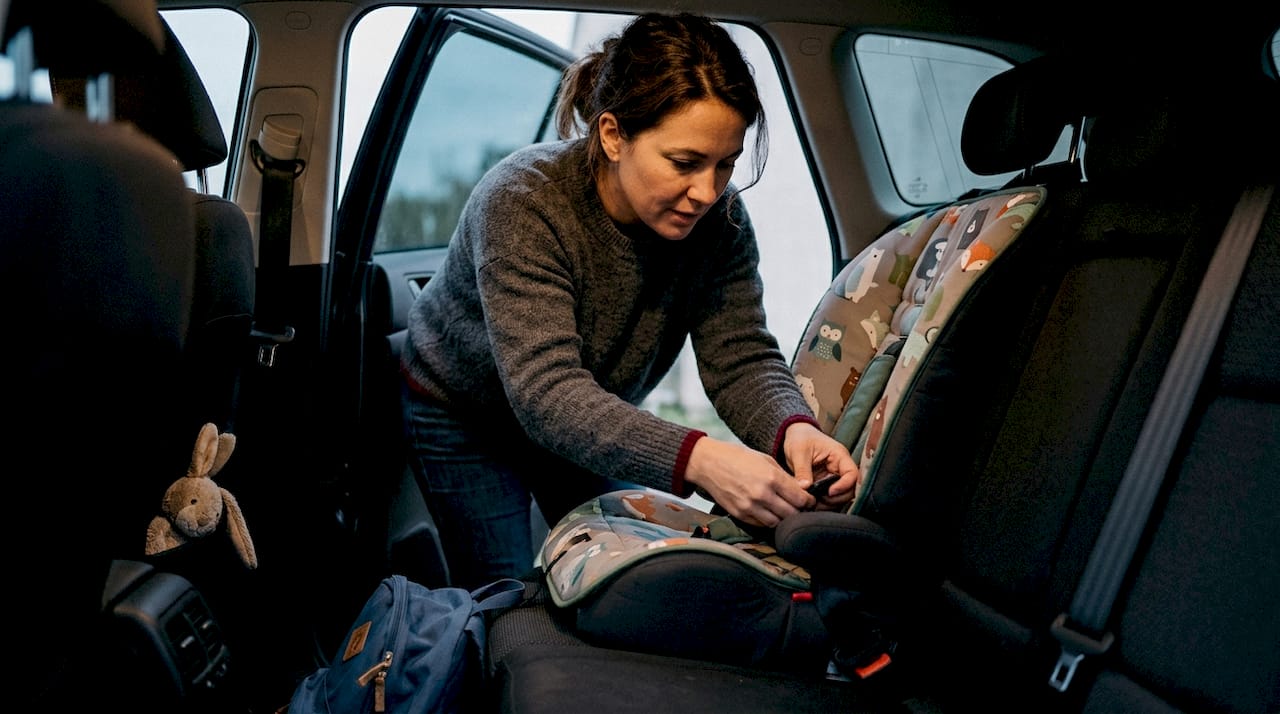
2. Certified retrofit anchor points
Retrofit anchor points are the single most important child-safe modification for older vehicles. Vehicles without factory-fitted child seat anchor points can be retrofitted with compliant systems meeting ADR 34 and AS/NZS 1754 standards by licensed engineers. That compliance is not a formality. It determines whether a child restraint performs correctly in a collision.
Retrofitting is required in several common situations:
- Older sedans manufactured before factory anchorages became standard
- Utes and vans that lack rear passenger anchor infrastructure
- Classic restomods and heritage vehicles converted for family use
- Any vehicle where the original anchor points have been removed or damaged
Certified installers ensure compliance with ADR 34, preventing installation errors that compromise child seat safety. DIY installations may be unsafe or illegal. The engineering certification attached to a compliant retrofit is what gives the system its legal standing and its real-world protective value.
Pro Tip: Ask your installer for a copy of the engineering certificate before leaving the workshop. That document is your proof of compliance and may be required by insurance providers after an accident.
Retrofitting compliant anchor points is particularly critical for vehicles such as utes, vans, or older sedans, where child restraints may not perform correctly without proper anchorage. The peace of mind that comes from a certified install is not just emotional. It is structural.
3. Comfort and convenience enhancements for child passengers
Once the safety layer is secured, cabin comfort modifications make a genuine difference on long trips. The best safe car accessories for children install quickly, require no permanent tools, and do not interfere with restraint systems. Family-focused cabin comfort modifications like backseat organizers with tray tables and air vent extenders install in under 10 seconds without permanent tools or wiring. That speed of installation matters because it means parents can adapt the setup between trips.
Popular comfort accessories for family vehicles include:
- Backseat organizers with integrated tray tables and cup holders
- Air vent extenders that redirect existing AC airflow toward rear passengers
- Headrest-mounted tablet holders for entertainment on longer drives
- Door panel storage pockets for books, snacks, and small toys
- Sunshades for rear side windows to reduce glare and heat
Backseat organizers attach easily to headrests and door panels, freeing space and reducing distractions for the driver. Fewer distractions from the back seat directly improve driving safety. That connection between child comfort and driver focus is often overlooked in discussions about how to make a car safe for kids.
Vent extenders deserve special mention. They plug into existing air vents and redirect cooled air toward rear passengers, avoiding any battery or wiring requirements. Children overheat faster than adults, and consistent cabin temperature reduces fatigue and irritability on extended drives.
Pro Tip: Before purchasing any backseat organizer, check that it attaches to the headrest posts rather than the seat back. Accessories that press against the seat back can affect the angle and stability of a forward-facing child seat.
4. Protective accessories that preserve interior and maintain safety
Seat protectors are one of the most popular safe car accessories for children, and also one of the most misunderstood. Their primary purpose is protecting upholstery from indentation, spills, and wear caused by child seat bases. High-density foam padding combined with a non-slip backing helps prevent shifting of child seats, preserving safety during trips. That non-slip function is the detail that separates a well-designed protector from a decorative mat.
The critical caution is compatibility. Parents must ensure seat protectors do not interfere with the child seat’s ability to remain tight as defined by the seat manufacturer. Some protectors’ thickness or materials cause slippage that affects seat performance under crash conditions. A seat that passes the tightness test on a bare seat may fail it on a thick foam protector.
When selecting a seat protector, prioritize these characteristics:
- Thin profile that does not raise the child seat base significantly
- Non-slip backing confirmed by the child seat manufacturer
- Waterproof surface for easy cleaning without removing the child seat
- No raised edges that could redirect crash forces unexpectedly
Pro Tip: Perform the inch-test after installing your child seat over any protector. Grip the seat at the belt path and attempt to move it more than one inch in any direction. If it moves, the protector is too thick or too slippery for safe use.
Seat protectors are essential for families wanting to preserve vehicle interiors, but they must be carefully chosen to avoid impeding child restraint safety. The Defender seats upgrades approach used by Ecdautodesign reflects this same philosophy: every interior modification must serve both form and function without compromising the structural integrity of the seating system.
5. Advanced vehicle safety technologies that complement physical customizations
Physical modifications address the child’s immediate environment inside the cabin. Active vehicle safety technologies address the primary cause of child passenger injuries: the collision itself. Active safety features such as Intelligent Speed Assistance and driver drowsiness monitoring statistically reduce collisions and related child injuries. These technologies work upstream of the restraint system, preventing the crash before the child seat is ever tested.
The table below outlines key technologies and their relevance to child passenger safety:
| Technology | Function | Child Safety Benefit |
|---|---|---|
| Intelligent Speed Assistance | Monitors and limits vehicle speed | Reduces severity of impact in collisions |
| Driver Drowsiness Monitoring | Detects fatigue and alerts the driver | Prevents loss-of-control incidents |
| Automatic Emergency Braking | Detects obstacles and brakes automatically | Reduces frontal collision frequency |
| Blind Spot Monitoring | Alerts driver to vehicles in adjacent lanes | Prevents lane-change collisions |
| Rear Cross-Traffic Alert | Detects movement behind reversing vehicle | Protects children near the vehicle exterior |
New vehicle safety technologies are projected to become mandatory by 2029 in certain jurisdictions, further enhancing child passenger protection. That regulatory trajectory means parents buying or restoring vehicles today should treat these features as baseline requirements, not premium options.
For families driving classic restomods or heritage vehicles, integrating these technologies requires careful engineering. Ecdautodesign’s approach to modernizing classic Defenders to current safety standards demonstrates that heritage provenance and modern protection are not mutually exclusive. A bespoke build can carry the soul of a 1980s Defender and the active safety suite of a 2026 vehicle.
6. Choosing the right interior configuration for child passengers
The interior configuration of a family vehicle determines how well every other customization performs. Seat placement, access routes, and storage layout all affect how safely and comfortably children travel. Custom seating solutions for restored Defenders, for example, require careful planning to accommodate child restraint anchor geometry while preserving the vehicle’s character. Custom seat configurations must account for the specific anchor point locations certified during the retrofit process.
Parents should map out the following before commissioning any interior work:
- Which seating positions will carry child restraints
- Whether the anchor geometry supports forward-facing, rear-facing, or both orientations
- How the storage layout affects access to children during stops
- Whether the HVAC configuration delivers adequate airflow to rear passenger positions
Interior configuration decisions made early in a build are far easier to reverse than those added after the vehicle is complete. Treating child passenger needs as a primary design input, rather than an afterthought, produces a vehicle that genuinely serves the family rather than merely accommodating it.
Key Takeaways
The most effective child-safe vehicle customization approach combines certified anchor point retrofits, carefully selected comfort accessories, and active safety technology integration to protect children at every stage of a trip.
| Point | Details |
|---|---|
| Retrofit anchor points first | Certified ADR 34 compliant installs are legally required and safety-critical for older vehicles. |
| Comfort accessories follow safety | Install organizers and vent extenders only after the restraint system is fully compliant. |
| Seat protectors require testing | Perform the inch-test after every installation to confirm the child seat remains tight. |
| Active safety tech reduces crashes | Intelligent Speed Assistance and drowsiness monitoring prevent collisions before restraints are needed. |
| Interior configuration is a design input | Plan child seat anchor geometry before commissioning any bespoke interior work. |
The part most parents get backwards
Parents typically spend more time researching backseat organizers than they do verifying anchor point compliance. That priority inversion is understandable. Organizers are visible, tactile, and immediately satisfying. Anchor point certification is paperwork. But the organizer is irrelevant if the child seat is not properly anchored.
The most overlooked customization in any family vehicle build is the engineering certificate. Not the seat. Not the protector. The document that proves the anchor point was installed by a licensed engineer to ADR 34 standards. I have seen beautifully appointed family vehicles where the child seat was technically non-compliant because the anchor was retrofitted without certification. The vehicle looked perfect. The safety record was not.
My recommendation is to treat the engineering certificate as the first line item in any family vehicle customization budget. Everything else, from the bespoke upholstery to the vent extenders, is built on top of that foundation. Comfort without compliance is decoration. Compliance without comfort is a missed opportunity. The best family builds deliver both, in that order.
— Evolve
Ecdautodesign’s approach to family vehicle builds
Ecdautodesign has spent years refining the art of building vehicles that carry heritage and modern capability in equal measure. For families, that expertise translates directly into builds where child safety compliance is engineered into the vehicle from the ground up, not bolted on afterward.
Every Ecdautodesign build begins with a ground-up restoration that accounts for the full range of passenger needs, including child restraint anchor geometry, HVAC configuration for rear passengers, and interior layouts that serve real family use. The bespoke customization program gives parents the ability to specify every detail, from certified anchor hardware to the upholstery that surrounds it. If you are building a family vehicle that refuses to compromise on either safety or character, Ecdautodesign is the atelier to call.
FAQ
What is ADR 34 and why does it matter for child seats?
ADR 34 is the Australian Design Rule governing child seat anchor points in vehicles. Certified retrofit systems must meet this standard to ensure child restraints perform correctly in a collision.
Can I install child seat anchor points myself?
DIY anchor point installation may be unsafe and is often illegal. Licensed engineers must perform and certify the installation to meet ADR 34 and AS/NZS 1754 compliance requirements.
Do seat protectors affect child seat safety?
Yes. Seat protectors that are too thick or too slippery can prevent a child seat from remaining tight. Always perform the inch-test after installing a child seat over any protector.
What active safety features most benefit child passengers?
Intelligent Speed Assistance and driver drowsiness monitoring reduce the frequency and severity of collisions. These technologies complement physical child restraint systems by addressing crash causes before impact.
When should I plan child seat anchor points in a vehicle build?
Plan anchor point locations before any interior work begins. Retrofitting after upholstery and trim installation is significantly more complex and may compromise the quality of the certified install.
Recommended
- 20 Top Custom Defender Upgrades – Custom Defender | Restored Defender Specialists | ECD Auto Design
- Choosing the Perfect Paint Color for Your Custom Vehicle – Custom Defender | Restored Defender Specialists | ECD Auto Design
- Connected Car News: E.C.D. Automotive Design Creates PhotoRealistic Designs – Custom Defender | Restored Defender Specialists | ECD Auto Design
- Benefits of a Soft Top Defender – Custom Defender | Restored Defender Specialists | ECD Auto Design
FREQUENTLY ASKED
QUESTIONS
No FAQs configured yet.