



Ground-Up Defender Restoration: A Complete Process Guide
July 10, 2026
Proper classic vehicle storage is defined as the disciplined practice of controlling environment, preparing mechanical systems, and maintaining ongoing care to prevent deterioration of a vehicle’s provenance and performance. For owners of bespoke builds, the stakes are higher than for standard collector cars. Proper storage is the single most important factor determining whether a classic appreciates or loses value over time. When you store a bespoke classic vehicle properly, you protect not just the metal and leather, but the craftsmanship and investment that define the build.
What are the ideal environmental conditions for storing bespoke classic vehicles?
The gold standard for collector vehicle storage is a consistent temperature of 50–70°F and relative humidity between 40–60%. These numbers are not arbitrary. Staying within this range prevents condensation from forming on metal surfaces, which is the primary driver of rust and electrical degradation.

Temperature swings are more damaging than sustained cold or heat. A garage that drops to 30°F overnight and climbs to 80°F by afternoon creates repeated thermal cycling that stresses seals, cracks leather, and accelerates paint oxidation. Climate-controlled storage eliminates this cycle entirely.
Ventilation is equally critical. Excessive humidity in poorly ventilated spaces accelerates leather and electrical system degradation even when temperature is controlled. A space that holds the right temperature but traps stale, moist air will still destroy a bespoke interior over a single winter.
| Environmental Factor | Effect on Vehicle | Recommended Standard |
|---|---|---|
| Temperature below 50°F | Seal cracking, fluid thickening, battery drain | Maintain 50–70°F |
| Humidity above 60% | Rust, mold, leather rot, electrical corrosion | Keep at 40–60% RH |
| Poor ventilation | Accelerated interior and wiring degradation | Active airflow or dehumidifier |
| Temperature swings | Paint stress, seal failure, condensation | Climate-controlled facility |
Pro Tip: Place silica gel desiccant packs inside the cabin and trunk to absorb residual moisture. Replace them every 60–90 days for consistent protection.
How to prepare your bespoke classic vehicle before storage
Preparation is where most owners cut corners, and where the most expensive damage originates. Improper long-term storage protocols cause more expensive damage than crashes, particularly on vehicles parked for more than six months without environmental controls. A thorough pre-storage routine takes several hours but saves thousands in restoration costs.
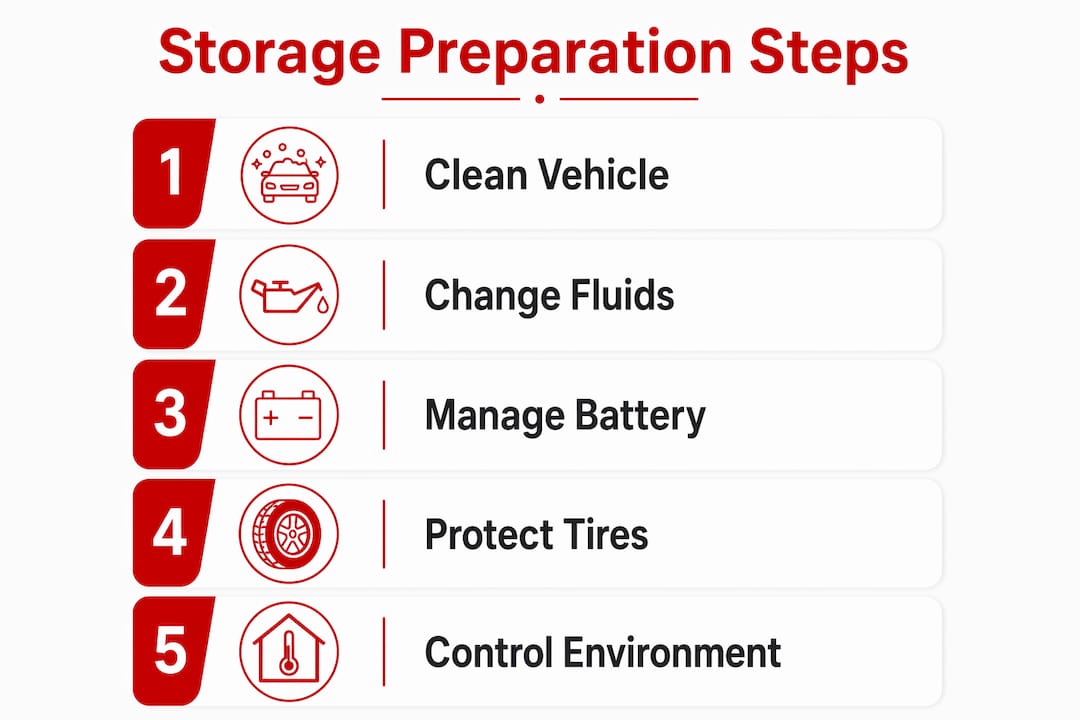
Cleaning, paint, and interior protection
Wash and dry the vehicle completely before storage. Any road salt, bird droppings, or organic debris left on paint will etch through the clear coat during storage. Apply a quality carnauba or synthetic wax to all painted surfaces to create a barrier against moisture. Treat leather with a pH-balanced conditioner, and apply a rubber seal protectant to door and window gaskets to prevent cracking.
Fluid management for vintage engines
Change the engine oil before storage, not after. Used oil carries acidic combustion byproducts that attack bearing surfaces over months of inactivity. Add a fuel stabilizer to a full tank to prevent oxidation and phase separation. For vintage carbureted engines stored over 90 days, drain carburetor float bowls after adding stabilizer. This step prevents fuel varnish from clogging jets and passages, which is one of the most common and costly storage failures on classic engines.
Battery and tire care
A discharged battery sulfates internally and loses capacity permanently. Use a battery maintainer rather than disconnecting the terminals. Battery disconnection requires electronics reprogramming on reconnection, which adds complexity and cost on modern restomod builds with updated electrical systems. A quality maintainer keeps the battery at full charge without overcharging.
Tire care demands equal attention. Weight distribution during storage causes compound migration and flat spots that can permanently deform a tire’s contact patch. Use tire cradles or slightly overinflate tires to counteract this. If the vehicle will sit for more than four months, jack stands under the suspension are the definitive solution.
Pre-storage preparation checklist:
- Wash, dry, and wax all exterior painted surfaces
- Condition leather and treat rubber seals
- Change engine oil and add fuel stabilizer to a full tank
- Drain carburetor float bowls on vintage carbureted engines
- Connect a battery maintainer or use a quality trickle charger
- Inflate tires to the upper end of the recommended range or use tire cradles
- Place desiccant packs inside the cabin and trunk
- Fit a breathable fabric cover over the vehicle
Pro Tip: Never use a plastic tarp as a car cover. Non-breathable plastic covers trap moisture against paint and accelerate corrosion. Choose a soft, breathable fabric cover sized specifically for your vehicle’s body style.
What are the best practices for long-term maintenance during storage?
Long-term storage is not a set-and-forget proposition. Fuel chemistry, oil acidity, tire compound migration, and battery sulfation all become critical failure risks after 180 days in storage. A monthly inspection routine catches problems before they compound.
One of the most counterintuitive facts in classic vehicle care is this: starting the engine monthly during storage causes more harm than leaving it undisturbed. Periodic short starts create thermal cycling and condensation in the exhaust system and crankcase without ever bringing the engine to full operating temperature. The result is accelerated internal corrosion. If the vehicle is properly prepared with fresh oil and stabilized fuel, leave it alone until you are ready to drive it properly.
Monthly storage maintenance routine:
- Inspect the cover for moisture accumulation or displacement.
- Check tire pressure and look for visible flat spots.
- Inspect the floor beneath the vehicle for fluid leaks.
- Verify the battery maintainer is functioning and showing a full charge.
- Check door seals and window gaskets for cracking or compression loss.
- Inspect the cabin for signs of pest activity or moisture intrusion.
- Review the storage environment’s temperature and humidity readings.
Brake and security considerations
Never leave the handbrake engaged during storage. Brake pads can bond to discs when held under constant pressure for months, requiring disc replacement on reassembly. Leave the vehicle in gear or in “P” for automatics, and use wheel chocks against the tires instead. This is a simple step that owners consistently overlook.
Maintaining active insurance throughout the storage period is non-negotiable. Coverage lapses can result in denied claims for storage-related damage, including fire, theft, and water intrusion. Notify your insurer of the storage location and confirm that the policy covers the vehicle while it is off the road.
Common mistakes to avoid when storing bespoke classic vehicles
The most damaging storage errors are also the most common. Owners who invest significantly in a bespoke build often underinvest in its storage, treating it as a passive activity rather than an active discipline.
| Common Mistake | Correct Practice |
|---|---|
| Storing in a damp, unventilated space | Use a climate-controlled facility or add dehumidifiers and active ventilation |
| Covering with a plastic tarp | Use a soft, breathable fabric cover matched to the vehicle’s body |
| Leaving the handbrake engaged | Use wheel chocks; leave in gear or “P” |
| Skipping fuel stabilizer | Add stabilizer to a full tank before storage; drain carb float bowls on vintage engines |
| Starting the engine monthly | Avoid short starts; prepare properly and leave undisturbed |
| Ignoring tire flat spots | Use tire cradles or jack stands for storage beyond four months |
| Letting insurance lapse | Maintain active coverage and notify insurer of storage location |
The plastic cover mistake deserves particular emphasis. Many owners assume any cover is better than none. A breathable cover allows moisture vapor to escape, preventing the localized high humidity that destroys paint and promotes rust. A plastic cover creates a sealed microclimate against the body. The damage it causes is often worse than no cover at all.
Skipping the benefits of owning classic vehicles extends to understanding that a bespoke build carries unique vulnerabilities. Custom leather, hand-finished paint, and upgraded electronics all require storage conditions that exceed the minimum standards applied to production vehicles.
Key Takeaways
Storing a bespoke classic vehicle properly requires a controlled environment of 50–70°F and 40–60% humidity, thorough pre-storage preparation, and a disciplined monthly inspection routine to prevent irreversible deterioration.
| Point | Details |
|---|---|
| Control the environment | Maintain 50–70°F and 40–60% relative humidity to prevent rust, mold, and material degradation. |
| Prepare fluids before storage | Change oil, add fuel stabilizer, and drain carb float bowls on vintage engines before parking. |
| Use a breathable cover | Soft fabric covers allow moisture to escape; plastic tarps accelerate corrosion and paint damage. |
| Avoid monthly engine starts | Short starts cause thermal cycling and condensation damage; leave the engine undisturbed when properly prepared. |
| Keep insurance active | Coverage lapses during storage can result in denied claims for fire, theft, or water damage. |
What I’ve learned about storage that most guides won’t tell you
The standard advice on classic vehicle storage is technically correct but practically incomplete. Most guides tell you what conditions to target. Very few tell you how much discipline the routine actually demands, or how quickly a bespoke build punishes neglect.
The most expensive lesson I’ve observed is the false economy of the home garage. Owners spend six figures on a restomod and then store it in a space with no humidity control, a concrete floor that wicks moisture, and a door that seals poorly. The garage feels adequate because it keeps rain off the car. It does not keep the car safe.
Professional climate-controlled storage provides superior environment control, security, and maintenance routines tailored to bespoke and high-value classics. The annual cost of professional storage is a fraction of what a single season of improper storage can cost in paint correction, mechanical restoration, or interior repair. The math is not close.
The other insight worth stating plainly: the cover matters more than most owners realize. A quality breathable cover is not an accessory. It is the last line of defense between the vehicle’s finish and whatever moisture the storage environment allows through. Spending $300 on the right cover is one of the highest-return investments in classic vehicle care.
My honest view is that bespoke vehicle storage should be treated with the same seriousness as the build itself. The craftsmanship that went into the vehicle deserves an environment worthy of it.
— Evolve
Ecdautodesign and the art of preserving bespoke builds
Ecdautodesign builds each Land Rover Defender from the ground up, with every detail chosen for longevity as much as aesthetics. That philosophy does not end at delivery.

Owners of Ecdautodesign builds benefit from a team that understands the specific vulnerabilities of bespoke construction: custom leather, hand-finished paint, upgraded drivetrains, and modern electronics housed in classic bodies. The craftsmanship behind each build is designed to endure, but only when paired with the right storage and maintenance discipline. Ecdautodesign’s restoration facility sets the standard for what a bespoke vehicle deserves in terms of environment, care, and attention. If you are ready to protect your investment at the same level it was built, explore Ecdautodesign’s approach to bespoke restoration and long-term vehicle care.
FAQ
What temperature is best for storing a classic vehicle?
The recommended range is 50–70°F with relative humidity between 40–60%. This range minimizes condensation, material degradation, and fluid breakdown during long-term storage.
Should I start my classic car engine during storage?
Starting the engine monthly causes more harm than leaving it undisturbed. Short starts create thermal cycling and condensation without reaching full operating temperature, accelerating internal corrosion.
How do I prevent flat spots on tires during storage?
Use tire cradles or slightly overinflate tires to counteract weight distribution pressure. For storage beyond four months, jack stands under the suspension are the most reliable solution.
Is it safe to leave the handbrake on during storage?
Leaving the handbrake engaged risks brake pads bonding to discs. Use wheel chocks and leave the vehicle in gear or in “P” instead.
Do I need insurance while my classic vehicle is in storage?
Active insurance is required throughout the storage period. Coverage lapses can result in denied claims for storage-related damage including fire, theft, and water intrusion.
Recommended
- Classic Vehicle Export Process: Your 2026 Complete Guide
- The Benefits of Owning Classic Vehicles – Custom Defender | Restored Defender Specialists | ECD Auto Design
- Top Years to Restore a Classic Defender – Custom Defender | Restored Defender Specialists | ECD Auto Design
- Everything You Need to Know About Maintaining Your Vintage Restoration – Custom Defender | Restored Defender Specialists | ECD Auto Design
FREQUENTLY ASKED
QUESTIONS
No FAQs configured yet.