


Trail-Ready Vehicle Build Checklist for Bespoke Defenders
July 27, 2026
How to Commission a One-of-a-Kind Defender
July 30, 2026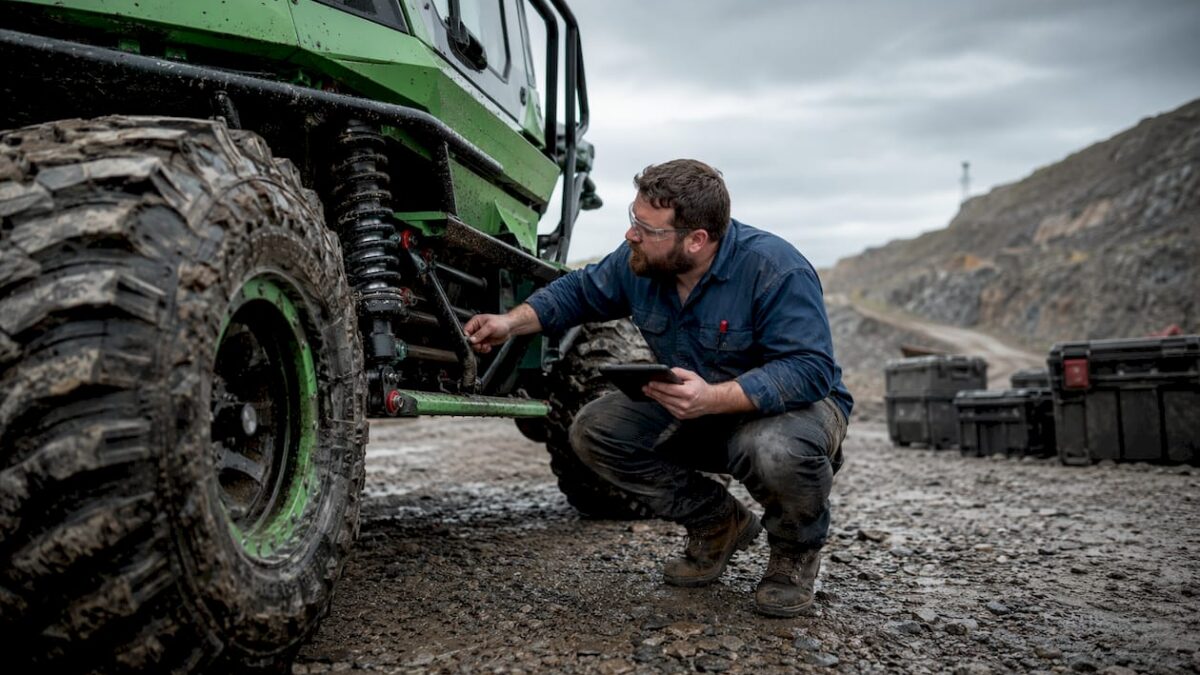
An extreme terrain vehicle (XTV) is engineered to operate across multiple hostile surfaces — land, ice, and open water — and to transition between them without swapping platforms. The DHS/USCG Amphibious XTV prototype demonstrates that mission-driven design, not brute force, is what separates a true XTV from a capable off-roader. Across the category, five distinct types define the field:
- Amphibious rescue prototypes (DHS/USCG ice-rescue vehicle, land/ice/water transition)
- Large rubber-tracked industrial machines (Prinoth PANTHER T16, 502 mm ground clearance)
- Multi-section articulated research chassis (steering by relative-section repositioning)
- Extreme UTVs (Polaris RANGER XP 1000 NorthStar Trail Boss, active descent control)
- Bespoke Defender conversions (ground-up restomod builds with EV or upgraded ICE drivetrains)
Each category solves the same core problem differently. Understanding those differences is the first step toward commissioning a Defender that genuinely belongs in this company.
Table of Contents
- What actually makes a vehicle “extreme terrain”?
- How chassis design and traction systems shape XTV capability
- What systems separate a capable XTV from an ordinary off-roader?
- Real-world examples of extreme terrain vehicles across every category
- How Ecdautodesign engineers a Defender for extreme terrain
- Safety, compliance, and operational cautions for U.S. buyers
- Key Takeaways
- The trade-off nobody talks about honestly
- What Ecdautodesign offers clients planning a bespoke XTV build
- Useful sources for engineers and owners
What actually makes a vehicle “extreme terrain”?
The engineering definition is more demanding than the marketing one. An XTV must sustain mobility across terrain transitions, not merely survive a single surface type. That means the chassis, drivetrain, and control systems must be co-designed around a mission profile rather than optimized for one environment.
Three engineering goals define the category:
- Cross-terrain transition: the vehicle must move from land to ice to water and back without a platform change.
- Survivability in cold and wet conditions: sealed compartments, corrosion-resistant materials, and thermal management for both mechanical and electrical systems.
- High payload for mission fit: the DHS/USCG prototype carries up to three rescuers and three passengers, which shapes every structural decision.
The practical trade-off, as off-road engineering references consistently note, is between durability and everyday usability. A vehicle optimized purely for extreme conditions becomes expensive to maintain and unpleasant to drive on pavement. Bespoke Defender builds live precisely in that tension: the client wants genuine capability without sacrificing the refinement that makes the vehicle worth owning daily.
Pro Tip: Before specifying any system, define your mission matrix: terrain types, temperature range, water exposure depth, payload, and recovery scenarios. Every architecture decision flows from that document.
How chassis design and traction systems shape XTV capability
The physical architecture of an XTV is where engineering ambition meets hard physics. Research on multi-section articulated chassis shows that steering can be achieved by changing the relative positions of chassis sections rather than conventional front-wheel steering. This approach unlocks extreme geometric mobility but introduces a critical constraint: transverse overturning and skidding limits must be calculated early, because stability math often eliminates a design concept before traction or clearance does.
Tracks versus wheels is the other foundational choice. DTIC mobility research confirms that tracked configurations reduce ground pressure dramatically and improve drawbar pull in soft cohesive soils compared to wheeled platforms. Removable track modules offer a middle path: wheel-based road manners with track capability when the terrain demands it.
| Vehicle / System | Ground Clearance | Key Traction Feature | Crew / Payload |
|---|---|---|---|
| Prinoth PANTHER T16 | 502 mm ground clearance | Rubber tracks, auto hydraulic tensioning | Implement-ready platform |
| DHS/USCG Amphibious XTV | Not publicly listed | Land/ice/water transition | 3 rescuers + 3 passengers |
| Polaris RANGER XP 1000 NorthStar Trail Boss | Not publicly listed | 29" Pro Armor X Terrain tires | Side-by-side UTV |
| Bespoke Defender 110 (XTV-spec) | Build-dependent | Locking diffs, optional track module | 4–5 occupants + gear |
Pro Tip: Wheelbase and articulation-point geometry set your critical turning radius. Model these numbers before fabrication begins — a 7% calculation error at the design stage is recoverable; the same error in steel is not.
What systems separate a capable XTV from an ordinary off-roader?
Mechanical protection and traction hardware matter, but the systems that genuinely separate extreme-terrain vehicles from capable off-roaders are the active control layers that reduce operator workload under duress. The 2026 Polaris RANGER XP 1000 NorthStar Trail Boss Edition bundles Active Descent Control, self-leveling rear suspension, a full-body skid plate, and 29" Pro Armor X Terrain tires into a factory package — proof that true extreme capability now requires pairing mechanical hardware with electronic management.
For a bespoke Defender build, the priority systems stack as follows:
- Active descent control and electronic traction management (reduces rollaway risk on severe grades)
- Self-leveling suspension (maintains geometry under variable payload and articulation)
- Full-body skid plates and underbody armor (protects drivetrain, fuel, and electrical routing)
- Locking front and rear differentials (essential for asymmetric traction surfaces)
- High-capacity winch and recovery points (rated to vehicle GVW, not curb weight)
- Snorkel and fording preparation (sealed airbox, raised breathers, waterproofed electrical connectors)
- Corrosion protection (epoxy undercoating, stainless fasteners, sealed wiring looms)
Serviceability is the dimension most clients underestimate. Modular skid plates that unbolt cleanly, electrical routing that allows loom access without major disassembly, and documented service intervals for upgraded components are what keep an extreme-capable Defender drivable year after year rather than a garage trophy.
Real-world examples of extreme terrain vehicles across every category
These five machines represent the clearest examples of extreme terrain vehicles currently documented, spanning rescue, industrial, research, sport, and bespoke categories.
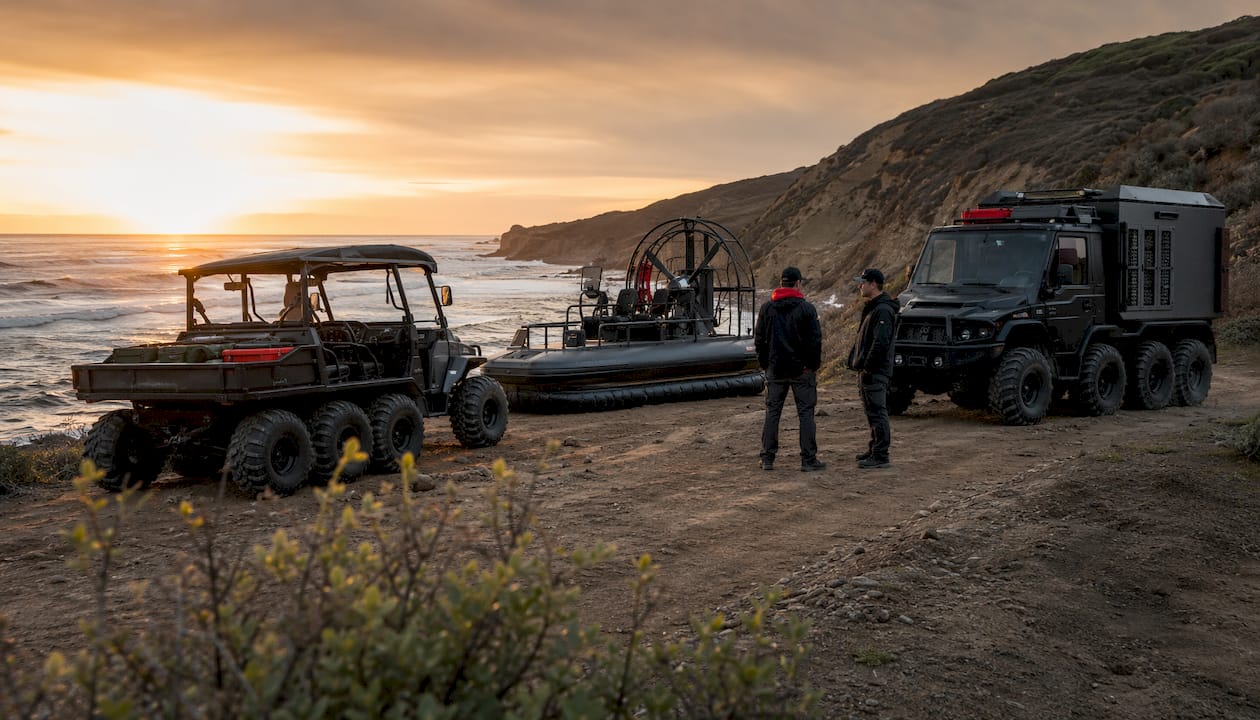
DHS/USCG Amphibious XTV. The DHS/USCG prototype is the most mission-explicit example in the field. Designed to augment ice rescue capabilities, it transitions between land, ice, and water carrying three rescuers and three passengers. The design philosophy — one asset, all terrains — is the clearest argument for cross-terrain engineering over single-surface optimization.
Prinoth PANTHER T16. The PANTHER T16 is the industrial benchmark for tracked ground vehicles. Its rubber tracks, 502 mm ground clearance, automatic hydraulic track tensioning, and documented gradeability specs make it the reference point designers use when benchmarking large-contact-area traction systems.
Multi-section articulated research chassis. Engineering literature documents three-section chassis with removable or permanent track modules, where turning is controlled by repositioning sections rather than steering wheels. The computational stability models for these designs calculate critical speeds and turning radii for both overturning and skidding — constraints that govern the entire architecture.
Polaris RANGER XP 1000 NorthStar Trail Boss. Among factory extreme UTVs, this machine demonstrates how active control systems and mechanical protection combine. Active Descent Control, self-leveling rear suspension, and radial traction tires purpose-built for rough terrain reduce operator workload on descents and in loose conditions.
Bespoke Defender conversions. The Defender’s body-on-frame architecture, long wheelbase options, and coachbuilt heritage make it one of the few platforms that accepts genuine XTV-level modification without fundamental re-engineering. Ecdautodesign’s Custom Defender 110 Overland builds demonstrate what this looks like in practice: expedition-ready capability married to interior refinement that no factory UTV can match.
“Designing for cross-terrain transition is often more effective than optimizing separate single-terrain vehicles. The approach reduces logistics and enables single-asset mission capability.” — DHS/USCG Amphibious XTV Fact Sheet
How Ecdautodesign engineers a Defender for extreme terrain
The build process begins with a mission matrix, not a parts list. Terrain mix, temperature range, water exposure depth, payload, and likely recovery scenarios determine whether the architecture needs a removable track module, enhanced fording preparation, or an EV drivetrain with dedicated thermal management.
For a Defender 110 targeting genuine XTV capability, the architecture decisions follow a logical sequence:
- Frame reinforcement and stiffening — body-on-frame advantage exploited with additional gusseting at high-stress articulation points.
- Suspension upgrade path — self-leveling option evaluated against coil-over alternatives based on payload variance in the mission matrix.
- Underbody protection — full skid plate system, sealed compartments, and raised breathers specified before drivetrain selection.
- Drivetrain selection — upgraded ICE or EV conversion. Ecdautodesign’s EV2 drivetrain work, covered by Forbes and detailed in EV offroading coverage, brings instant torque delivery and simplified mechanical packaging — with the trade-off of thermal management requirements in extreme cold.
- Fording and sealing — snorkel, sealed wiring looms, and waterproofed differentials specified to the client’s stated water-crossing depth.
The build specification checklist Ecdautodesign uses maps directly to this sequence. Timeline and investment vary by specification depth; the Custom Defender 110 Overland serves as the documented proof signal that the process produces a street-legal, daily-drivable result. The ground-up restoration process ensures every system is integrated from the chassis up rather than bolted onto a compromised base.
Pro Tip: Specify your EV thermal management system for the coldest temperature in your mission matrix, not the average. Battery performance in sub-zero conditions is the constraint that determines real-world range and recovery capability.
Safety, compliance, and operational cautions for U.S. buyers
Extreme capability creates proportional risk when operators are not prepared for the vehicle’s actual performance envelope.
- Stability testing is not optional. For any articulated or multi-section design, computational stability modeling must precede physical testing. Incremental capability validation — not full-envelope testing on day one — is the professional standard.
- U.S. jurisdictional complexity: amphibious vehicles that operate on navigable waters may attract USCG interest in addition to DOT road-use requirements. Confirm registration category with your state DMV and legal counsel before the build is finalized.
- Environmental restrictions: sensitive ecosystems (wetlands, protected shorelines) carry federal and state restrictions on vehicle operation. Verify access permissions before planning routes.
- Recovery planning: winch capacity must be rated to vehicle GVW. Cold-weather sealing and battery thermal management for EV conversions require pre-departure checks in sub-freezing conditions.
- Operator training: a vehicle with active descent control and locking differentials still requires trained inputs. Manufacturer or specialist training programs are worth scheduling before the first serious expedition.
This article is general information, not legal or regulatory advice. Confirm current registration requirements and environmental restrictions with your state DMV, the USCG, and qualified legal counsel for your specific vehicle and use case.
Pro Tip: Run a documented stability-envelope test at a controlled off-road facility before your first backcountry deployment. It reveals real-world limits that no specification sheet captures.
Key Takeaways
Extreme terrain vehicles demand mission-first engineering: the mission matrix drives every architecture choice, from chassis geometry to drivetrain selection, and stability modeling must precede fabrication on any articulated or multi-section design.
| Point | Details |
|---|---|
| Mission matrix first | Define terrain, temperature, water depth, and payload before specifying any system. |
| Stability before traction | Critical speed and turning-radius limits often constrain a design before clearance or traction does. |
| Active control is non-optional | Pairing mechanical protection with electronic traction management defines modern XTV capability. |
| Modularity preserves usability | Removable track modules and service-friendly skid plates keep a bespoke build daily-drivable. |
| Ecdautodesign as build partner | Ecdautodesign’s EV2 drivetrain, 3D configurator, and Custom Defender 110 Overland are documented proof signals for XTV-capable bespoke builds. |
The trade-off nobody talks about honestly
Most clients arrive with a clear picture of capability and a vague picture of consequence. They want the Prinoth’s ground clearance, the DHS prototype’s terrain transitions, and the Polaris’s active descent control — all wrapped in the Defender’s unmistakable provenance. That combination is achievable. What surprises them is where the real engineering tension lives: not in adding capability, but in preserving usability once you have it.
Over-specifying ground clearance while under-specifying service access is the most common mistake we see in ambitious builds. A vehicle that requires four hours of disassembly to reach the battery management system is not an XTV — it is an expedition liability. The builds that age well are the ones where the mission matrix was honest about daily use, where modular protection systems were chosen over welded-in armor, and where the drivetrain was selected for the coldest day of the year rather than the average one. The modern upgrades that endure are always the ones that respected the Defender’s original design logic rather than fighting it.
What Ecdautodesign offers clients planning a bespoke XTV build
For clients who have studied the examples above and are ready to commission a vehicle rather than read about one, Ecdautodesign offers something the tracked-industrial and amphibious categories cannot: a bespoke Defender that is genuinely street-legal, daily-drivable, and built to a documented specification from the chassis up.
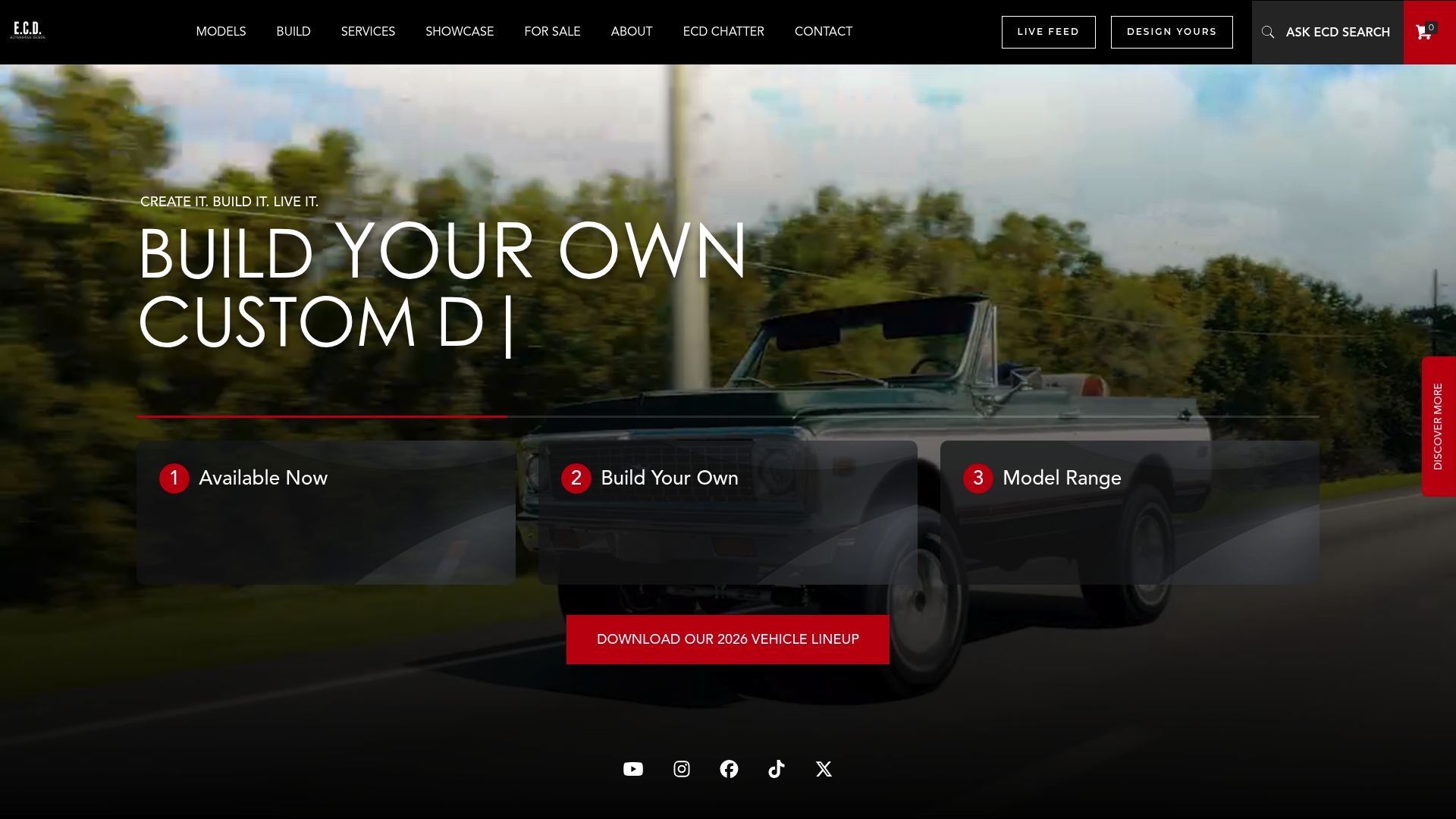
The process begins with Ecdautodesign’s 3D rendering configurator, which lets you visualize drivetrain, protection, and interior choices in real time before a single component is ordered. Every build draws on the same ground-up restoration discipline that earned press coverage from Car Buzz for making new Defender buyers reconsider their choices. The EV2 drivetrain option brings instant torque and simplified mechanical packaging; the ICE upgrade path preserves the sensory experience that defines the Defender’s character. Both are available. Neither is a compromise. Contact Ecdautodesign to begin your mission matrix and commission a build that belongs in this category.
Useful sources for engineers and owners
The primary references behind this article, with brief context for follow-up:
- DHS/USCG Amphibious XTV Fact Sheet — the definitive mission-driven XTV program document; essential for amphibious and ice-rescue design framing.
- Multi-section chassis stability paper (IOP Publishing) — computational models for critical speed, turning radius, overturning, and skidding in articulated extreme cross-country vehicles.
- Prinoth PANTHER T16 brochure — tracked-industrial benchmark with documented ground clearance (502 mm) and gradeability specs.
- DTIC terrain and mobility research — tracked vs. wheeled ground-pressure and drawbar-pull comparisons in soft soils.
- Polaris RANGER XP 1000 NorthStar Trail Boss Edition — factory UTV systems reference for active descent control, self-leveling suspension, and traction tire specifications.
- Ecdautodesign Custom Defender 110 Overland — practitioner reference for expedition-ready bespoke Defender builds balancing capability and daily usability.
- Ecdautodesign EV2 drivetrain coverage — detail on EV conversion architecture and luxury off-road positioning.
Recommended
- Offroad Xtreme | British Mud Buds: Matching Land Rover D90 Twins – Custom Defender | Restored Defender Specialists | ECD Auto Design
- The EV Report | ECD’s EV2 Drivetrain Revolutionizes Off-Road Luxury – Custom Defender | Restored Defender Specialists | ECD Auto Design
- Forbes: Building A Tesla-Powered Range Rover & Ultimate Overland Vehicle – Custom Defender | Restored Defender Specialists | ECD Auto Design
- What Is a Safari-Ready Vehicle? Your 2026 Guide
FREQUENTLY ASKED
QUESTIONS
No FAQs configured yet.