


How to Commission a One-of-a-Kind Defender
July 30, 2026
For a bespoke classic SUV commission, the highest-impact stylish yet practical SUV features to specify are: a vehicle-specific roof rack, 33–35" all-terrain tires with a moderate suspension lift range, custom low-center-of-gravity lockable drawer storage, full-cabin soundproofing across the firewall and wheel wells, integrated Apple CarPlay and backup camera, and a drivetrain choice among the LS3 V8, diesel, or EV conversion. Each of these decisions serves double duty: the lift and tire package preserves the Land Rover Defender’s period-correct silhouette while unlocking genuine trail capability; the drawer system keeps heavy gear low and central so handling stays predictable; and the soundproofing transforms a heritage cabin into a long-distance grand tourer without erasing its character.
TL;DR brief for your builder: “Ground-up restomod on a classic SUV platform — 33–35” all-terrain tires, 2.5" lift, vehicle-specific roof rack and drawer system, full-cabin soundproofing, Apple CarPlay, backup camera, and LS3 V8 or EV drivetrain. Prioritize suspension and brakes first."
Table of Contents
- What do “stylish yet practical” features actually mean for a bespoke build?
- Exact specs to request and the tradeoffs you must accept
- How do you prioritize features and commission the build?
- What does Ecdautodesign deliver, and how does the process work?
- Key Takeaways
- The tradeoff most collectors underestimate
- Your next step toward a one-of-one classic SUV build
What do “stylish yet practical” features actually mean for a bespoke build?
Collectors often frame this as a style-versus-utility tension, but the better framing is a hierarchy of five categories, each with aesthetic and functional consequences.
- Exterior capability and finishes: Tire size, lift height, LED lighting, and protective coatings define both trail readiness and visual presence. A 2.5" lift on a Defender changes the roofline geometry and affects roof-rack load transfer.
- Suspension and drivetrain: The mechanical heart of the build. Drivetrain choice determines weight distribution, sound character, maintenance cadence, and resale trajectory.
- Interior materials and acoustics: Marine-grade vinyl versus premium leather, soundproofing scope, and HVAC quality determine whether the vehicle is a daily driver or a weekend-only trophy.
- Modern convenience and safety tech: Apple CarPlay, backup cameras, parking sensors, and digital gauges must be integrated without destroying period-correct dash aesthetics.
- Storage and utility systems: Roof racks, lockable drawers, and fuel capacity govern real-world range and load management.
Styling decisions interact with practical constraints in ways that surprise first-time commissioners. A roof rack loaded with heavy gear raises the center of gravity and stresses unsupported body panels. Oversized tires without a matching suspension refresh accelerate wear on steering components. Ecdautodesign’s 3D vehicle configurator and the Classic SUV Build Specification Checklist: 2026 Guide exist precisely to surface these interactions before fabrication begins.
Exact specs to request and the tradeoffs you must accept
Exterior capability
The 33–35" all-terrain tire range is the practical sweet spot for classic SUV platforms. Larger tires improve ground clearance and visual stance; they also add unsprung weight and can require fender trimming. A 2.5" lift is the most common choice for classic SUVs because it clears the larger tire without dramatically altering the vehicle’s proportions. LED lighting upgrades — headlights, fog lights, and roof-rack-mounted forward lights — deliver a measurable safety gain on night trails while reading as a deliberate aesthetic choice rather than an afterthought.
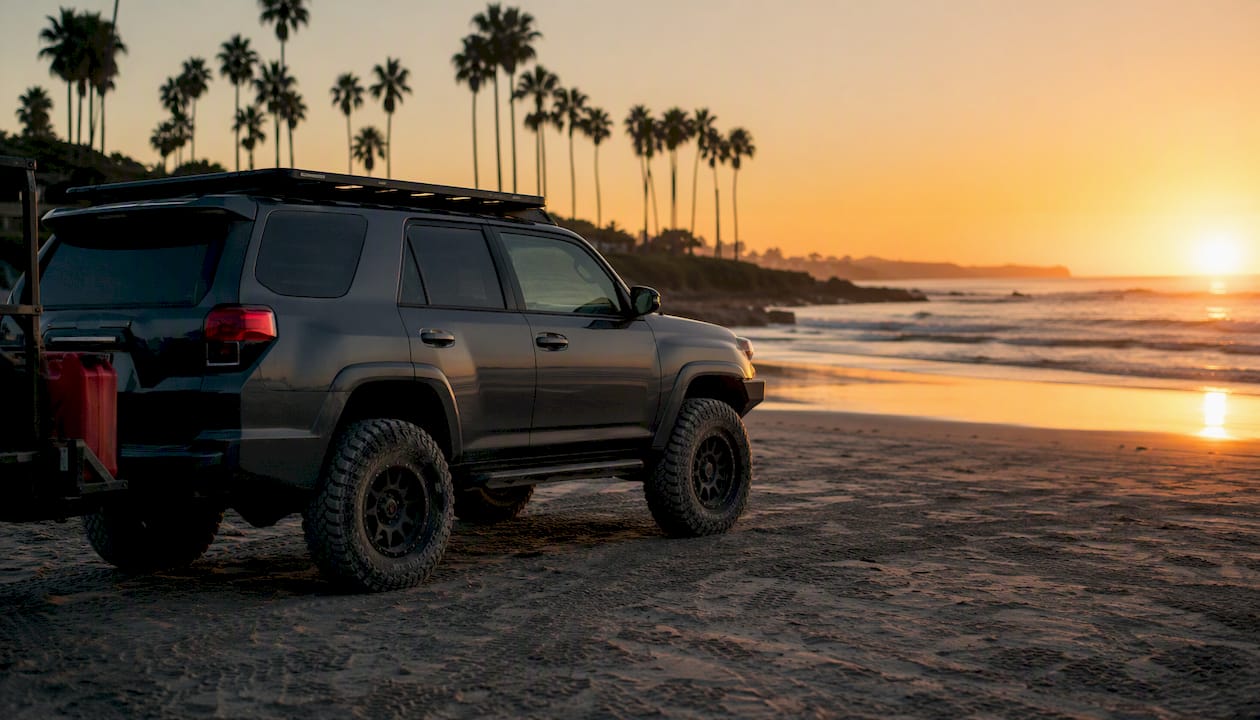
Fuel capacity is a range-planning decision. Large-capacity tanks extending fuel range are standard in serious long-range builds, extending off-grid range substantially. The tradeoff is weight: a full 40-gallon tank adds roughly 240 lbs, which must be accounted for in the payload budget.
Suspension and drivetrain
Suspension and brakes must be refreshed before any payload is added. Running gear comes first — attaching heavy racks and drawers to a worn suspension accelerates component failure. For brake upgrades, four-wheel disc brakes with Hydroboost assistance are the documented standard on high-performance restomods, matching stopping power to the increased performance of a modern drivetrain.
The LS3 V8 remains a popular drivetrain choice for collectors who want V8 character with reliable, easily serviced performance. Ecdautodesign’s K5 Blazer builds demonstrate this pairing directly: a modern V8 with four-wheel disc brakes and Hydroboost delivers the analog driving experience modern SUVs have engineered away. Diesel conversions offer superior torque and fuel economy for towing-focused builds. EV conversion eliminates the combustion soundtrack entirely — a genuine tradeoff for collectors who prize V8 character — but delivers instant torque and near-zero maintenance on the drivetrain itself.
| Feature category | Weight impact | On-road comfort | Off-road utility | Aesthetic fidelity |
|---|---|---|---|---|
| 33–35" all-terrain tires + 2.5" lift | Moderate (unsprung weight) | Slight NVH increase | High | High |
| LS3 V8 drivetrain | Moderate | High (V8 character) | High | High |
| EV conversion | Higher (battery mass) | Very high (silent) | High | Moderate |
| Full-cabin soundproofing | Low | Very high | Neutral | Neutral |
| 40 gallon fuel tank | High (up to ~240 lbs full) | Neutral | High (range) | Neutral |
| Vehicle-specific roof rack | Low (rack only) | Neutral | High | High |
Interior materials and acoustics
Durable, cleanable surfaces — marine-grade vinyl, rubber matting, and moisture-resistant panels — are the correct choice for builds that will see dirt and wet use. Premium leather reads as more luxurious and is appropriate for builds oriented toward urban driving and occasional light trails. Soundproofing the firewall, floor, wheel wells, and all four doors is standard practice for a refined long-distance cabin; the result is a measurably quieter interior that makes the LS3’s exhaust note feel intentional rather than intrusive.
Pro Tip: Request CAD-fit mockups for your drawer system at the specification stage. A custom-molded drawer that fills the boot precisely eliminates dead space and keeps heavy gear low and central, where it belongs for handling and component longevity.
How do you prioritize features and commission the build?
Prioritization checklist
- Safety and performance foundation: Suspension refresh, brake upgrade (four-wheel disc + Hydroboost), and tire/lift package. Nothing else goes on the vehicle until this is signed off.
- Carry and range: Fuel tank capacity, vehicle-specific drawer system, and fridge slide.
- Comfort systems: Full-cabin soundproofing, HVAC upgrade, and seating material selection.
- Aesthetic and tech finish: Paint, LED lighting, Apple CarPlay, backup camera, and interior trim details.
Questions to ask your builder at the first meeting
- Do you provide CAD-fit mockups for storage systems?
- How do you validate roof-load transfer to factory mounting points?
- Can you provide a weight and center-of-gravity estimate before fabrication?
- Which drivetrains do you engineer in-house, and what is your documented process for each?
- What warranty do you offer, and what does it cover?
Red flags: no engineering sign-off on payload or roof-load analysis, no documented warranty, unclear sourcing for critical drivetrain components, and no staged payment or milestone plan.
Budget and timeline snapshot
| Phase | Scope | Typical timeline |
|---|---|---|
| Phase 1: Mechanical foundation | Suspension, brakes, drivetrain, tires | 8 weeks |
| Phase 2: Capability fit | Fuel tank, roof rack, drawer system, lighting | 6 weeks |
| Phase 3: Luxury finish | Soundproofing, interior, tech integration, paint | 8 weeks |
Bespoke builds vary significantly. These ranges reflect a full ground-up commission; partial restorations compress the timeline. Budget variability is highest in Phase 3, where material and finish choices carry the widest price spread.
What does Ecdautodesign deliver, and how does the process work?
The Ecdautodesign commissioning process moves through six stages: discovery and brief, design and 3D configurator session, engineering and mockups, fabrication, systems integration, and final testing with delivery. At the design stage, clients receive real-time 3D renders of their specified build, allowing finish, trim, and configuration decisions to be confirmed before a single component is ordered.
Concrete deliverables include 3D renders, CAD-fit drawer templates, a weight and center-of-gravity report, test-drive sign-off documentation, and a vehicle restoration warranty package. The Classic SUV Build Specification Checklist: 2026 Guide is available to every client as a structured brief template.
Ecdautodesign’s portfolio spans Land Rover Defenders, Series IIA, Range Rover Classics, Chevrolet K5 Blazers, and Toyota FJ40s, with drivetrain options covering the LS3 V8, diesel, and full EV conversion. Collectors can request a sample specification and quote directly through the discovery call process.
Key Takeaways
A bespoke classic SUV build delivers both style and real-world utility only when suspension, brakes, and tires are specified first, followed by storage, comfort, and finish in that order.
| Point | Details |
|---|---|
| Suspension and brakes first | Refresh running gear before adding any payload, racks, or drawers to prevent accelerated wear. |
| Tire and lift sweet spot | Specify 33–35" all-terrain tires with a moderate suspension lift range for capability without compromising proportions. |
| Weight placement governs handling | Keep heavy gear low and central; reserve the roof rack for low-density items like awnings and recovery boards. |
| Soundproofing scope matters | Firewall, floor, wheel wells, and all four doors are the minimum for a refined long-distance cabin. |
| Ecdautodesign commissioning | Request the 3D configurator session, CAD-fit mockups, and a weight/CG report as part of your specification package. |
The tradeoff most collectors underestimate
The conversation around functional SUV design almost always gravitates toward the visible choices: paint, upholstery, wheel finish. Those decisions matter, but they are the last ones to make, not the first. The builds that hold their value and their character over a decade are the ones where the engineering decisions were made before the aesthetic ones. A vehicle-specific roof rack that uses factory rain-gutter geometry and the manufacturer’s intended load paths preserves both the silhouette and the published roof-load rating. A custom drawer system molded to the exact boot geometry of a Defender eliminates dead space and keeps the load floor honest. These are not glamorous decisions, but they are the ones that separate a restomod with provenance from one that looks right in photographs and disappoints on a long drive. The LS3 V8 paired with four-wheel disc brakes and Hydroboost is a documented, proven combination precisely because the engineering was validated before the first client drove it. Collectors who brief their builder on weight management and load-path analysis from the first meeting end up with vehicles that feel as considered as they look.
Your next step toward a one-of-one classic SUV build
Ecdautodesign gives collectors something no production SUV can match: a fully commissioned, ground-up restomod where every specification, from the LS3 V8 to the marine-grade vinyl stitching, is yours alone. The one-of-one build process begins with a discovery call where you share your vehicle VIN and photos, intended use, target spec items, and budget range. From there, Ecdautodesign’s team produces a 3D configurator session so you can see your build in real time before fabrication begins.
Before your call, prepare a one-line brief using the TL;DR format from this article. Review the warranty documentation and portfolio case studies on the Ecdautodesign site to understand what a completed commission looks like. Then schedule your discovery call and request the Classic SUV Build Specification Checklist: 2026 Guide as your starting point. The vehicle you have been commissioning in your head already has a specification. Let’s put it on paper.
Recommended
FREQUENTLY ASKED
QUESTIONS
No FAQs configured yet.