


Configure Your Defender as a Family Daily Driver
July 22, 2026
Trail-Ready Vehicle Build Checklist for Bespoke Defenders
July 27, 2026
A vehicle restoration warranty is a written guarantee from a restoration shop that covers defects in workmanship and materials for a specified period after the work is completed. Under the Magnuson-Moss Warranty Act of 1975, warrantors of consumer products must provide detailed, pre-sale disclosure of coverage terms, making these protections a matter of federal law, not just shop policy. For owners of restored classics, this distinction carries real weight: a properly documented warranty is the difference between a shop that stands behind its craft and one that simply takes your money and moves on.
Velocity Restorations is one example of a restoration provider whose warranty terms reflect the industry standard of providing written coverage details before work begins. Coverage typically spans workmanship, paint and refinishing, materials, and in some cases mechanical components, though the scope varies considerably from shop to shop. The types of restoration warranties available range from short-term limited agreements to lifetime guarantees tied to original ownership.
- Written guarantee: A formal document covering defects in workmanship or materials.
- Federal framework: The Magnuson-Moss Warranty Act sets minimum disclosure standards for all consumer product warranties.
- Coverage scope: Typically includes labor, paint, refinishing, and structural repairs; mechanical coverage varies.
- Duration range: From one-year limited contracts to lifetime workmanship guarantees for original owners.
- Velocity Restorations standard: Written warranty terms provided upfront, consistent with industry best practice.
What do typical restoration warranty terms actually cover?
The core of any restoration warranty is its coverage scope, and the best shops spell this out in writing before a single panel is touched. Written warranty documentation should include the shop’s contact information, vehicle details, a precise description of covered repairs, duration, exclusions, and the claim process. Vague verbal assurances are not warranties under federal law.
Coverage areas commonly found in restoration warranty agreements include:
- Labor and workmanship: Guarantees proper installation, panel alignment, and repair execution meeting industry standards.
- Paint and refinishing: Covers defects such as peeling, bubbling, cracking, or premature fading caused by workmanship errors.
- Parts (OEM or aftermarket): OEM parts often carry the original manufacturer’s limited warranty; aftermarket parts typically carry 6 months to 2 years of coverage.
- Rust protection: Conditional coverage for rust-through on repaired or replaced panels, often tied to specific materials used.
- Frame and structural repairs: Assurance of proper alignment and structural integrity after collision or restoration work.
Warranty durations vary significantly by shop and repair type. Paint and refinishing warranties commonly run lifetime or 3–5 years; labor and workmanship guarantees often extend for the life of original ownership. Mechanical restomod work tends to carry shorter, component-specific terms. The critical point: terms must be in writing before work begins, and any maintenance compliance requirements or deductibles must be disclosed at that stage.
Pro Tip: Ask for the warranty document before you authorize any work. A shop that hesitates to provide written terms upfront is telling you something important about how it operates.
When does a restoration warranty become void?
Warranties are not unconditional. Every legitimate restoration warranty agreement includes specific conditions under which coverage is reduced or eliminated entirely, and understanding these conditions protects you from unpleasant surprises down the road.
- Owner neglect or improper maintenance: Failure to follow specified maintenance protocols, such as using incorrect cleaning products on a freshly refinished surface, can void coverage on paint and materials.
- New collisions or accidents: Damage from incidents occurring after the restoration is complete falls outside workmanship coverage. The shop is not responsible for what happens after delivery.
- Unauthorized modifications or repairs: Work performed by any shop other than the original restorer, or modifications not sanctioned by the warranty terms, typically invalidate coverage on affected components.
- Non-compliance with service protocols: Some warranties require periodic inspections or specific service intervals. Missing these can constitute a breach of the warranty agreement.
- Environmental rust and corrosion: Rust resulting from humidity, road salt, or other environmental conditions after delivery is generally excluded, as it falls outside the shop’s control over workmanship.
The underlying logic is straightforward: a warranty covers what the shop did, not what the world does to the vehicle afterward. Restoration shops design these invalidation clauses to limit exposure to variables they cannot control, which is both legally sound and commercially reasonable.
What restoration warranties typically exclude
Exclusions define the practical limits of your coverage, and standard restoration warranties are designed to focus protection on workmanship rather than the full spectrum of things that can go wrong with a vehicle over time.
- Normal wear and tear: Everyday degradation from use, weather exposure, and minor rock chips is universally excluded.
- Environmental damage: Tree sap, acid rain, bird droppings, and similar contaminants are outside the scope of workmanship guarantees.
- Mechanical failures unrelated to restoration work: If a component fails for reasons independent of the restoration, the warranty does not apply.
- Damage from misuse or neglect: Improper storage, use of abrasive cleaning compounds, or failure to protect a freshly painted surface are owner responsibilities.
- Incidental cosmetic damage: Minor scratches or scuffs acquired during normal ownership are not covered.
The distinction between a workmanship warranty and an extended service contract matters here. A workmanship warranty covers defects arising from the shop’s labor and materials. An extended service contract, sometimes marketed as an “extended warranty,” is a separate, optionally purchased agreement covering mechanical repairs and maintenance, often with deductibles and pre-approval requirements. These are legally distinct instruments under federal law.
Legal framework and liability limits you should understand
The legal architecture governing restoration warranties in the United States is more structured than most owners realize. The Magnuson-Moss Warranty Act requires that written warranties on consumer products costing more than $10 be labeled either “full” or “limited,” with full warranties meeting specific federal minimums and limited warranties disclosing any restrictions on coverage.
A full warranty requires the shop to remedy defects within a reasonable time at no charge and, if repair is not possible after a reasonable number of attempts, to offer either a replacement or a full refund. Most restoration warranties are labeled “limited,” meaning they may restrict coverage duration, exclude certain damage types, or impose conditions on the owner.
Key legal considerations include:
- Limitation of liability clauses: Most restoration warranties cap the shop’s financial exposure to the cost of repairing or replacing the specific defective work, excluding consequential damages unless the warranty explicitly states otherwise.
- Non-transferability: The majority of restoration warranties apply only to the original owner. If you sell the vehicle, the new owner typically receives no warranty protection from the original restorer.
- Warranties vs. service contracts: Under federal law, a written warranty is conveyed at the time of sale at no additional cost; a service contract requires separate consideration and is governed by different rules.
- Dispute resolution: Many warranty documents specify an informal dispute resolution process that must be exhausted before litigation, a provision permitted under the Magnuson-Moss Act.
- State law interaction: State consumer protection laws may provide additional rights beyond federal minimums, particularly regarding implied warranties of merchantability.
Understanding these parameters before you commission a restoration is not excessive caution. It is the kind of due diligence that separates a well-protected investment from an expensive lesson.
Why a restoration warranty signals craftsmanship confidence
A restoration warranty is, at its core, a public declaration of confidence. Shops that offer written workmanship guarantees have standardized their processes sufficiently to stand behind them financially. Those that refuse tend to lack the procedural discipline that makes consistent quality possible.
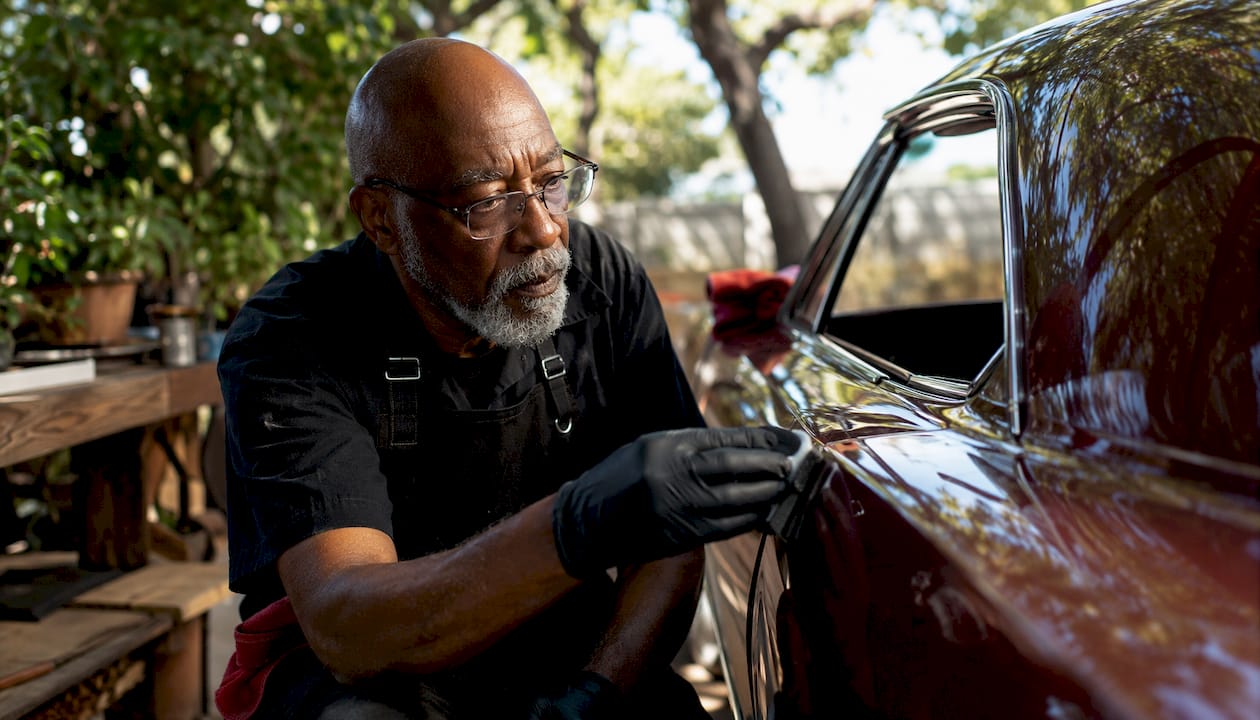
For owners of bespoke or investment-grade vehicles, the warranty serves as a risk management instrument. A ground-up restoration on a classic Land Rover Defender, for example, represents a substantial financial and emotional commitment. Written coverage for paint, bodywork, and structural repairs protects that investment against the possibility of workmanship failure, which, however rare in a well-run atelier, is never impossible.
Expert guidance consistently points to one question as the most revealing you can ask a prospective restorer: is the warranty “lifetime” or “limited”? A lifetime workmanship warranty, valid for as long as the original owner holds the vehicle, signals that the shop builds to last. A limited warranty covering only one or two years suggests the shop is less certain about the longevity of its own work.
The benefits of carrying a strong warranty extend beyond financial protection. They include a clear claim process when issues arise, documented proof of workmanship standards for insurance and appraisal purposes, and a formal record of the restoration scope that supports the vehicle’s provenance. For collectors, that paper trail is part of what makes a restored vehicle worth owning for the long term.
What to look for when evaluating a restoration warranty
Not all warranty documents are equal, and the gap between a well-crafted guarantee and a vague one-page disclaimer can be considerable. Before committing to any restoration shop, evaluate the warranty agreement against these criteria:
- Written delivery at pickup: A legitimate warranty is provided in writing at the time the vehicle is returned, not promised verbally and never formalized.
- Explicit coverage scope: The document should name specific covered areas, such as paint, bodywork, frame repairs, and parts, rather than using broad language that invites dispute.
- Clear duration terms: Know whether coverage is lifetime, multi-year, or component-specific, and confirm when the clock starts.
- Transferability status: Confirm in writing whether the warranty transfers to a subsequent owner. Most do not, which affects resale value.
- Claim process instructions: A credible warranty tells you exactly how to file a claim, whom to contact, and what documentation you will need.
- Maintenance obligations: Some warranties require you to follow specific care protocols. Understand these before you sign, not after a claim is denied.
- Inclusion vs. add-on cost: Confirm whether the warranty is included in the restoration price or sold separately. A separately purchased agreement is a service contract, not a warranty under federal law.
Pro Tip: Compare warranty documents from at least two shops side by side. The differences in exclusion language alone will tell you a great deal about each shop’s confidence in its own work.
How manufacturer warranties differ from restoration shop warranties
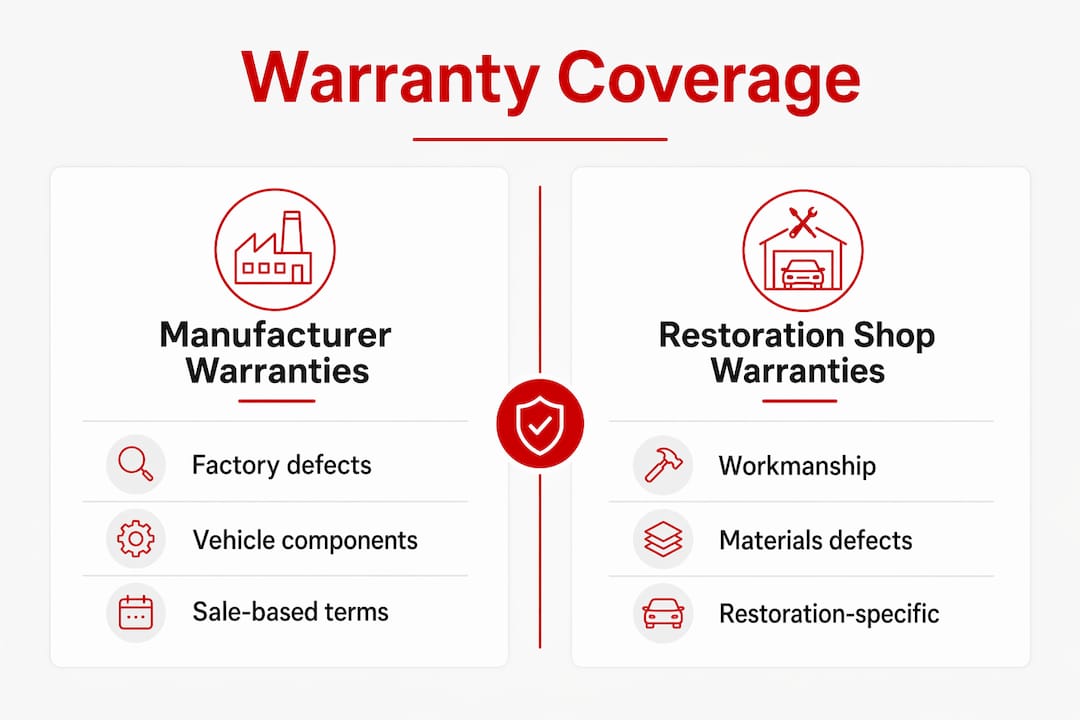
The distinction between an original manufacturer warranty and a restoration shop warranty is fundamental, and conflating the two leads to coverage gaps that owners discover at the worst possible moment.
A manufacturer’s warranty is issued by the vehicle’s original maker at the point of sale and covers factory defects in materials and workmanship for a specified period, typically expressed in years or mileage. For a classic vehicle undergoing restoration, the original manufacturer warranty has almost certainly expired, often by decades. It offers no protection for work performed by a restoration shop.
A restoration shop warranty, by contrast, covers only the work that shop performed. It does not extend to original factory components left untouched during restoration, nor does it cover mechanical systems outside the restoration scope unless the shop explicitly includes them. The coverage is narrower in origin but potentially longer in duration, particularly when a shop offers a lifetime workmanship guarantee.
Third-party extended service contracts occupy a third category entirely. These are optional, separately purchased agreements, often facilitated through insurance-style providers, that cover mechanical repairs across a defined list of components. They typically involve deductibles, pre-approval requirements for repairs, and restrictions on which licensed facilities can perform the work. The FTC is explicit that these contracts are not warranties under federal law, regardless of how they are marketed.
For owners of restored classic SUVs and restomod builds, the practical approach is to hold all three documents simultaneously when applicable: the restoration shop’s workmanship warranty, any parts manufacturer warranties on newly installed components, and a third-party service contract for mechanical coverage. Each protects a different layer of the vehicle, and none substitutes for the others.
Ecdautodesign and the standard of bespoke restoration assurance
At Ecdautodesign, every ground-up build of a bespoke Land Rover Defender reflects a philosophy where craftsmanship is currency. The atelier’s commitment to meticulous finish and provenance-conscious restoration means that warranty documentation is not an afterthought; it is part of the ownership experience from the first conversation to final delivery. Clients who commission a fully customized Defender, selecting everything from the drivetrain to the interior materials, deserve the same clarity about their coverage as they receive about their build specifications.
Ecdautodesign’s custom restoration expertise has been recognized across the automotive press precisely because the brand treats each vehicle as an investment-grade creation, not a transaction. Understanding your warranty is part of understanding what you own. For those ready to explore what a truly bespoke restoration looks like, Ecdautodesign’s expert restoration guidance is a natural starting point.
Key Takeaways
A vehicle restoration warranty is a written, federally governed guarantee covering workmanship and materials defects, with coverage scope, duration, and transferability varying significantly by shop and repair type.
| Point | Details |
|---|---|
| Federal law governs disclosures | The Magnuson-Moss Warranty Act requires warrantors to provide detailed written coverage terms before sale. |
| Duration varies by repair type | Paint and refinishing warranties run lifetime or 3–5 years; replacement parts are typically covered for 6 months to 2 years. |
| Most warranties are non-transferable | Coverage usually applies only to the original owner; confirm transferability in writing before committing. |
| Exclusions are standard | Normal wear, environmental damage, new collisions, and unauthorized repairs are universally excluded from workmanship coverage. |
| Warranties differ from service contracts | A separately purchased service contract is not a warranty under federal law and carries different rules, deductibles, and repair approvals. |
Recommended
FREQUENTLY ASKED
QUESTIONS
No FAQs configured yet.