


Examples of Extreme Terrain Vehicles: The Builder’s Guide
July 29, 2026
Stylish Yet Practical SUV Features: 2026 Build Guide
August 3, 2026
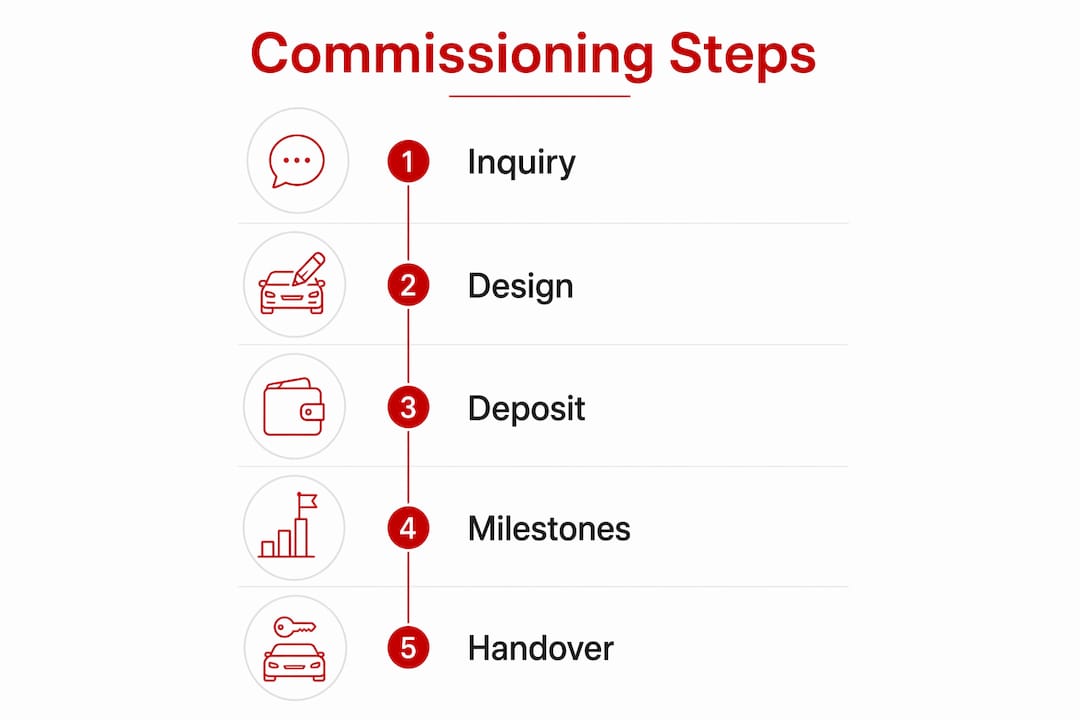
You can commission a one-of-a-kind Land Rover Defender — and the path from first call to keys-in-hand is more structured than most buyers expect. The commissioning process follows a clear sequence: inquiry and discovery, design brief with 3D renders, slot secured by deposit, milestone-based build payments, and final handover. Investment-grade bespoke Defenders typically start at a substantial cost level, with full ground-up restorations reaching higher depending on powertrain, coachbuilt bodywork, and interior specification. The deposit to secure a production slot generally represents a portion of the total build cost, with the balance paid across defined milestones.
- Inquiry: Schedule a discovery call and share inspiration references, intended use case, and budget range.
- Design brief: Receive a signed build specification sheet, material samples, and 3D rendered visualizations for approval.
- Secure your slot: Pay the agreed deposit and execute the build contract.
- Build milestones: Receive scheduled photo and video updates; make milestone payments tied to build stages.
- Final payment and delivery: Complete payment on acceptance, following a pre-delivery inspection and owner orientation.
The immediate next step: contact Ecdautodesign to request a build specification and schedule your initial consultation.
Table of Contents
- How does the commissioning process work, step by step?
- What can you actually customize on a bespoke Defender?
- What does a bespoke Defender cost, and how long will it take?
- What should you ask before paying a deposit?
- Why Ecdautodesign stands out for a bespoke Defender commission
- What happens at handover, and what aftercare should you negotiate?
- Key Takeaways
- Your Ecdautodesign commission starts with one conversation
How does the commissioning process work, step by step?
A bespoke Defender commission is a collaborative atelier experience, not a catalog order. Each stage has defined deliverables, and understanding them protects your investment and keeps the build on schedule.
-
Initial consultation and scope: The process opens with a discovery call or in-person meeting. You share inspiration imagery, intended use (daily driver, weekend off-road, concours display), geographic compliance requirements, and a realistic budget ceiling. The builder uses this to define scope and flag any constraints early — emissions compliance for California buyers, for instance, can shape drivetrain choices before a single render is drawn. Ecdautodesign’s team walks through the full ground-up restoration process at this stage so you understand exactly what the build entails.
-
Design and approval: The builder produces a signed build specification sheet covering every material, finish, and mechanical choice. Alongside that document, you receive 3D renderings or configurator sessions that let you visualize the vehicle before fabrication begins. Material swatches, paint chips, and leather samples arrive for physical review. Nothing moves to the shop floor until you sign off.
-
Contracting and deposit: Once the spec sheet is approved, you execute a formal build contract. This document defines the deposit amount, the milestone payment schedule, the change-order policy, and cancellation terms. The deposit secures your production slot and is typically non-refundable once fabrication begins.
-
Build and reporting: The vehicle moves through the shop in defined stages — strip-down, chassis work, powertrain installation, bodywork, interior, and final systems integration. Clients receive scheduled updates (weekly or biweekly) with dated photographs and video evidence. Midpoint inspections or shop visits are standard at reputable builders.
-
Pre-delivery and handover: Before the vehicle leaves the shop, it undergoes a full pre-delivery inspection covering fit, finish, mechanical function, and all bespoke components. A road test confirms drivability. Handover includes an owner orientation covering every system, and you receive the full build documentation package.
| Build Stage | Key Deliverable | Client Action Required |
|---|---|---|
| Consultation | Scope document, budget alignment | Confirm brief and references |
| Design sign-off | Signed spec sheet, 3D renders, samples | Approve and sign |
| Contract and deposit | Executed build contract | Pay deposit, secure slot |
| Build milestones | Photo/video updates, inspection access | Review, approve changes, pay milestones |
| Pre-delivery | PDI report, road test results | Accept vehicle, final payment |
What can you actually customize on a bespoke Defender?
The honest answer: nearly everything. The Defender’s body-on-frame architecture and long production history make it one of the most accommodating platforms for bespoke work. The decisions that matter most fall into five categories.
Model and platform: The D90 (short-wheelbase, two-door) suits buyers who want a nimble, characterful machine with a strong visual presence. The D110 (station wagon or pickup) offers rear-seat practicality and is the most popular platform for family-oriented luxury builds. The D130 extends that further, accommodating third-row seating or a bespoke rear cargo configuration. Your intended use case should drive this choice before any other decision is made. Ecdautodesign’s platform history resource is worth reviewing before your first consultation.
Powertrain: This is where character meets compliance. Authentic V8 swaps deliver the visceral soundtrack and mechanical simplicity that many collectors prize, but they add weight and require emissions compliance work in states like California. Modern LT-series or turbocharged four-cylinder swaps offer better efficiency and cleaner emissions profiles, though they demand custom mounts and cooling solutions. The full trade-off breakdown is detailed in Ecdautodesign’s drivetrain options guide. For buyers interested in engine management refinement after the build, ECU calibration services from specialists like Ignition Remapping can optimize the tune for your specific powertrain configuration.
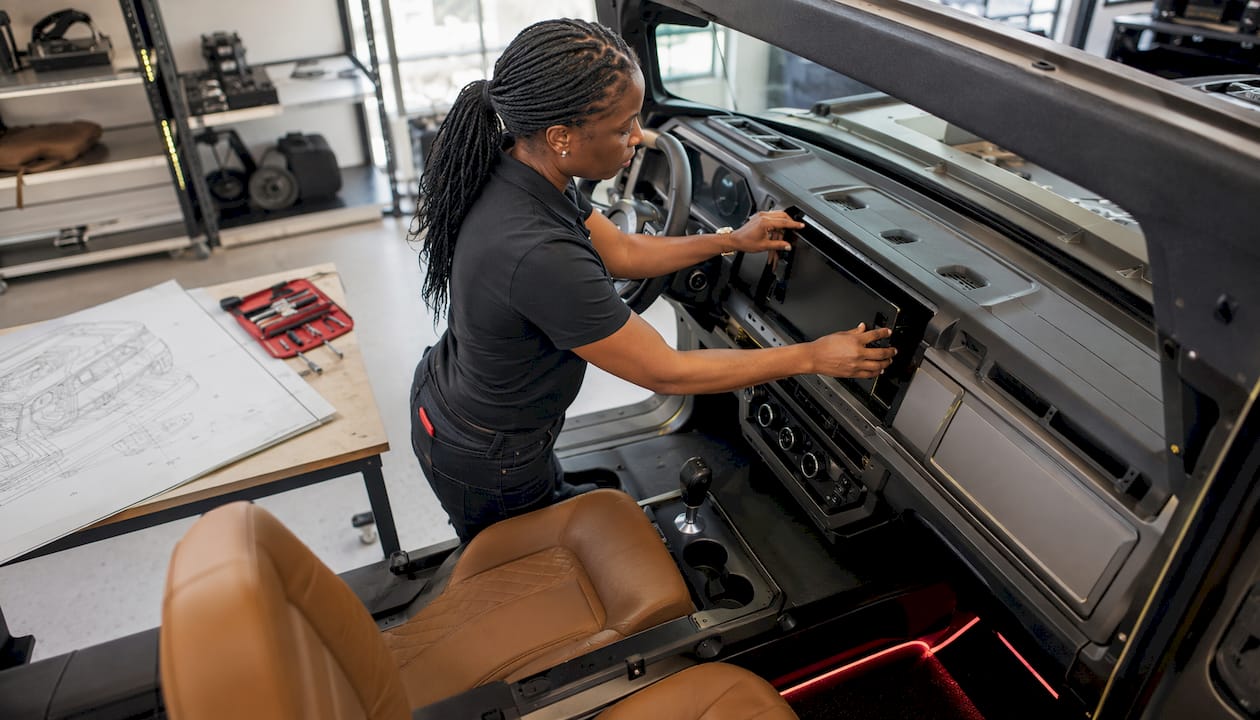
Interior: The cabin is where craftsmanship as currency becomes most visible. Buyers choose from full-hide leather in virtually any color, bespoke stitch patterns, custom headliners, hand-fabricated center consoles, and seating layouts tailored to the platform. Ecdautodesign’s custom leather interior guide covers the full range of hide grades and finishing options. One decision worth thinking through early: ultra-supple leather looks extraordinary on a show vehicle but demands more care in a working off-road machine.
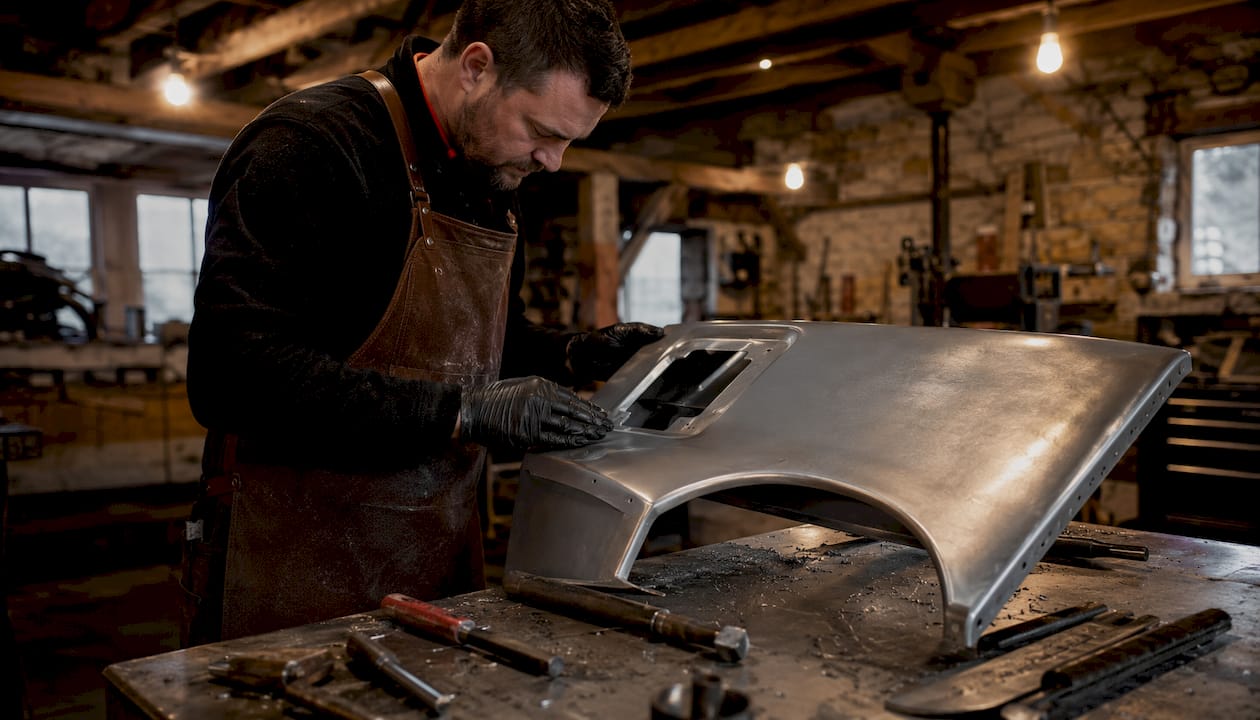
Exterior and bodywork: Coachbuilt aluminum panels, raised suspension, bespoke wheel and tire packages, auxiliary lighting, snorkels, and custom paint finishes (including matte, satin, and two-tone treatments) are all on the table. Coachbuilt bodywork scales nonlinearly with complexity — a unique fender profile or custom vent can add substantial labor hours relative to a straightforward paint change.
- Bespoke paint: single-stage, two-stage, matte, satin, or full custom mix
- Coachbuilt aluminum panels: custom vents, fender flares, roof treatments
- Suspension lifts and bespoke wheel/tire packages for off-road or road-biased builds
- Auxiliary lighting: LED light bars, heritage-style round lamps, integrated roof mounts
Technology and comfort: Modern climate control, premium audio, Apple CarPlay/Android Auto integration, and advanced driver aids can all be wired into a classic Defender body. EV or hybrid drivetrain options are emerging for buyers prioritizing urban usability alongside off-road capability.
Pro Tip: Lock your powertrain choice before finalizing the interior specification. The engine determines the transmission tunnel profile, which affects center console design and seating position — changing it mid-build is one of the most expensive change orders a builder can face.
What does a bespoke Defender cost, and how long will it take?
Cost and timeline are the two questions every buyer asks first, and both depend heavily on the scope of the build.
Investment-grade bespoke builds typically start above $150,000, with full restorations reaching $300,000 or more. Ecdautodesign’s custom Defender cost guide provides a detailed breakdown of the primary cost levers.
The five primary cost drivers include powertrain swaps, bespoke interior leather and trim, custom bodywork or coachbuilding, electronics and wiring integration, and specialty suspension or drivetrain engineering. Each of these items materially increases labor hours and parts cost. A straightforward color-change and interior refresh sits at the lower end of the range; a full coachbuilt restomod with a V8 swap and bespoke cabin sits at the top.
| Build Scope | Estimated Timeline | Notes |
|---|---|---|
| Light customization (paint, interior, wheels) | Several months | Donor vehicle in good condition |
| Mid-range restomod (powertrain swap, partial interior) | Extended timeframe | Custom fabrication adds time |
| Full ground-up restoration with coachbuilt bodywork | Long duration | Extensive fabrication and compliance work |
Deposit structures typically require an initial payment representing a fraction of the total build cost to secure a production slot, with the balance paid across multiple milestones tied to defined build stages. Final payment is due at acceptance, before the vehicle leaves the shop.
Risk factors that extend timelines include sourcing rare donor vehicles in suitable condition, iterative design changes approved mid-build, and supply chain delays for specialty components. A clearly written change-order policy and a schedule buffer of four to six weeks are standard mitigation tools at reputable builders. Buyers commissioning California-registered vehicles should also factor in the additional time required for emissions compliance work.
What should you ask before paying a deposit?
The deposit is the point of commitment. Before you reach it, a prepared question set shortens negotiation cycles and reduces the risk of post-deposit disputes. Here is the prioritized checklist.
- Request a full sample build contract — not a summary, the actual document.
- Confirm the milestone payment schedule in writing, with specific build-stage triggers for each payment.
- Ask for three client references from completed builds of similar scope, and follow up with them.
- Request a shop visit or virtual walkthrough of an active build.
- Confirm the warranty terms in writing: what is covered, for how long, and who performs warranty repairs.
- Ask for proof of insurance covering the vehicle during the build period.
Critical questions to ask before signing:
- What is the lead time from deposit to build start, and what factors could extend it?
- What is the refund or cancellation policy if you need to exit the contract before fabrication begins?
- How are change orders priced, and what is the approval process for mid-build modifications?
- Who sources specialty parts, and who bears the cost and delay risk if a part is unavailable?
- What are the acceptance criteria at handover, and what recourse do you have if a bespoke component does not meet the approved specification?
Red flags to watch for:
- Vague milestone language (“payment due at completion of interior work”) with no defined inspection criteria
- No willingness to provide client references or allow shop visits during an active build
- Absence of a documented build gallery showing completed vehicles with verifiable provenance
- A change-order policy that gives the builder sole discretion over pricing without client approval
Transparent milestone reporting, including dated photographs and scheduled inspections, is a stronger trust signal than any marketing copy. Ask builders for consistent, dated progress evidence before you commit.
Why Ecdautodesign stands out for a bespoke Defender commission
Ecdautodesign operates from a ground-up restoration methodology that treats every build as a clean-sheet engineering exercise, not a modification of an existing vehicle. The donor Defender is stripped to the chassis, inspected, and rebuilt with new mechanical components, bespoke bodywork, and a fully custom interior — a process that delivers both aesthetic distinction and long-term mechanical reliability.
The 3D rendering configurator is one of the most practical tools in the commissioning process. It allows multiple approval passes before fabrication begins, which materially reduces expensive mid-build change orders. Buyers can review color combinations, interior layouts, and exterior details in rendered form, approve the specification, and sign off with confidence. This visualization capability is documented in Ecdautodesign’s press coverage from Driving.ca, which highlights the atelier approach to custom builds.
Proof points worth reviewing before your consultation:
- Published build gallery featuring completed D90, D110, and D130 commissions across a range of specifications
- Press features in outlets including Car Buzz, which covered a featured D110 build in detail
- Documented build methodology and shop process available for review before committing
- BBB accreditation providing an independent credibility check
To begin, request a build specification document and schedule an initial consultation. Ecdautodesign’s intake process covers scope, platform, powertrain, and budget alignment in the first session, giving you a clear picture of what your commission will entail before any financial commitment is made.
What happens at handover, and what aftercare should you negotiate?
Handover is not the end of the process — it is the beginning of ownership. A well-negotiated aftercare package protects both the vehicle’s condition and its long-term value.
Pre-delivery inspection checklist:
- Verify all bespoke components against the signed build specification sheet
- Inspect fit and finish on coachbuilt panels, interior trim, and paint
- Confirm all electronic systems (climate, infotainment, lighting, driver aids) function as specified
- Complete a road test covering both on-road drivability and, where applicable, off-road capability
- Receive the full build documentation package: spec sheet, parts records, compliance certificates, and warranty documentation
Warranty and aftercare to negotiate:
- A minimum 12-month mechanical warranty covering the powertrain and drivetrain
- Extended coverage options for bespoke interior components and coachbuilt bodywork
- A scheduled servicing package with the builder or a designated specialist, including regular inspections
- Concierge transport for warranty repairs to avoid shipping damage to a finished vehicle
Ownership tips for investment-grade Defenders:
- Maintain a fully documented service history from day one — provenance is a material factor in resale value
- Store the vehicle in a climate-controlled environment if it will not be driven regularly
- Use the vehicle as intended: a bespoke Defender that never sees a dirt road or a city street loses the narrative that makes it valuable
- Consult the builder before making any post-delivery modifications, as unauthorized changes can void warranty coverage and affect the vehicle’s documented specification
Key Takeaways
Commissioning a one-of-a-kind Defender is a structured, milestone-driven process that rewards buyers who prepare thoroughly, ask the right questions, and choose a builder with a documented ground-up methodology.
| Point | Details |
|---|---|
| Commissioning steps | Inquiry, design sign-off, deposit, milestone build payments, and final handover form the full sequence. |
| Cost range | Investment-grade bespoke builds typically start above $150,000, with full restorations reaching $300,000 or more. |
| Timeline expectations | Light builds take 4–6 months; full ground-up restorations with coachbuilt bodywork run 12–18 months. |
| Contract essentials | Secure a full sample contract, milestone triggers, change-order policy, and warranty terms before paying any deposit. |
| Ecdautodesign | Ecdautodesign’s ground-up methodology, 3D configurator, and documented build gallery make it the recommended starting point for a bespoke Defender commission. |
The real calculus of commissioning a bespoke Defender
What most buyers underestimate is not the cost or the timeline — it is the decision density. A bespoke commission asks you to make dozens of choices that a standard vehicle purchase never surfaces: the exact weight of a leather hide, the precise lift height that balances road manners against off-road clearance, the trade-off between a V8’s character and a modern engine’s compliance profile. That density is the point. It is what separates a vehicle with genuine provenance from one that merely looks expensive.
The buyers who find the process most satisfying are those who arrive with a clear sense of how they intend to use the vehicle. The ones who struggle are those who treat every option as equally open — because in a build with this many variables, indecision is its own cost driver. Choosing between a supple full-hide leather interior and a more durable material for a working off-road machine is not a trivial aesthetic call; it shapes the vehicle’s character for the life of the ownership. Make that call early, commit to it, and let the builder execute.
Your Ecdautodesign commission starts with one conversation
Ecdautodesign delivers what no production line can: a Defender built entirely to your specification, from chassis up, with every material choice, powertrain decision, and finish detail documented and approved before fabrication begins. The 3D configurator lets you see your vehicle before it exists. The build spec sheet gives you a contractual foundation. And the ground-up restoration methodology means the vehicle you receive is not a modified classic — it is a purpose-built machine with your name on the specification sheet.
The next step is straightforward: request your build specification and schedule a private design consultation. Review the press-validated portfolio and the limited-edition customization guide before your first call, then contact Ecdautodesign to begin.
Useful sources and further reading
| Resource | Description |
|---|---|
| Ecdautodesign — Custom Defender Cost Guide | Detailed breakdown of pricing drivers and ballpark ranges for bespoke builds |
| Ecdautodesign — Drivetrain Options | Comprehensive guide to powertrain choices, trade-offs, and compliance considerations |
| Ecdautodesign — Ground-Up Restoration Process Guide | Step-by-step build methodology from strip-down to handover |
| Ecdautodesign — Custom Leather Interior | Interior material options, hide grades, and finishing choices |
| Ecdautodesign — California Compliance Guide | Emissions and regulatory considerations for U.S. buyers in California |
| Ecdautodesign — Driving.ca Press Feature | Editorial coverage of ECD’s bespoke build capability and atelier approach |
| BBB Profile — ECD Automotive Design | Independent accreditation and credibility verification |
Recommended
- Design a Custom Defender: Render to Reality – Custom Defender | Restored Defender Specialists | ECD Auto Design
- Why Restoring a Custom Defender is Difficult – Custom Defender | Restored Defender Specialists | ECD Auto Design
- Designing Your Defender with Masai Windows – Custom Defender | Restored Defender Specialists | ECD Auto Design
- Outfitting Your Custom Defender with Kahn Design – Custom Defender | Restored Defender Specialists | ECD Auto Design
FREQUENTLY ASKED
QUESTIONS
No FAQs configured yet.